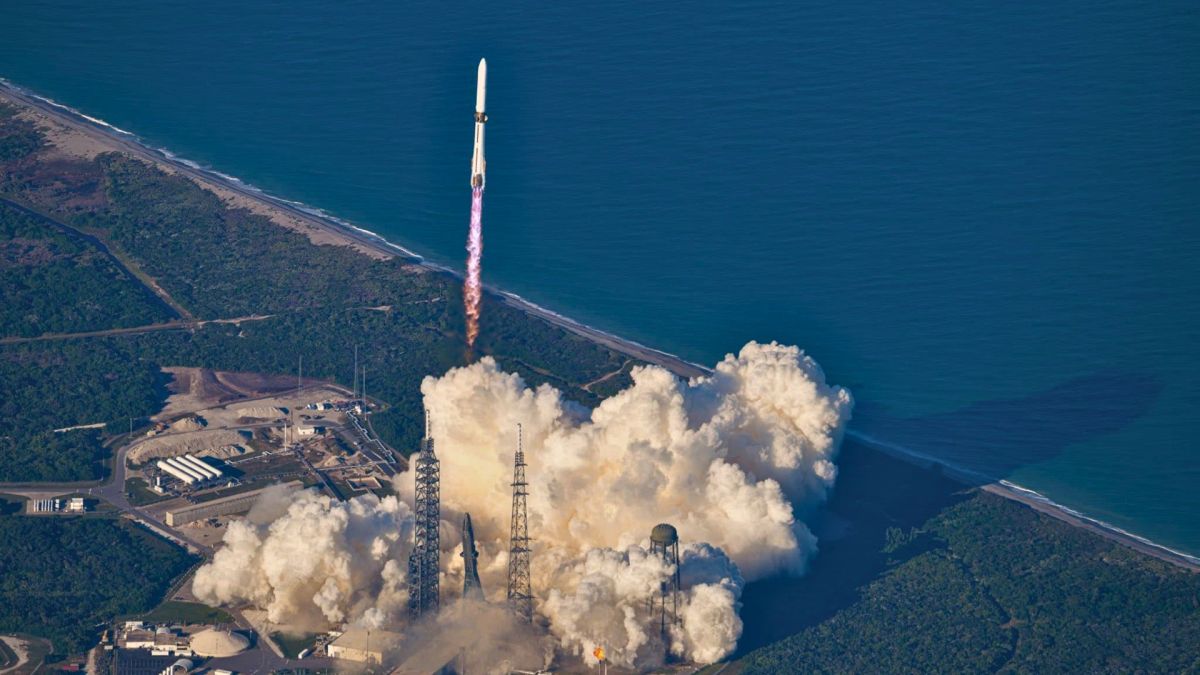
Blue Origin experienced a stark bifurcation of fortunes this past weekend during the third flight of its New Glenn heavy-lift rocket. While the mission’s first-stage booster successfully touched down on Earth for the second time—a critical milestone for Jeff Bezos’s vision of reusable spaceflight—the victory was overshadowed by a failure in the upper atmosphere.
The mission’s primary objective, placing a satellite into a specific trajectory, went awry when the vehicle failed to reach its intended orbit. Despite the flawless performance of the landing sequence, the payload was left stranded in a precarious position. Because the satellite cannot fulfill its purpose or be recovered from its current path, it is slated for destruction.
This outcome underscores the unforgiving asymmetry of aerospace engineering, where the mastery of one complex system does not guarantee the integrity of the whole. For Blue Origin, the successful recovery of the New Glenn booster remains a significant industrial achievement, yet the loss of the payload serves as a reminder of the steep climb toward operational reliability in the orbital launch market.
With reporting from Numerama.
Source · Numerama