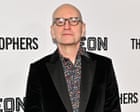
Steven Soderbergh has long been Hollywood’s most restless tinkerer, a director who transitioned to digital cinematography early and once shot entire features on iPhones. His latest film, *The Christophers*, starring Ian McKellen and Michaela Coel, explores the precarious nature of authorship through the story of an art forger hired to finish a master’s work. Yet, the film’s thematic preoccupation with "authentic" creation stands in striking contrast to Soderbergh’s recent public interest in generative AI as a legitimate tool for the modern auteur.
In recent interviews, Soderbergh revealed he is utilizing generative AI to craft "thematically surreal images" for an upcoming documentary on John Lennon and Yoko Ono. Rather than using the technology to replace traditional cinematography, he describes a pursuit of a "dream space"—visuals that defy literal interpretation. This pragmatic pivot suggests that for established directors, the utility of AI may lie not in its ability to mimic reality, but in its capacity to generate the uncanny and the abstract.
This shift is not isolated to Soderbergh. Other prestige filmmakers, including Darren Aronofsky, have begun exploring how these tools might reshape production pipelines. While the industry remains embroiled in essential debates over labor and intellectual property, a segment of the cinematic vanguard appears to be moving past total rejection. They are beginning to treat AI as another texture in the director’s kit, signaling a future where the line between the artist’s hand and the algorithm’s output becomes increasingly, and perhaps intentionally, blurred.
With reporting from The Guardian Tech.
Source · The Guardian Tech