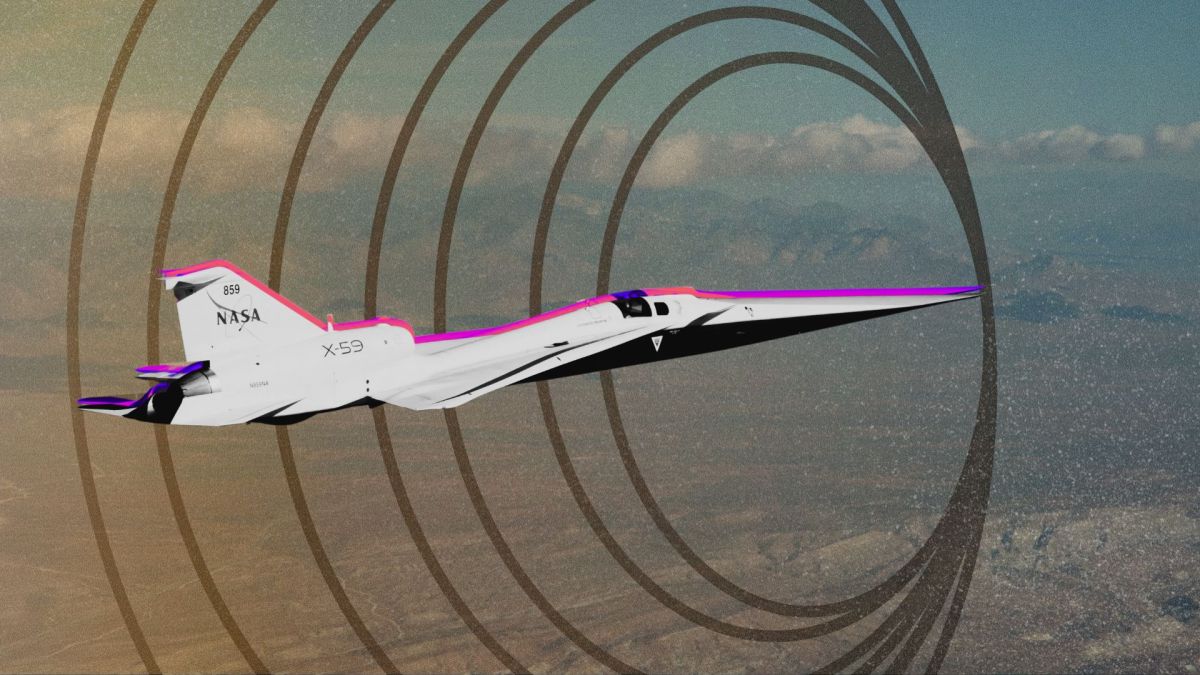
NASA’s experimental X-59 aircraft is nearing a pivotal milestone in the quest to revive supersonic commercial travel. During recent flight tests over the California desert, the jet exceeded speeds of 1,000 km/h and reached altitudes significantly higher than those of standard commercial airliners. These trials suggest that the aircraft is within days of attempting its first supersonic flight, a moment that could redefine the physics of high-speed transit.
The primary hurdle for supersonic flight has never been speed itself, but the acoustic signature left in its wake. Since the retirement of the Concorde, supersonic flight over land has been largely banned due to the disruptive sonic booms that occur when an aircraft breaks the sound barrier. The X-59, the centerpiece of NASA’s Quesst mission, is engineered to mitigate this effect, theoretically replacing the thunderous boom with a muted "sonic thump" no louder than a car door closing.
By reshaping the shockwaves produced by the airframe, NASA hopes to provide the regulatory data necessary to lift current bans on overland supersonic travel. If the upcoming tests prove successful, the X-59 will serve as a technical blueprint for a new generation of aircraft capable of halving transcontinental flight times without disturbing the populations below.
With reporting from Numerama.
Source · Numerama