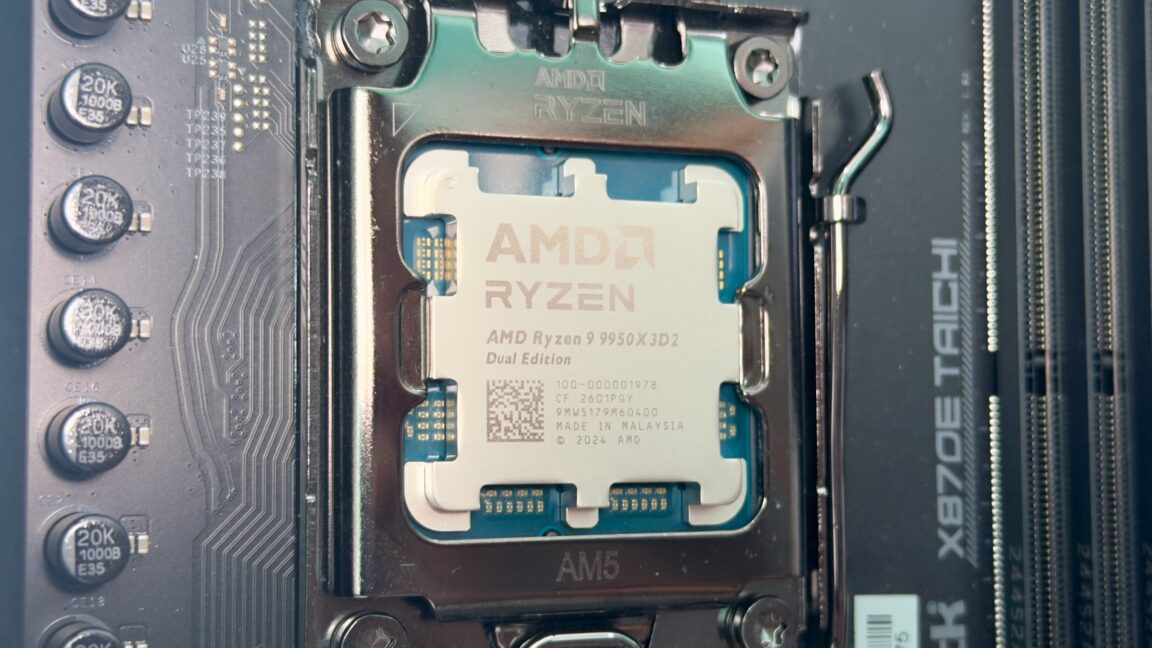
AMD is doubling down on its signature 3D V-Cache technology with the upcoming release of the Ryzen 9 9950X3D2 Dual Edition. Scheduled for an April 22 debut at a premium $899 price point, the 16-core processor represents a structural evolution of the existing Zen 5 lineup. While the standard 9950X3D features extra cache on only one of its two chiplets, the "Dual Edition" applies this stacking technique to both, resulting in a staggering 208MB of L3 cache.
In practice, this silicon density offers a lesson in the physics of diminishing returns. Early benchmarks in gaming and video encoding reveal that the 9950X3D2 is only marginally faster than its predecessor. However, the more compelling narrative lies in the chip’s thermal and power management. Despite a default thermal design power (TDP) of 200W—a 30W increase over the standard model—the new processor maintains comparable, and occasionally lower, power consumption during real-world workloads.
This efficiency suggests a maturation of AMD’s stacking architecture. By neutralizing the power-draw penalties that often plague high-cache configurations, the company has refined a once-experimental solution into a stable, high-performance platform. While the $899 entry fee positions the chip as a luxury for enthusiasts rather than a necessity for the masses, it serves as a quiet testament to the engineering strides made in managing the complexities of 3D-stacked silicon.
With reporting from Ars Technica.
Source · Ars Technica