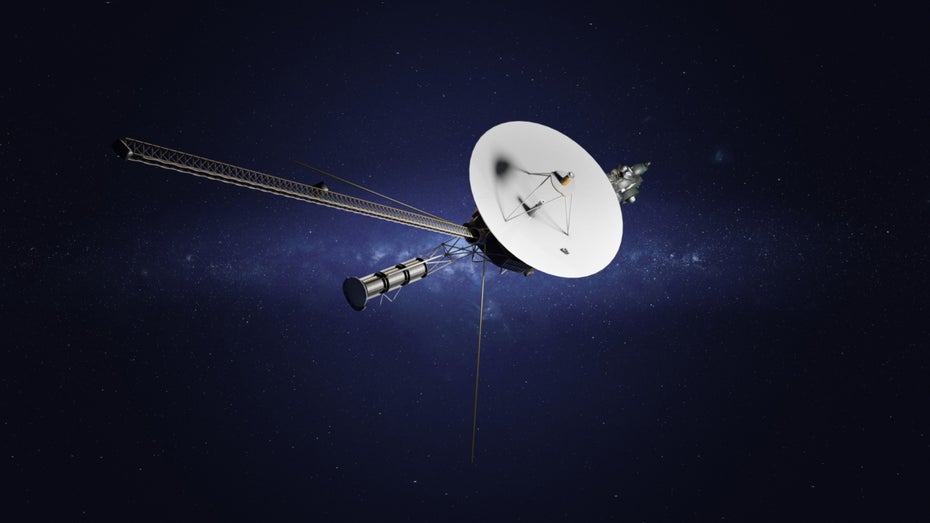
For nearly half a century, Voyager 1 has served as humanity’s most distant scout, a 1970s-era relic hurtling through the cold silence of interstellar space. But as the spacecraft nears its fifth decade of operation, its survival has become a delicate game of technical triage. NASA engineers recently announced the deactivation of another onboard instrument, a necessary sacrifice to conserve the probe’s dwindling power reserves and extend its historic mission.
The challenge lies in the spacecraft’s aging heart: its radioisotope thermoelectric generators. These nuclear batteries, which convert heat from decaying plutonium into electricity, lose approximately four watts of power every year. At more than 15 billion miles from Earth, every milliwatt is a precious commodity. By shutting down non-essential systems, mission controllers hope to keep the probe’s vital engineering data and remaining scientific sensors functioning for as long as possible.
This latest power-saving measure is part of a broader, medium-term strategy to manage the slow sunset of the Voyager program. While the loss of individual instruments diminishes the probe’s scientific output, the priority remains maintaining communication. Even in its diminished state, Voyager 1 continues to provide unprecedented data from beyond the heliosphere, offering a final, flickering transmission from the edge of our solar understanding.
With reporting from t3n.
Source · t3n