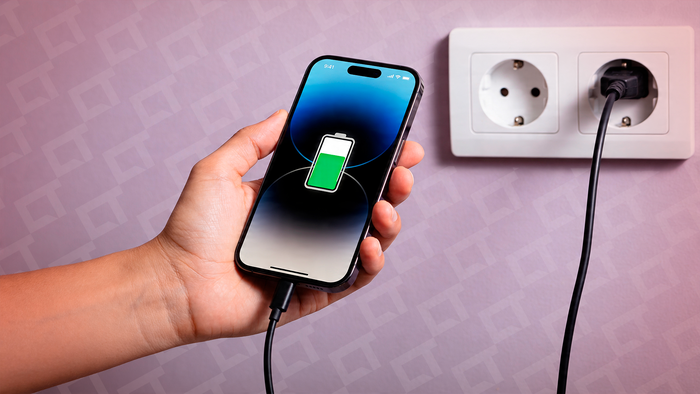
The persistent anxiety surrounding smartphone battery health often centers on a single, common habit: using the device while it is tethered to a wall outlet. Internet lore frequently suggests that this practice "destroys" the battery's chemistry or leads to catastrophic swelling. However, modern power management systems—the silent orchestrators of our digital lives—are designed to handle this exact scenario without compromising the hardware's integrity.
According to manufacturers like Samsung and various electrical engineering experts, the process is less a tug-of-war and more a managed distribution. When a phone is plugged in, the incoming current is split between powering the active system and replenishing the lithium-ion cells. If you are browsing the web, the battery fills slightly slower; if you are performing a resource-heavy task, the charge may even plateau, but the internal components remain protected by sophisticated safeguards.
Edson Watanabe, an electrical engineer at the Federal University of Rio de Janeiro (UFRJ), likens the battery to a water tank. The charger acts as a pump, while the user’s activity acts as a drain. As long as the pump is active, the system simply balances the flow. The result is a state of equilibrium where the primary "risk" is not a ruined device, but merely a longer wait for a full charge. In an era of increasingly complex hardware, the simplest explanation remains the most accurate: the machine is smarter than the myth.
With reporting from Canaltech.
Source · Canaltech