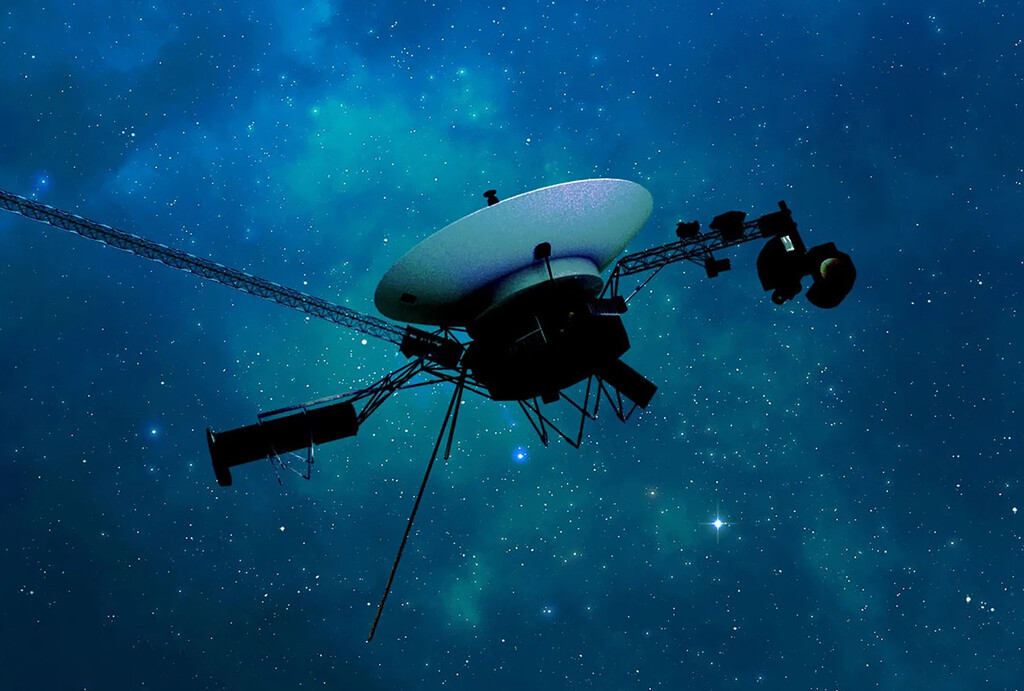
Voyager 1 is currently drifting some 15 billion miles from Earth, a distance so vast that even light-speed commands take nearly a day to arrive. Launched in 1977, the probe has long since transitioned from a planetary explorer to a lonely sentinel in interstellar space. But nearly half a century of operation has pushed its hardware to its physical limits, forcing NASA’s Jet Propulsion Laboratory to make increasingly difficult decisions about what remains of its dwindling power supply.
Unlike modern satellites that rely on solar arrays, Voyager 1 is powered by radioisotope thermoelectric generators (RTGs) fueled by decaying plutonium-238. As the heat source cools, the probe loses roughly four watts of power every year. To manage this decline, engineers have spent years systematically disabling heaters and non-essential systems. Recently, they took the more drastic step of turning off the Low-energy Charged Particles (LECP) instrument—a sensor that has spent decades measuring the electrons and ions streaming through the cosmos.
The decision to silence the LECP was not a response to a malfunction, but rather a pre-negotiated sacrifice. For years, science and engineering teams have maintained a prioritized list of which instruments to retire first to keep the probe’s communication and navigation systems operational. By dimming its own lights, Voyager 1 buys itself a few more years of relevance, continuing its slow, quiet transit into the deep dark of the galaxy.
With reporting from Xataka.
Source · Xataka