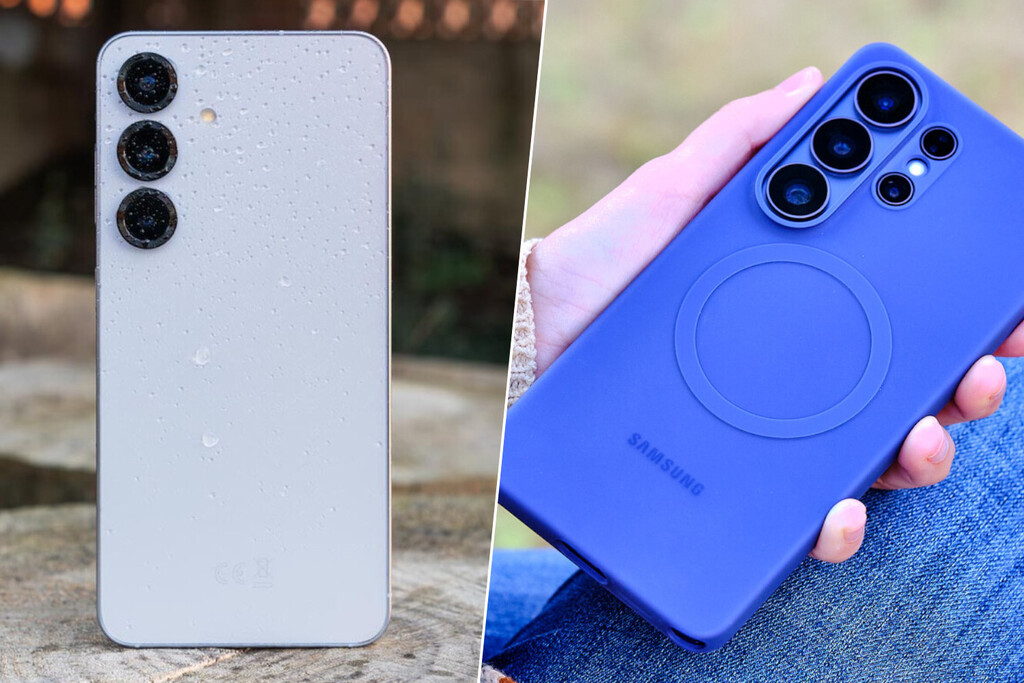
Samsung's recent product cycle reveals a brand leaning into the commoditization of high-end hardware. By 2026, features once reserved for the flagship S-series—specifically AMOLED panels and high-refresh-rate displays—have become the baseline for the company's more accessible offerings. The shift is not accidental. It reflects a deliberate recalibration of how the world's largest smartphone manufacturer by volume segments its portfolio, and what it expects consumers to value at each price tier.
At the entry-level, the Galaxy A17 exemplifies this democratization. Priced under €200, it pairs an AMOLED screen with a 90Hz refresh rate, providing a visual fluidity that was a luxury only a few years ago. The device also retains a microSD slot—a feature that has largely vanished from the premium market—positioning the entry-level tier as a refuge for users who prioritize local storage and physical flexibility over the sleek, sealed enclosures of the high-end. Moving into the mid-range, the Galaxy A26 and A36 offer more iterative refinements: the A26 introduces a 120Hz display and expanded RAM, while the A36 represents a more conservative evolution. Taken together, the lineup demonstrates Samsung's ability to maintain a dominant presence in the mid-market by ensuring that even its most affordable devices feel fundamentally contemporary.
The logic of feature migration
The pattern Samsung is executing has a long precedent in consumer electronics. Technologies debut at the top of a product stack, command a premium for a cycle or two, then migrate downward as manufacturing costs decline and competitors force the pace. OLED display panels followed this trajectory across the television market over the past decade, and smartphones have traced a similar arc. What distinguishes Samsung's position is its vertical integration in display manufacturing. As one of the world's leading producers of AMOLED panels, the company controls a critical input cost that rivals must purchase on the open market. That structural advantage makes it possible to push high-quality screens into sub-€200 devices without compressing margins as severely as a competitor relying on third-party supply.
The inclusion of 90Hz and 120Hz refresh rates across the A-series follows a parallel logic. Once the Android software ecosystem began optimizing animations and scrolling behavior for higher frame rates, the feature shifted from a differentiator to a baseline expectation. Consumers who have experienced 120Hz on a friend's phone or in a retail display are unlikely to accept 60Hz as adequate, regardless of price point. Samsung appears to have internalized this dynamic earlier than some competitors, treating refresh rate not as a premium feature to protect but as a hygiene factor to standardize.
Where differentiation moves next
If display quality and refresh rate no longer separate the A-series from the S-series, the question becomes what does. The answer, increasingly, lies in computational photography, on-device AI capabilities, build materials, and the software experience layer. Samsung's flagship devices have leaned into generative AI features, advanced night photography processing, and titanium or ceramic construction—none of which have yet appeared in the mid-range. This suggests that the company's segmentation strategy is migrating from hardware specifications toward a combination of materials science and software intelligence.
The retention of the microSD slot in the A17 is a small but telling detail. It signals that Samsung views its budget and mid-range customers as a distinct population with distinct needs, not simply as aspirational flagship buyers constrained by budget. In markets across Southeast Asia, Latin America, and Africa—where the A-series commands significant share—expandable storage, battery longevity, and repairability often matter more than the thinnest possible profile or the latest chipset.
The broader tension is structural. As the gap between budget and flagship narrows on visible specifications, Samsung must continuously invent new axes of differentiation to justify the price premium of its S-series and foldable lines. If it succeeds, the A-series becomes a powerful funnel that familiarizes millions of users with the Samsung ecosystem. If the differentiation falters, the company risks cannibalizing its own high-margin products. How Samsung navigates that tension—and whether AI-driven software features prove durable enough to anchor a price premium—remains the central strategic question for its mobile division.
With reporting from Xataka.
Source · Xataka