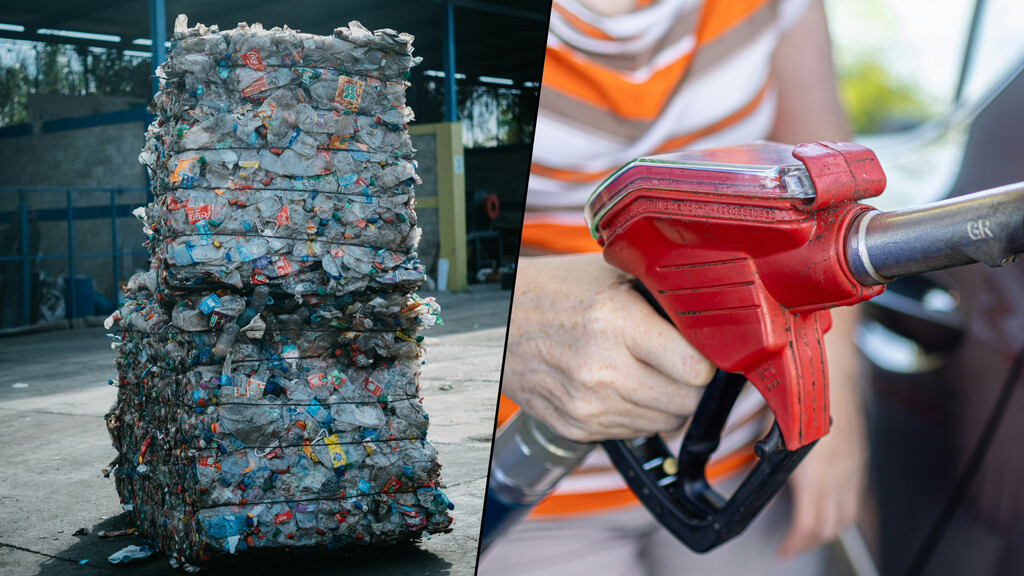
Polyethylene is the most widely produced plastic on the planet, present in grocery bags, food packaging, piping, and countless consumer goods. Its molecular structure — long, stable chains of carbon and hydrogen — is precisely what makes it so useful and so difficult to dispose of. Mechanical recycling can process some of it, but each cycle degrades the polymer's properties, limiting how many times the material can be reused. The vast majority of polyethylene waste ends up in landfills or the natural environment, where it persists for centuries.
A research team at the Oak Ridge National Laboratory (ORNL) has published a method in the Journal of the American Chemical Society that offers a different trajectory. By using a mixture of molten inorganic salts combined with aluminum chloride, the researchers found they could break polyethylene down into liquid hydrocarbons — specifically, components consistent with gasoline and diesel — without the extreme temperatures that have long made chemical recycling economically impractical.
Why pyrolysis has stalled as a solution
The dominant approach to converting plastic waste into fuel has been pyrolysis, a thermochemical process that decomposes polymers in the absence of oxygen. In principle, pyrolysis can reduce plastic to its hydrocarbon building blocks, yielding oils that can substitute for conventional fuels. In practice, the process demands temperatures above 450 degrees Celsius and often produces a broad, inconsistent mix of products — some useful, some not — that require further refining. The energy cost of sustaining those temperatures, combined with the downstream purification needed, has kept pyrolysis from achieving the economic viability necessary for widespread adoption.
Several startups and industrial players have attempted to commercialize pyrolysis-based plastic-to-fuel systems over the past decade, with mixed results. The challenge is not merely technical but thermodynamic: polyethylene's carbon-carbon bonds are strong, and breaking them selectively — producing specific fuel fractions rather than a chaotic soup of hydrocarbons — requires either brute-force heat or a cleverer chemical pathway.
The ORNL approach opts for the latter. Molten salts have been used in various industrial and research contexts, from nuclear reactor coolants to electrochemical processing, because of their thermal stability and ability to dissolve a wide range of compounds. In this application, the molten salt mixture serves a dual function: it acts as a solvent that disperses the polyethylene and as a medium that facilitates catalytic action by the aluminum chloride. The result is a reaction environment that can crack the polymer chains at significantly lower temperatures than conventional pyrolysis demands.
From laboratory chemistry to industrial question
The reduction in thermal requirements is the core of the method's potential significance. Lower operating temperatures translate directly into lower energy consumption, which in turn affects the economic equation that has historically undermined chemical recycling efforts. If the energy input drops enough, the process could cross the threshold where it becomes cheaper to convert waste polyethylene into fuel than to produce equivalent hydrocarbons from virgin crude oil — a tipping point that would fundamentally alter the incentive structure around plastic waste.
Several questions remain open, however. Laboratory demonstrations and industrial-scale operations occupy different worlds. Molten salt systems introduce their own engineering challenges: corrosion of reactor vessels, salt recovery and recycling, and the handling of aluminum chloride, which is reactive and moisture-sensitive. The selectivity of the product slate — how much of the output falls within the gasoline and diesel range versus less valuable fractions — will also determine commercial relevance.
There is a broader tension at play as well. Converting plastic into fuel solves a waste problem but perpetuates a combustion one. Environmental advocates have long argued that plastic-to-fuel technologies risk creating a market incentive to produce more plastic, not less, by giving waste streams an economic value that competes with reduction and reuse strategies. The counterargument is pragmatic: hundreds of millions of tons of polyethylene already exist in the waste stream, and any technology that diverts even a fraction from landfills or oceans addresses an immediate material reality.
The ORNL work does not resolve that tension, but it sharpens it. A lower-energy conversion pathway makes the economic case for plastic-derived fuel more plausible, which in turn makes the policy questions around it more urgent. Whether this chemistry scales, and under what regulatory framework it operates, will determine whether molten salts become a footnote in materials science or a meaningful part of the waste infrastructure.
With reporting from Xataka.
Source · Xataka