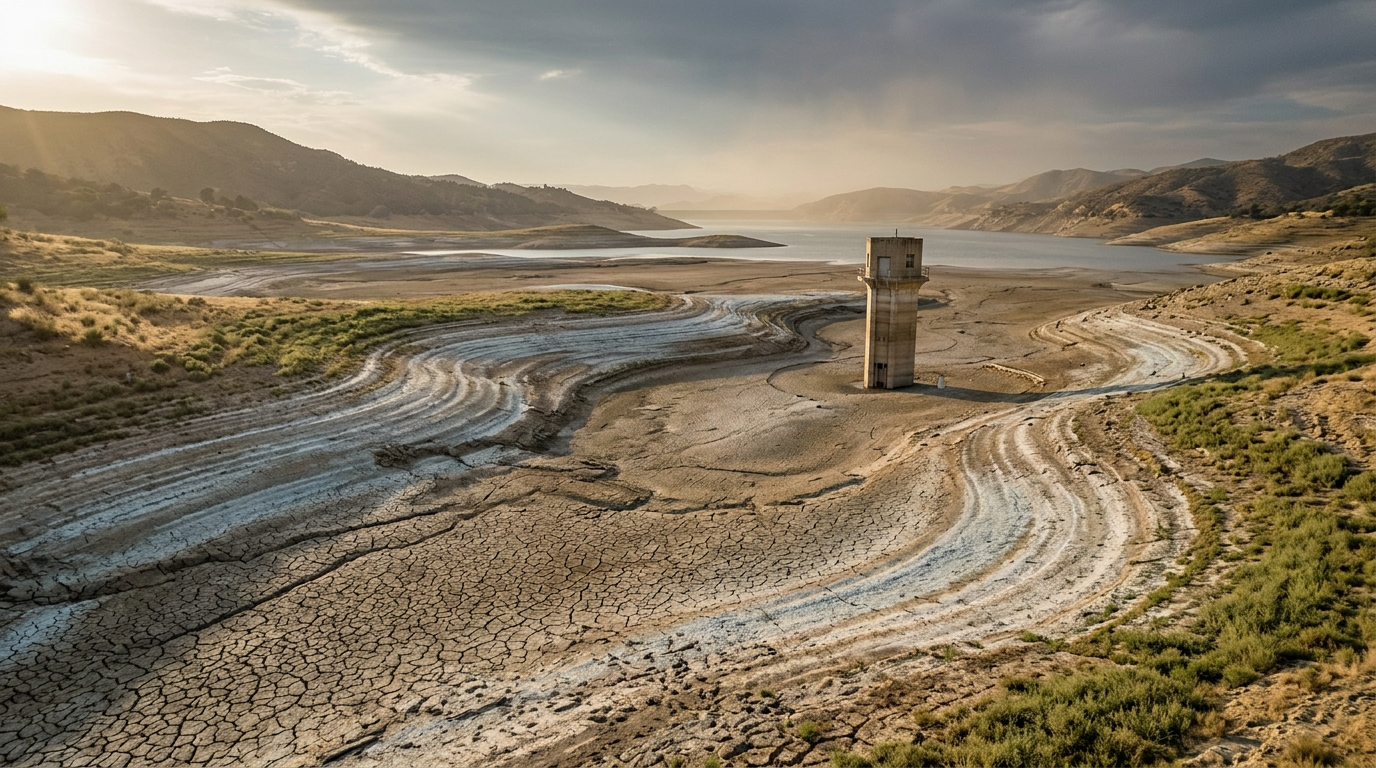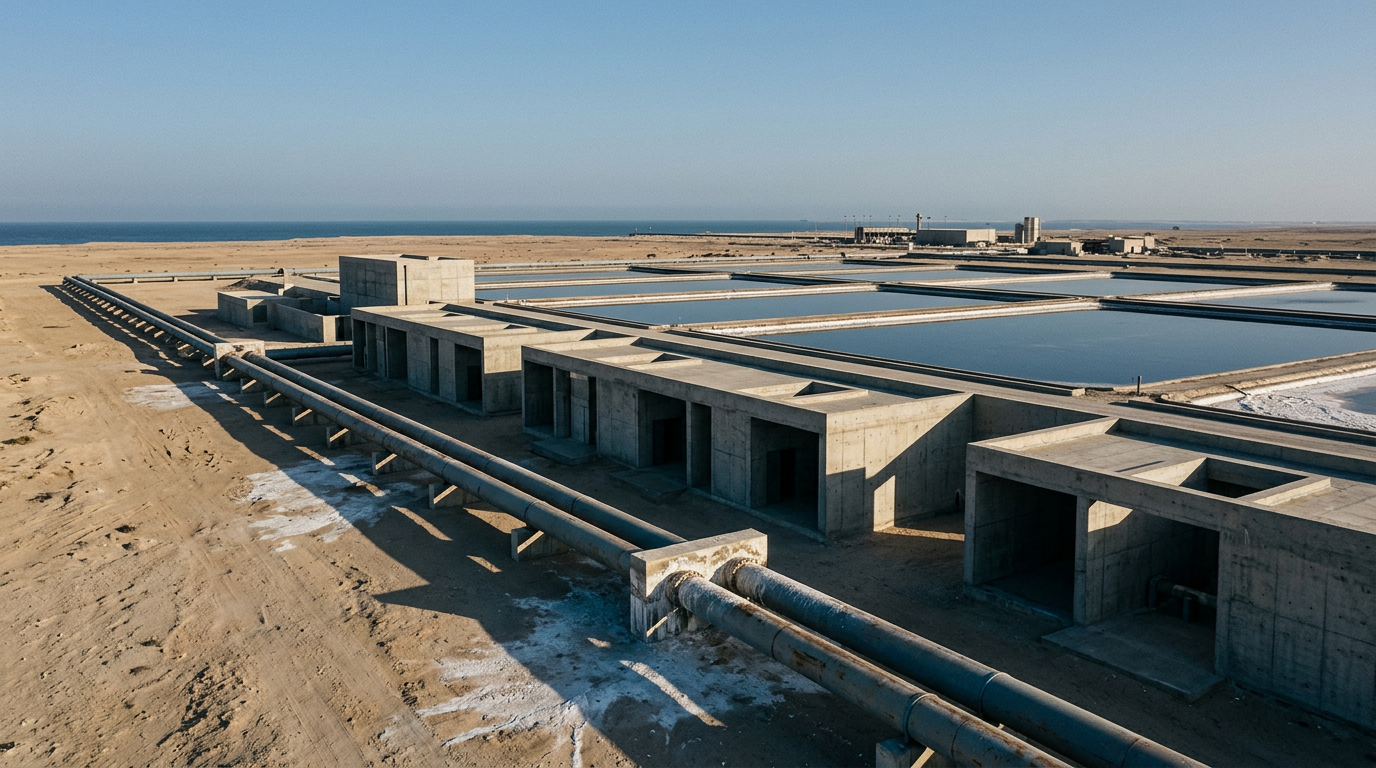
In the arid landscapes of the Middle East, the ability to turn saltwater into fresh water is no longer a technological novelty but a fundamental pillar of existence. For nations like Qatar, desalination provides 99% of all drinking water, a figure that underscores a profound dependency. According to reporting from MIT Technology Review Brasil, while desalinated water accounts for just 1% of global freshwater withdrawals, its concentration in specific regions tells a story of survival and engineered resilience. The Middle East, home to only 6% of the world's population, operates over a quarter of the globe's nearly 18,000 desalination facilities, making it the undisputed center of this water-making industry.
This intense regional reliance is transforming desalination from a mere water supply solution into a form of critical national infrastructure, as vital as the power grid or transportation networks. The technology is enabling megacities to thrive where nature intended otherwise and fueling industrial and agricultural ambitions. However, this progress comes at a significant cost. The escalating scale of desalination plants and their voracious appetite for energy create a complex dilemma, pitting the immediate need for water against long-term energy security and environmental sustainability. The story of desalination is thus a story of trade-offs, where solving the crisis of water scarcity risks intensifying the challenges of energy consumption and climate change.
A Technology Forged by Scarcity
The concentration of desalination technology in the Gulf Cooperation Council countries—Saudi Arabia, the UAE, Qatar, Bahrain, Kuwait, and Oman—is a direct consequence of a unique convergence of geography, demography, and economics. The Arabian Peninsula has no permanent rivers and faces some of the most extreme water scarcity on the planet. This natural constraint was manageable for smaller, nomadic populations but became an existential barrier to the rapid urbanization and economic diversification that began in the 20th century. Oil wealth provided the capital necessary to invest in what was then a prohibitively expensive technological fix: wresting fresh water from the sea.
Today, this technology is the lifeblood of the region. However, the application of desalination is not uniform globally. The source highlights a contrasting model in Brazil, where the technology serves a different purpose. In the country's semi-arid northeast, the federal government’s Programa Água Doce employs smaller, decentralized desalination systems not to support sprawling urban centers but to provide basic water security for isolated communities dealing with brackish groundwater. With over a thousand systems deployed, it is a model of localized resilience rather than centralized, industrial-scale production. This comparison illustrates that desalination is not a single solution but a versatile tool adapted to vastly different socioeconomic and environmental contexts.
The historical trajectory shows a clear pattern: where water is scarcest and financial resources are most abundant, desalination has become foundational. It is a testament to human ingenuity in overcoming environmental limits, but it also represents the creation of an entirely new, man-made water cycle dependent on capital, energy, and complex machinery. This artificial cycle is now as crucial to the region's stability as the natural water cycles are elsewhere.
The Economics of Scale and Energy
The modern era of desalination is defined by a relentless drive toward massive scale. According to data cited by the report, the average size of a desalination plant is now approximately ten times larger than it was just 15 years ago. This trend is exemplified by behemoth facilities like Saudi Arabia's Ras Al-Khair plant, which produces over a million cubic meters of fresh water daily—enough to supply millions of people in the capital, Riyadh. The logic behind this upscaling is rooted in economics: larger plants, particularly those using the prevalent technology of reverse osmosis, achieve greater efficiencies and lower the cost per cubic meter of water produced.
However, this efficiency in production comes with a colossal energy bill. The Ras Al-Khair facility alone has a power generation capacity of 2.4 gigawatts, comparable to a large nuclear power station. As the Middle East is projected to expand its desalination capacity by over 40% between 2024 and 2028, the energy implications are staggering. The International Energy Agency projects that the global growth of desalination could add 190 terawatt-hours to electricity demand by 2035—an amount equivalent to the annual consumption of about 60 million homes. This surge in demand presents a direct challenge to global decarbonization efforts, as much of the current energy powering these plants is derived from fossil fuels.
The mechanism of reverse osmosis, which uses high pressure to force water molecules through a semi-permeable membrane, is inherently electricity-intensive. While far more efficient than the older, thermal-based distillation methods, its energy footprint remains substantial. The pursuit of water security is therefore inextricably linked to energy security, creating a powerful feedback loop. As nations build more plants to quench their thirst, they must also secure vast new sources of power to run them, further entrenching their dependence on energy-intensive solutions.
From Solution to Strategic Asset
When a nation's water supply depends almost entirely on a handful of large industrial facilities, those facilities transcend their technical function to become strategic assets of the highest order. This designation carries with it a new set of vulnerabilities. The concentration of water production into a few mega-plants creates single points of failure that are susceptible to technical malfunction, natural disasters, or, in a region fraught with geopolitical tension, deliberate attack. The security of desalination plants is now a core component of national security planning for Gulf states.
This shift impacts a wide range of stakeholders. For governments, these facilities are instruments of state power, enabling population growth, industrial development—including for water-intensive data centers—and a reduced reliance on contentious transboundary water sources like shared rivers or aquifers. For the global engineering and construction industry, the projected $25 billion market for Middle Eastern desalination projects by 2028 represents a significant commercial opportunity. For citizens, the result is a reliable flow of tap water that makes modern life possible in an otherwise inhospitable climate. Yet, the immense subsidies required to keep water affordable mask the true, energy-laden cost of this manufactured resource.
The Unseen Costs and Open Questions
The most significant challenges ahead for desalination are not technical but environmental and systemic. The first is the immense energy footprint, which creates a direct conflict with climate goals. The key question is whether this new capacity can be powered by renewable energy. While theoretically possible, the scale is daunting. Powering a plant like Ras Al-Khair would require a vast dedicated solar or wind farm, adding another layer of complexity and cost to the infrastructure.
Another critical externality is the problem of brine. For every liter of fresh water produced, desalination creates a liter or more of highly concentrated saltwater, or brine. This waste product, often containing residual chemicals from the treatment process, is typically discharged back into the ocean. The long-term ecological impact of this on marine ecosystems, particularly in semi-enclosed bodies of water like the Persian Gulf where many plants are located, is a growing concern among scientists. This raises a fundamental question: is a technology that solves a freshwater crisis by potentially damaging the marine environment a truly sustainable solution? The future of desalination may depend on developing more effective and affordable methods for brine management and disposal.
As climate change continues to disrupt traditional rainfall patterns and deplete freshwater reserves worldwide, desalination will inevitably become a more common feature of our global water infrastructure. The core tension, however, remains unresolved. The technology offers a powerful solution to a pressing resource crisis but does so by intensifying demand on our energy systems and creating new environmental pressures. The ultimate challenge is not simply to build more plants, but to integrate them into a world striving for both resource security and ecological sustainability.
With reporting from MIT Tech Review Brasil
Source · MIT Tech Review Brasil