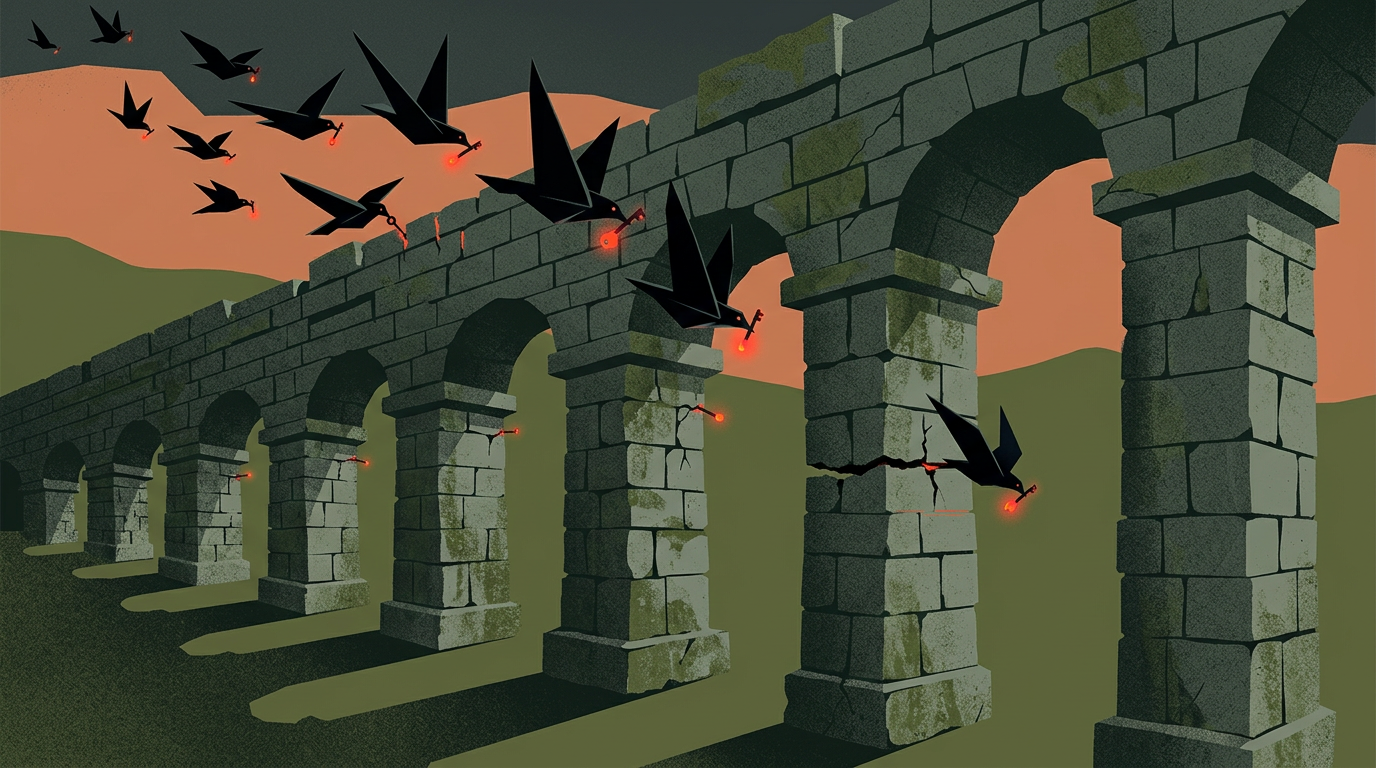
Anthropic recently announced that its new model, Claude Mythos Preview, can autonomously discover and weaponize software vulnerabilities — turning them into working exploits without expert guidance. The targets include operating systems and core internet infrastructure, areas where thousands of human developers had failed to identify the flaws. Anthropic is restricting the model's release to a limited number of companies rather than making it publicly available.
According to IEEE Spectrum reporting, the announcement has divided the security community. Some observers suspect Anthropic lacks the GPU capacity to run the model broadly and is using cybersecurity concerns as cover for a constrained rollout. Others see the decision as consistent with Anthropic's AI safety commitments. Beneath the debate over motives, however, lies a more consequential question: what happens when autonomous AI becomes a reliable finder of critical vulnerabilities in the software that underpins daily life — and how should developers and infrastructure operators respond?
The Shifting Baseline of AI-Driven Exploitation
The concept of shifting baseline syndrome — where gradual, incremental changes obscure the magnitude of a long-term transformation — applies directly to AI's role in cybersecurity. Even if the specific vulnerabilities surfaced by Mythos could theoretically have been found by models from a few months prior, the broader trajectory is unmistakable. Models from five years ago could not have done this. Each incremental step compounds, and the cumulative shift is substantial.
Finding vulnerabilities in source code is precisely the kind of pattern-recognition task at which large language models excel. The real analytical challenge is not whether AI would eventually reach this capability — that was broadly anticipated — but how the consequences distribute unevenly across different types of systems. IEEE Spectrum's analysis offers a useful taxonomy: some vulnerabilities are easy to find, verify, and patch automatically; others are easy to find but nearly impossible to patch. Cloud-hosted web applications built on standard software stacks can be updated quickly. But IoT appliances, industrial control systems, and embedded devices — systems that are rarely updated or structurally resistant to modification — present a fundamentally different problem. For these, the arrival of autonomous vulnerability discovery does not create a temporary gap between offense and defense. It risks creating a permanent one.
What Mythos Means for How Software Gets Built
The implications extend well beyond security operations into the practice of software engineering itself. If AI agents can continuously probe a real software stack, identifying exploits and distinguishing them from false positives, then the concept of "VulnOps" — vulnerability operations integrated into the development pipeline — becomes not a luxury but a baseline expectation. Automated, continuous testing against live environments could become as standard as unit testing is today.
Documentation, long treated as an afterthought in many development cultures, gains new strategic value. Well-documented codebases guide AI agents on vulnerability-hunting missions just as they guide human developers. Similarly, adherence to standard practices, tools, and libraries allows both AI and engineers to recognize patterns more effectively — even in a world where code can be generated and deployed on demand. The irony is notable: the most futuristic AI capabilities reinforce some of the most traditional software engineering disciplines. Meanwhile, systems that cannot be easily patched — cars, electrical transformers, medical devices — demand a different approach entirely. Wrapping them in restrictive, tightly controlled network layers and applying the principle of least privilege are not novel ideas, but they become existential necessities when autonomous exploit generation is a reality.
The defense will likely catch up for systems that are easy to patch and verify — phones, web browsers, major cloud services. But for the vast installed base of unpatchable infrastructure, the calculus is less reassuring. As AI models continue to advance in capability and autonomous operation, the question is not whether offense or defense ultimately prevails in the abstract. It is whether the systems most critical to daily life — and least amenable to rapid updates — can be insulated quickly enough from tools that are already learning to break them.
With reporting from IEEE Spectrum
Source · IEEE Spectrum