Anthropic, the artificial intelligence research company behind the Claude family of models, is reportedly in advanced discussions to acquire the developer tools startup Stainless for at least $300 million. According to a report from The Information citing a person familiar with the matter, the deal would bring the four-year-old infrastructure provider in-house. Stainless currently supplies software to a roster of leading model makers, including OpenAI and Google, designed to help developers, non-technical users, and AI agents access artificial intelligence models more efficiently.
The reported talks emerge during a transitional period for the generative AI sector, as the focus expands from raw model capabilities to the practical deployment of autonomous systems. Software that bridges the gap between complex models and end-user applications has seen a surge in demand, particularly as AI agents designed to automate multi-step tasks gain traction. If finalized, the acquisition would represent a significant consolidation play by a major foundation model developer, signaling that control over the developer experience is becoming as critical as the underlying neural networks themselves.
The vertical integration of developer tooling
The potential acquisition of Stainless highlights a strategic pivot among frontier AI labs toward vertical integration. Historically, companies like Anthropic, OpenAI—the Microsoft-backed AI lab behind ChatGPT—and Google have relied on a fragmented ecosystem of third-party startups to build the connective tissue between their application programming interfaces and enterprise developers. Stainless has operated as a neutral layer in this ecosystem, providing the necessary infrastructure to streamline model access across competing platforms. By bringing such a capability in-house, Anthropic would secure proprietary control over a critical chokepoint in the AI supply chain.
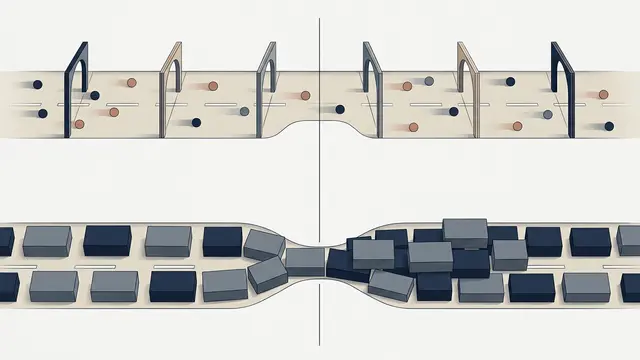
This shift reflects the maturing economics of foundation models. As the initial novelty of generative text and image creation settles into enterprise software development, the friction of integrating these models remains a primary bottleneck. Tooling startups that simplify this process have captured significant value by serving multiple model builders simultaneously. An acquisition by Anthropic would not only enhance its own developer ecosystem but also potentially disrupt the tooling pipeline for its rivals, given that Stainless currently serves both OpenAI and Google. The move suggests that leading labs are no longer content to simply provide the intelligence layer; they are increasingly moving to own the distribution and integration pathways.
Infrastructure demands of the agentic shift
Beyond the immediate competitive dynamics, the reported $300 million valuation for Stainless underscores the specific technical requirements of the next generation of AI applications. The industry is currently pivoting toward AI agents—systems capable of planning, reasoning, and executing complex workflows autonomously. Tools like Anthropic’s recently introduced Claude Code and open-source alternatives like OpenClaw require highly optimized, low-latency access to underlying models to function effectively. Traditional API gateways, designed for simple prompt-and-response interactions, often struggle to support the continuous, iterative loops required by agentic software.
Stainless’s software is specifically positioned to address these emerging infrastructure demands. By facilitating faster and more reliable model access for both human developers and automated agents, the startup provides the plumbing necessary for autonomous systems to operate at scale. The broader market context, which includes ongoing tensions over compute access and hardware partnerships—such as Cerebras' complex supply arrangements with OpenAI—further illustrates the intense pressure on infrastructure. As foundation models become increasingly commoditized, the ability to seamlessly deploy and manage agentic workflows is emerging as the primary differentiator for enterprise adoption.
Whether the acquisition materializes remains unconfirmed, but the reported negotiations provide a clear window into the strategic priorities of top-tier AI developers. As the race to deploy autonomous agents accelerates, the battleground is expanding from the training cluster to the developer console. The outcome of these talks will likely test how aggressively foundation model builders are willing to consolidate the surrounding software ecosystem to secure their platforms.
With reporting from The Information, Simon Willison
Source · The Information