On Friday evening, a shimmering capsule concluded a 700,000-mile odyssey with a splashdown in the Pacific Ocean, marking the successful end of the Artemis II mission. For the four astronauts on board, the descent off the coast of California was the final act in a journey that returned humans to deep space for the first time in over half a century. It was a technical performance of high precision, executed with a level of composure that masked the immense difficulty of lunar transit.
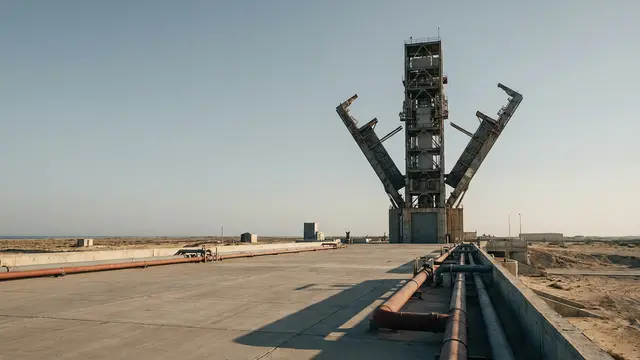
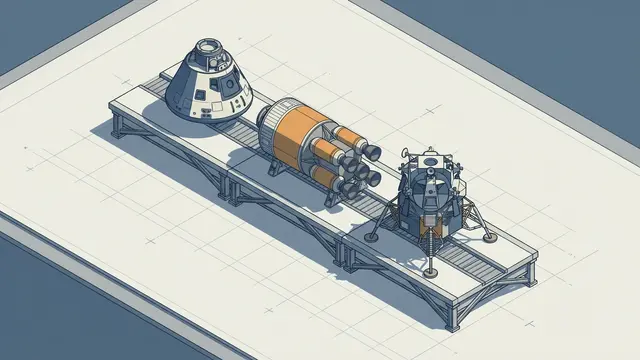
NASA's success is more than a singular milestone; it is a proof of concept for a new era of orbital logistics. By making the return to lunar orbit look relatively routine, the agency and its international partners have validated the core architecture of the Artemis program — the Space Launch System rocket, the Orion spacecraft, and the ground systems that tie them together. Yet the mission's conclusion shifts the conversation from the feat of arrival to the sustainability of presence. The hardware has proven it can survive the trip; now, the focus turns to the infrastructure required to stay.
From Apollo's shadow to Artemis's ledger
The last time astronauts traveled beyond low Earth orbit was December 1972, when Apollo 17 closed out an era defined by Cold War urgency and concentrated federal spending. The intervening decades saw NASA redirect its human spaceflight efforts toward the Space Shuttle and the International Space Station — programs that delivered enormous scientific value in low Earth orbit but left deep space exploration to robotic probes. Artemis II represents the institutional answer to a question that lingered for more than fifty years: whether the political will, industrial base, and technical knowledge still existed to send crews beyond the Van Allen belts.
The answer, evidently, is yes — but the context has changed. Apollo operated under a single-purpose mandate with peak funding that, adjusted for inflation, dwarfed current NASA budgets. Artemis, by contrast, must compete for resources within a broader portfolio that includes Earth science, planetary exploration, and commercial crew transportation. The program also relies on an international partnership model, with the European Space Agency supplying the Orion service module and other agencies contributing to the planned Lunar Gateway station. This distributed architecture spreads cost and risk, but it also introduces coordination complexity that Apollo never faced.
Artemis II was, by design, a crewed test flight — a circumlunar loop without a landing. Its purpose was to verify life-support systems, navigation, and communications in the deep space environment before committing crews to the lunar surface. In that narrow sense, the mission's clean execution removes a significant technical gate. The Orion capsule's heat shield, which must withstand re-entry speeds far greater than those experienced returning from the ISS, performed as intended. So did the crew interfaces and abort systems that would be critical in a contingency.
The harder math ahead
The next phase of Artemis demands capabilities that Friday's splashdown did not test. A crewed lunar landing requires a human landing system — a role assigned to vehicles under development by commercial partners — as well as the spacesuits, surface mobility hardware, and power systems needed to operate on the Moon itself. Each of these elements carries its own development timeline, budget pressure, and integration risk.
Beyond hardware, the program faces a scheduling puzzle. Cadence matters: long gaps between missions erode institutional knowledge, strain supplier bases, and weaken political support. Yet compressing timelines without adequate testing invites the kind of failure that could set the program back by years. NASA must thread a narrow path between momentum and prudence.
There is also the question of purpose. Apollo's rationale was geopolitical competition; Artemis's stated goals — sustained lunar presence, scientific return, preparation for eventual Mars missions — are broader but less politically galvanizing. Whether those objectives can sustain multi-decade funding through successive administrations and congressional cycles remains an open variable. The growing commercial space sector offers a partial hedge: if private companies find economic value in lunar resources or cislunar logistics, government programs gain allies whose incentives do not reset with election cycles.
As recovery teams secure the Orion spacecraft and engineers begin poring over mission data, the aerospace community confronts a familiar tension. The spectacular moment has passed. What remains is the slower, less cinematic work of turning a successful demonstration into a repeatable operation — and deciding whether the commitment matches the ambition.
With reporting from Ars Technica Space.
Source · Ars Technica Space