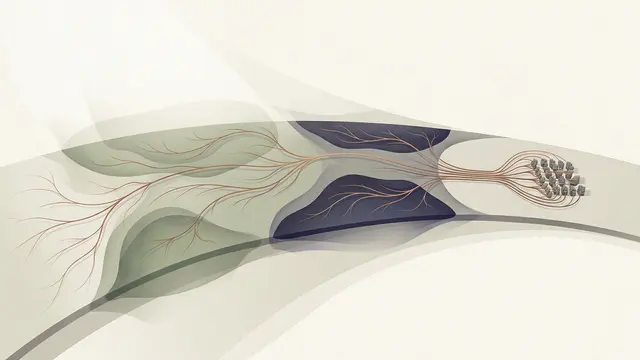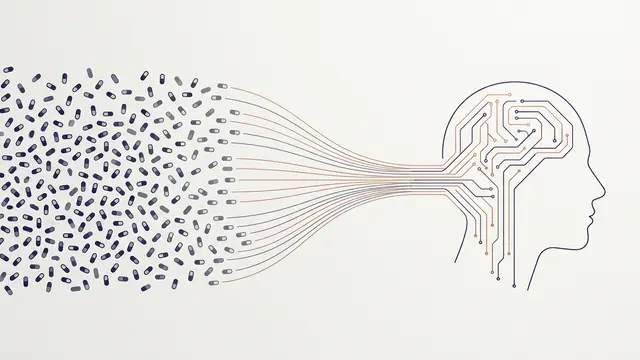
A newly described form of neuroplasticity may reshape how neuroscientists understand learning and memory. According to Quanta Magazine reporting, researchers have identified a mechanism that explains how the brain can rewire itself after just a single experience — a process that operates on longer timescales than the well-known principle that "neurons that fire together, wire together."
The finding challenges a foundational assumption in neuroscience. For decades, Hebbian learning — the idea that simultaneous neural firing strengthens synaptic connections — has served as the dominant framework for understanding how the brain encodes new information. The newly identified mechanism suggests that this framework, while valid, is incomplete. The brain appears to possess additional pathways for learning that do not depend on the tight temporal coincidence of neural activity, opening a broader window through which experience can leave its mark on neural architecture.
A Gap in the Hebbian Framework
Hebbian plasticity, first articulated by psychologist Donald Hebb in 1949, has been one of the most productive ideas in brain science. Its elegance lies in its simplicity: when two neurons activate at nearly the same moment, the synapse between them strengthens. This principle has been validated in countless experiments and forms the backbone of most computational models of learning, from artificial neural networks to theories of memory consolidation.
Yet Hebbian learning has always had a temporal limitation. It works best when neural events are tightly correlated in time — on the order of milliseconds. Many real-world learning experiences, however, unfold over seconds, minutes, or longer. A child touching a hot stove, a driver narrowly avoiding a collision, or a student grasping a concept in a single lecture — these are events where cause and effect, stimulus and response, may be separated by intervals that exceed the narrow window of classical synaptic plasticity. The new research, as described by Quanta Magazine, points to a mechanism that bridges this gap, allowing single experiences to trigger lasting neural rewiring even when the relevant signals are not perfectly synchronized.
Implications for Neuroscience and Beyond
If confirmed and elaborated by further research, this discovery could have significant implications across multiple domains. In basic neuroscience, it adds a new dimension to models of how memories form and stabilize. The existence of a plasticity mechanism that operates on longer timescales could help explain phenomena that have long puzzled researchers — such as one-trial learning, where animals or humans acquire lasting behavioral changes from a single event, or the way traumatic experiences can produce durable neural imprints without repeated exposure.
The potential downstream effects extend into clinical and applied fields as well. Understanding how the brain rewires after singular events could inform approaches to post-traumatic stress disorder, where a single traumatic episode can produce lasting changes in neural circuitry. It could also influence the design of educational strategies, rehabilitation protocols for brain injury, and even the architecture of artificial intelligence systems that aim to mimic biological learning. Current deep learning models rely heavily on Hebbian-inspired principles and typically require vast amounts of repeated training data; a biologically grounded mechanism for single-experience learning could point toward more efficient machine learning paradigms.
The broader significance of this work lies in its reminder that the brain's capacity for change is more varied and nuanced than any single principle can capture. The Hebbian framework has been extraordinarily useful, but neuroscience has periodically discovered that its most elegant models are approximations of a more complex reality. The identification of a new plasticity mechanism does not invalidate Hebbian learning — it contextualizes it within a richer landscape of neural adaptation.
As researchers continue to characterize this mechanism — its molecular underpinnings, its role across different brain regions, and its relationship to existing forms of plasticity — the question of how the brain balances rapid synaptic change with slower, experience-driven rewiring remains open. Whether this discovery ultimately reshapes clinical practice or computational theory, it underscores a persistent truth in neuroscience: the brain's repertoire for learning from the world is broader than any single framework has yet described.
With reporting from Quanta Magazine
Source · Quanta Magazine