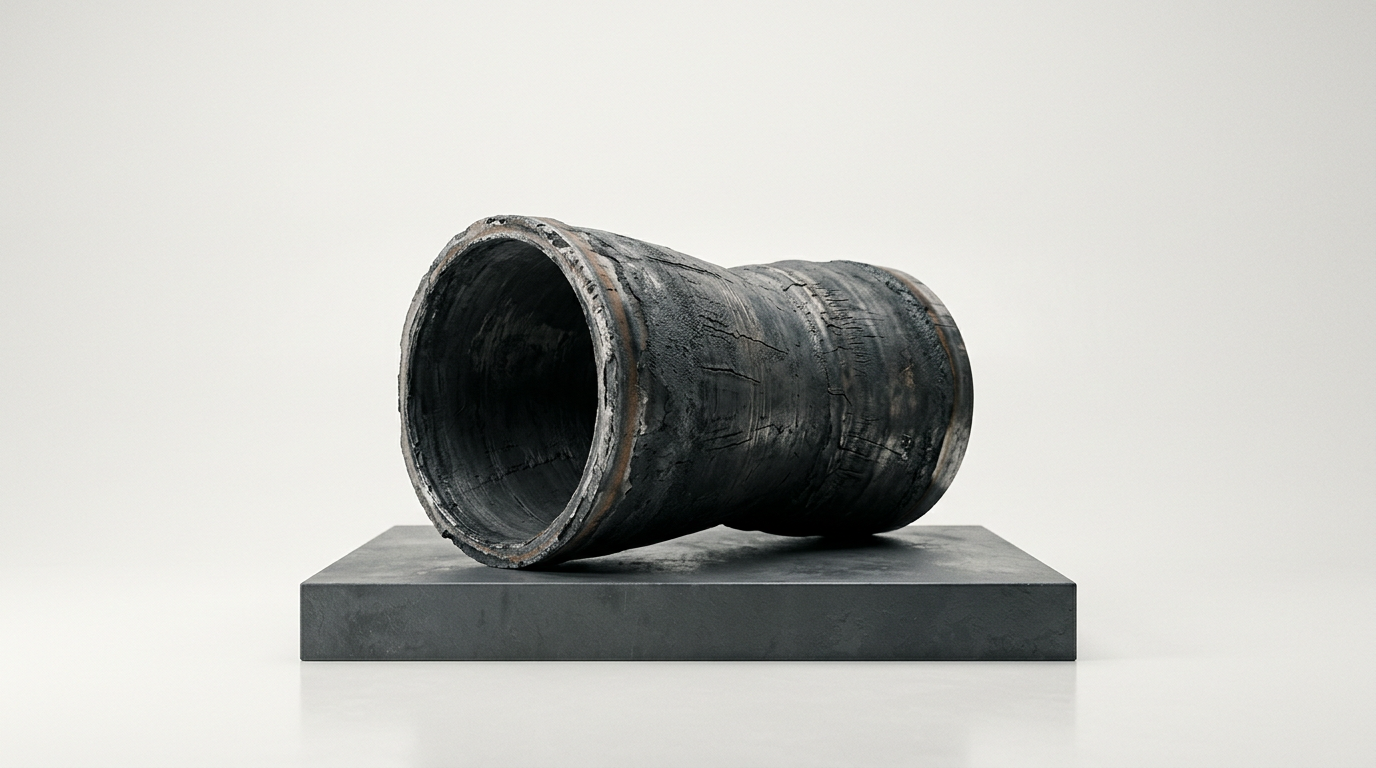
China is refining the delicate choreography required to sustain a permanent presence in low Earth orbit. The Qingzhou, a prototype cargo vessel, recently completed a series of rendezvous and proximity operations (RPO) tests, maneuvering in tandem with a satellite to demonstrate the precision needed for complex orbital logistics. The tests represent a milestone in Beijing's broader effort to reduce the per-kilogram cost of delivering supplies to the Tiangong space station — and, potentially, to other orbital platforms that may follow.
The mission marks a strategic pivot toward more economical space infrastructure. While high-profile crewed launches often capture the public imagination, the long-term viability of orbital platforms depends on the mundane efficiency of resupply. The Qingzhou is designed to fulfill this role, offering a lower-cost alternative to the more robust, multi-purpose vehicles currently in use for Tiangong logistics.
The economics of orbital resupply
Space stations are only as sustainable as their supply chains. The International Space Station has relied for decades on a rotating cast of cargo vehicles — from Russia's Progress freighters to commercial vessels developed by SpaceX and Northrop Grumman under NASA contracts. Each generation of vehicle has pushed unit costs lower and cadence higher, but the economic challenge remains formidable: every kilogram lofted to orbit carries a steep price, and stations consume consumables — food, water, replacement parts, experiment hardware — at a relentless pace.
China's current workhorse for Tiangong resupply is the Tianzhou cargo spacecraft, a capable but relatively heavy vehicle derived from the Tianhe core module's design lineage. Tianzhou missions fulfill their role, yet the vehicle was engineered for capacity and reliability rather than cost optimization. The Qingzhou program appears to represent a complementary approach: a lighter, potentially more frequently launched vessel tailored to routine deliveries rather than large, infrequent payloads. If the economics prove favorable, such a vehicle could allow mission planners to shift toward a more flexible, just-in-time logistics model rather than stockpiling supplies in bulk.
This mirrors a pattern visible elsewhere in the industry. The commercial cargo program that NASA established in the late 2000s demonstrated that opening resupply to competitive, purpose-built vehicles could drive down costs while increasing mission frequency. China appears to be internalizing a similar lesson, albeit through state-directed development rather than competitive procurement.
Autonomous maneuvering in a crowded orbit
The RPO tests carry significance beyond logistics economics. Rendezvous and proximity operations — the ability to approach, inspect, and dock with another object in orbit — are among the most demanding tasks in spaceflight. They require precise navigation, real-time sensor fusion, and autonomous decision-making, particularly when communication delays or operational tempo make ground-based control impractical.
As the density of human-made objects in low Earth orbit increases, autonomous maneuvering becomes not merely useful but essential. The same technology that enables a cargo vessel to dock with a space station can, in principle, support on-orbit servicing, debris inspection, or the assembly of larger structures from modular components. Several nations and commercial entities are pursuing these dual-use capabilities, and the Qingzhou tests place China squarely within that competitive field.
The geopolitical dimension is difficult to ignore. Autonomous RPO capability is inherently dual-use — relevant to both civil logistics and military space operations. Western defense analysts have long tracked Chinese advances in this domain, and each successful demonstration adds a data point to ongoing assessments of space security dynamics. That tension between civilian utility and strategic ambiguity is unlikely to resolve; it is, rather, a permanent feature of the orbital environment.
What remains to be seen is how quickly the Qingzhou program moves from prototype validation to operational deployment, and whether the vehicle's design choices — presumably favoring simplicity and cost over payload capacity — prove well-matched to Tiangong's actual resupply cadence. The successful RPO tests clear a necessary technical hurdle, but the distance between a maneuvering demonstration and a reliable logistics service is considerable. The more consequential question is whether China can translate this capability into a repeatable, economically disciplined supply chain — the kind of unglamorous infrastructure that determines whether a space station thrives or merely survives.
With reporting from SpaceNews.
Source · SpaceNews