Global efforts to preserve the world’s forests have reached a notable, if fragile, milestone. According to recent reporting from the World Resources Institute, 2025 saw the lowest rate of forest loss recorded in the last decade. This decline in land clearing, largely driven by shifts in agricultural policy and international supply chain regulations, suggests that coordinated governance and corporate accountability mechanisms are beginning to yield tangible results in the fight against habitat destruction.
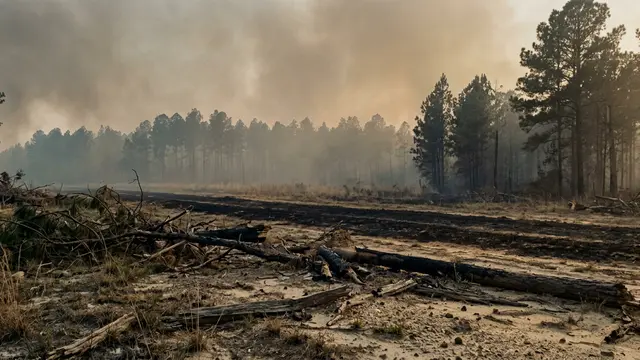
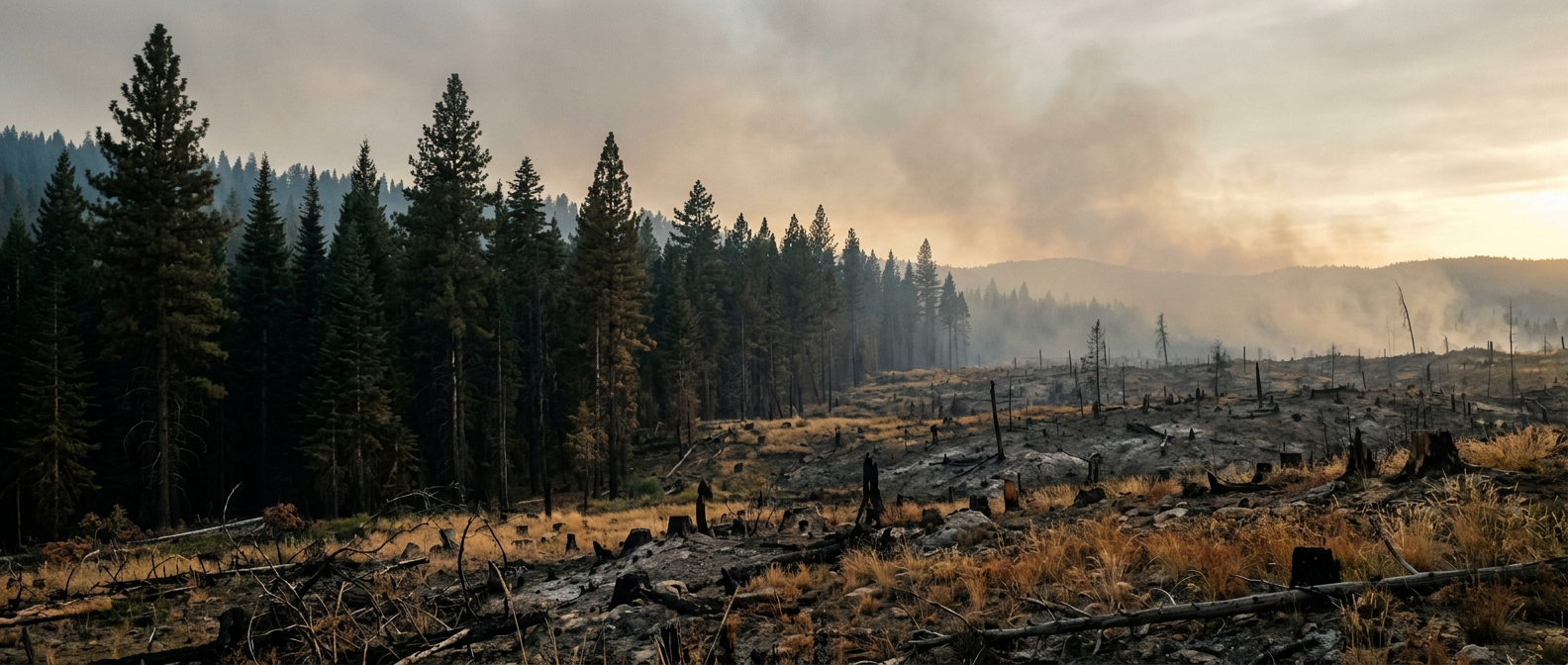
However, this positive trajectory is increasingly overshadowed by a growing systemic threat. While humans are cutting down fewer trees, the environment itself is incinerating them at an alarming rate. As global temperatures continue to rise, the increased frequency and intensity of wildfires have introduced a volatile variable that threatens to undermine years of conservation progress. The central challenge for environmental policy is no longer just the regulation of industrial expansion, but the management of a biosphere that is becoming fundamentally more flammable.
The Structural Shift in Land Use Governance
The reduction in deliberate deforestation represents a success for the regulatory frameworks that have gained momentum over the past several years. International initiatives, such as the European Union’s deforestation-free supply chain regulations and various corporate ESG (Environmental, Social, and Governance) mandates, have forced a recalibration of land-use practices in critical regions. By creating financial and legal friction for commodities linked to forest clearing, these policies have effectively raised the cost of land conversion, making traditional slash-and-burn expansion models less viable for large-scale agricultural players.
This structural change underscores the efficacy of supply-side interventions when they are backed by rigorous tracking and enforcement. When the market for goods produced on deforested land shrinks, the economic rationale for clearing that land evaporates. Yet, this success is largely confined to the realm of human agency. It assumes a degree of stability in the landscape that is increasingly absent. The policy frameworks currently in place are designed to curb intentional activity, but they remain ill-equipped to handle the stochastic, widespread destruction caused by climate-driven events.
The Mechanism of Climate-Induced Volatility
To understand why wildfires are becoming a more significant factor than industrial clearing, one must look at the feedback loops inherent in the climate system. As atmospheric carbon concentrations rise, the resulting warming creates drier, more combustible conditions in forests globally. This is not merely a localized phenomenon but a systemic one. When forests dry out, they lose their resilience, making them susceptible to ignition from even minor sources. Once a fire begins, the dry conditions ensure that it spreads with greater speed and intensity than historical norms would suggest.
This creates an analytical paradox for climate strategy. If the primary goal of forest conservation is carbon sequestration—keeping carbon locked in biomass—then the mechanism of loss is, in some ways, secondary to the outcome. Whether a forest is cleared for soy production or consumed by a wildfire, the carbon remains released into the atmosphere. The difference lies in the predictability. Industrial deforestation is a linear, manageable risk that can be addressed through regulation. Wildfires, however, are non-linear and often uncontrollable, representing a form of ecological failure that escapes the reach of traditional land-use policy.
Stakeholder Implications and Regulatory Tensions
The implications of this shift are profound for both policymakers and the private sector. For regulators, the focus must expand beyond simple metrics of land clearing to include forest resilience and fire management infrastructure. This requires a shift in funding priorities, moving from monitoring deforestation to investing in early-detection technology, forest thinning, and fire-break infrastructure. For the private sector, the risk profile of land-based assets is changing. Investors who once focused on the risk of being associated with illegal deforestation must now account for the risk of their assets quite literally going up in smoke.
Furthermore, the divergence between human-led and climate-led forest loss complicates the global carbon accounting system. Many countries have relied on the preservation of forests to meet their Nationally Determined Contributions (NDCs) under international climate agreements. If those forests are lost to fire, the accounting models must be adjusted to reflect that the carbon sink is no longer reliable. This creates an urgent tension between the need for immediate climate action and the reality that some of the most effective carbon sequestration tools are becoming increasingly fragile.
The Outlook for Ecological Resilience
The uncertainty surrounding future wildfire patterns makes long-term climate planning exceptionally difficult. While we can forecast the economic impacts of agricultural regulations with reasonable accuracy, the trajectory of fire-driven loss remains highly sensitive to temperature fluctuations and precipitation patterns that are notoriously difficult to predict on a global scale. This leaves a significant gap in our understanding of how forest ecosystems will adapt, or fail to adapt, to a warming planet.
Looking ahead, the focus must shift toward creating more resilient landscapes. This involves a fundamental rethinking of how we value standing forests, moving beyond simple preservation toward active management and restoration. The question remains whether the global community can pivot from a defensive posture, focused solely on stopping the axes and chainsaws, to a more proactive stance that addresses the underlying climatic conditions driving the current fire crisis. If we fail to address the latter, the hard-won gains in stopping deforestation may prove to be a temporary victory against a much larger, more systemic tide.
As the world continues to navigate the complex interplay between human economic activity and the physical limits of the planet, the divergence between these two trends serves as a reminder that policy success in one area does not guarantee immunity from broader environmental shifts. The challenge of the coming decade will be to integrate these disparate risks into a cohesive, global strategy that acknowledges the limits of regulation in the face of a changing climate.
With reporting from The New York Times
Source · The New York Times — Science