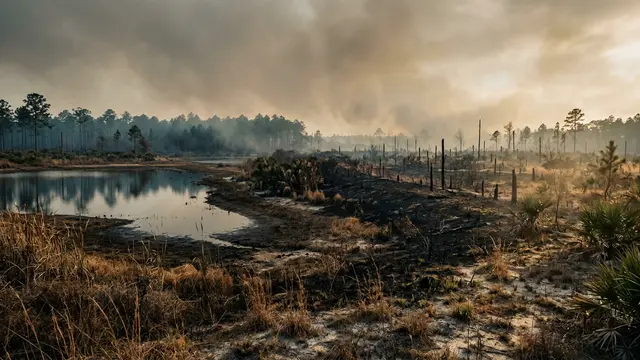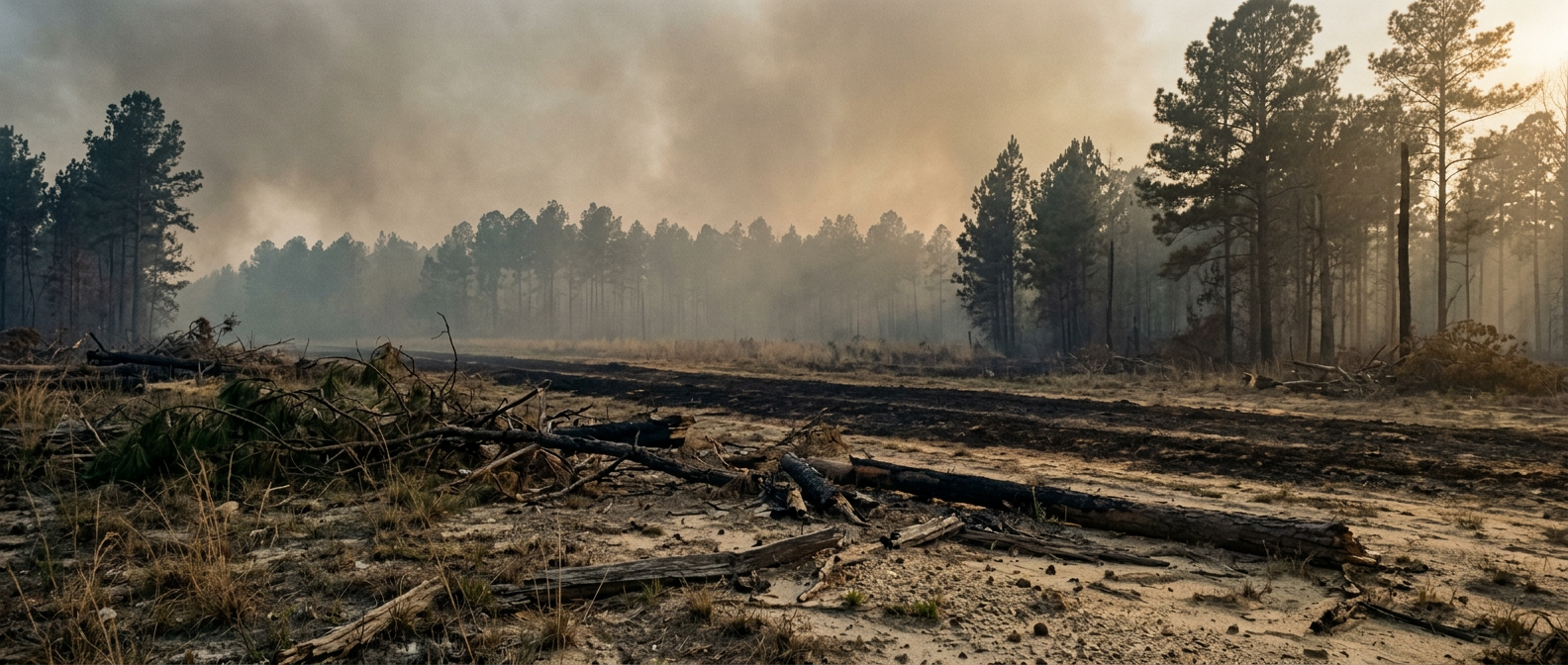
In April 2026, two significant wildland fires in southern Georgia—the Pineland Road and Highway 82 blazes—consumed over 50,000 acres, marking a devastating chapter in the state's environmental history. According to reporting from NASA Earth Observatory, these fires resulted in the loss of more than 120 homes, an unprecedented toll for a wildfire event in Georgia. The fires were initially sparked by human activity—a welding accident and a mylar balloon striking power lines—but their rapid escalation was dictated by a confluence of environmental conditions that have become increasingly common in the U.S. Southeast.
These events serve as a sobering case study on the intersection of climate volatility, land management, and infrastructure vulnerability. While the immediate triggers were accidental, the scale of the destruction suggests that the region’s historical resilience to fire is failing under the pressure of prolonged drought and the lingering physical remnants of past extreme weather events. The situation in Georgia is not an isolated anomaly but rather a manifestation of a structural shift in how landscapes behave when environmental stressors overlap.
The Compounding Effect of Legacy Debris
The severity of the Georgia fires cannot be attributed solely to the immediate drought conditions, though the lack of rainfall certainly set the stage for ignition. A critical, often overlooked factor in this disaster was the presence of significant forest debris left behind by Hurricane Helene, which struck the region in September 2024. This debris acted as a massive, ready-to-burn fuel load, drastically increasing the intensity and spread rate of the fires once they were ignited. In forest management, the accumulation of such material is a known hazard, yet the logistics of clearing vast swaths of storm-damaged timber often outpace the resources of local and state agencies.
This dynamic creates a feedback loop of vulnerability. When extreme weather events like hurricanes deposit millions of tons of woody material across a landscape, they fundamentally alter the fire regime of that area for years to come. The structural challenge for regulators and forestry commissions is that the window for mitigating these hazards is narrow. Without aggressive debris management programs in the aftermath of major storms, the landscape remains primed for disaster. The Georgia fires demonstrate that the period of risk following a hurricane is not merely the immediate weeks of flooding and wind, but a multi-year window of heightened fire susceptibility.
Mechanisms of Modern Fire Escalation
The mechanisms driving these fires reflect a modern reality where human infrastructure and natural ecosystems are increasingly intertwined. In the case of the Highway 82 and Pineland Road fires, the ignition sources were mundane—a welding spark and a balloon—but the environment into which these sparks were introduced was anything but normal. The combination of parched vegetation and high wind speeds created a scenario where small, localized ignition events rapidly scaled into landscape-level disasters. This is the hallmark of the "new normal" in wildfire management: the threshold for a catastrophic event has been lowered by persistent, long-term environmental drying.
Furthermore, the reliance on satellite monitoring tools, such as NASA’s FIRMS and the Fire Event Explorer, underscores how essential data-driven observation has become in managing these incidents. These tools allow for real-time tracking of fire fronts, but they also highlight the limitations of current suppression strategies. When fires move with the speed observed in Georgia, the ability of ground crews to intervene is severely hampered. The reliance on heavy machinery and aerial support is necessary, but these are reactive measures. The core challenge remains the structural inability to manage the landscape before the fire begins, despite the availability of sophisticated monitoring technology.
Stakeholder Tensions and Regulatory Challenges
The implications of these fires extend far beyond the immediate loss of property in Brantley and Clinch counties. For residents and insurers, the event signals a reassessment of risk in areas previously considered lower-priority for wildfire mitigation. Insurance providers, already grappling with climate-related losses in the American West, are now forced to confront the reality that the Southeast is becoming a high-risk zone. This shift will likely lead to increased premiums and, potentially, a withdrawal of coverage in regions where the combination of drought and storm-damaged forests makes fire risk unmanageable.
For regulators and policymakers, the pressure is mounting to integrate wildfire mitigation into broader climate adaptation strategies. The current division between disaster relief—often focused on the immediate aftermath of a hurricane—and fire management is becoming untenable. A more holistic approach is required, one that recognizes the long-term fire risks created by storm damage. This involves not only better forest management but also stricter zoning and infrastructure hardening in areas where the wildland-urban interface is expanding. The cost of proactive debris removal is high, but as the Georgia experience shows, the cost of inaction is significantly higher.
The Outlook for Regional Climate Resilience
As the region recovers, the lingering question is whether the lessons of these fires will lead to a fundamental change in land management practices. The reliance on extreme weather events to clear forests is a dangerous gamble that the current climate trajectory makes increasingly costly. While heavy rains eventually provided some relief to the efforts of firefighting personnel, the underlying drought conditions persist, and the structural risks remain embedded in the landscape.
Looking ahead, the focus must shift toward long-term landscape resilience. This includes investing in the capacity to manage forest health in the wake of major storms and improving the precision of fire-risk modeling at the local level. The events in Georgia serve as a reminder that the environment is a dynamic system where the impact of one disaster often acts as a catalyst for the next. The ability of communities to adapt will depend on their capacity to anticipate these cascading effects before the next spark is struck.
As the intersection of climate change and land use continues to evolve, the challenge of protecting communities from wildfire will require a shift from reactive suppression to proactive, systemic risk reduction. The question of how to balance economic activity, residential expansion, and forest health remains open, demanding a level of coordination that transcends current jurisdictional boundaries. With reporting from NASA Breaking News
Source · NASA Breaking News