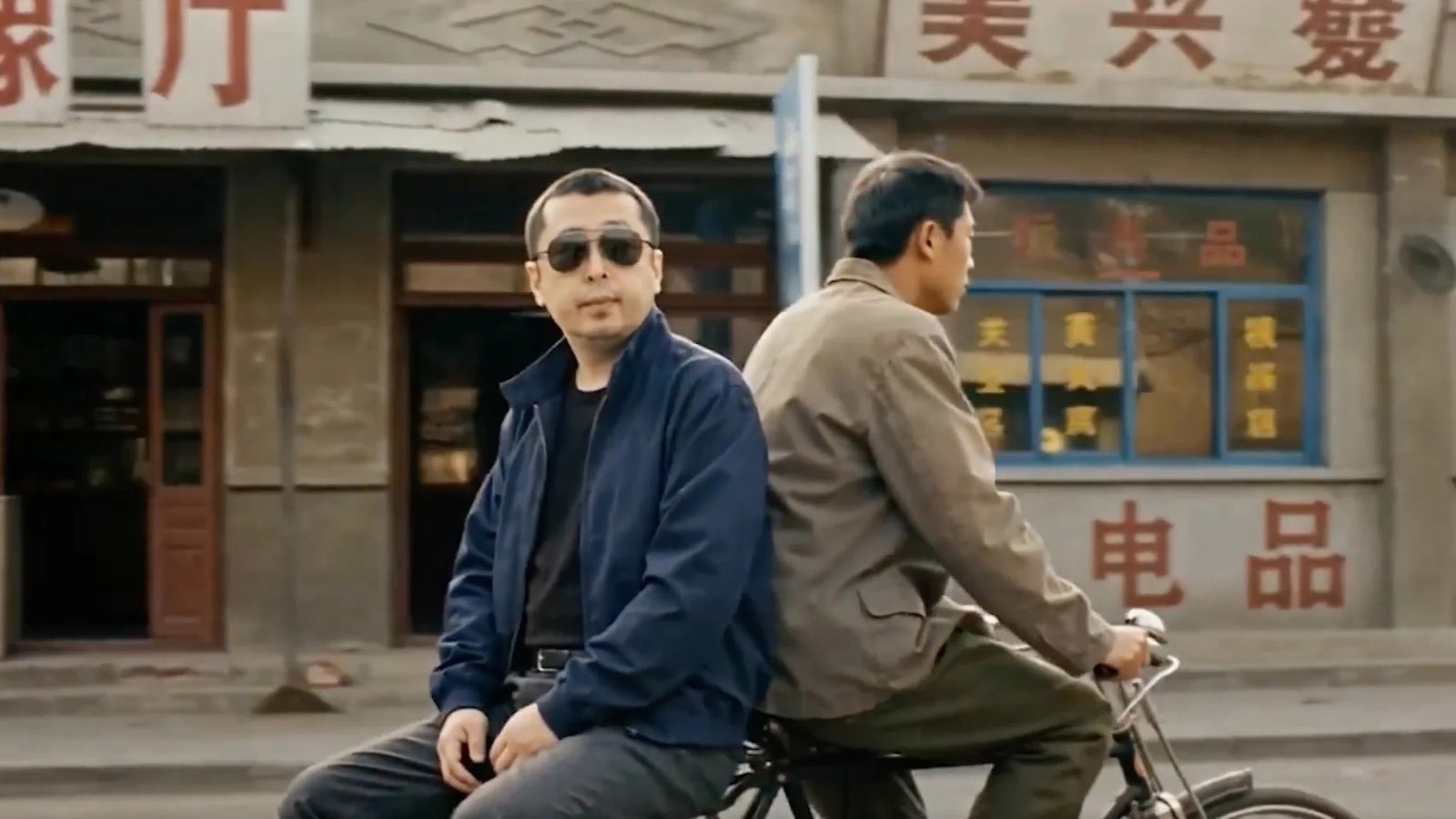
Jia Zhang-Ke, the preeminent chronicler of China’s rapid social transformation, recently released a video on Weibo that functions as a digital hall of mirrors. Using generative AI, the director inserted his younger and present-day selves into the frames of his own films, creating a synthetic dialogue across time. For an auteur whose work has long been a bastion of gritty realism, the transition to AI-generated imagery suggests a new, perhaps uneasy, chapter in his career.
The move has sparked debate over the compatibility of art-house sensibilities with emerging technology. Jia himself remains unperturbed, arguing that the focus should remain on human agency rather than the threat of replacement. “I am not worried about whether technology will ‘replace’ cinema,” he wrote, adding that what truly matters is how the tools are used. Yet, as scholar Michael Berry observes in the *Los Angeles Review of Books*, there is a sharp irony in a director known for interrogating labor rights and environmental devastation “going all in” on a technology often criticized for its own opaque labor practices and energy demands.
While the broader cinematic world continues to focus on preservation—notably with Cinema Guild’s recent acquisition of restored films by Portuguese masters António Reis and Margarida Cordeiro—Jia’s gaze is fixed on the frontier. His career has always been an interrogation of the "uncanny" shifts in Chinese society. As the nation asserts its dominance in the global AI race, Jia’s experiment serves as a microcosm of a larger cultural reckoning, suggesting that the future of cinema may lie in the auteur’s ability to inhabit the machine rather than resist it.
With reporting from Criterion Daily.
Source · Criterion Daily