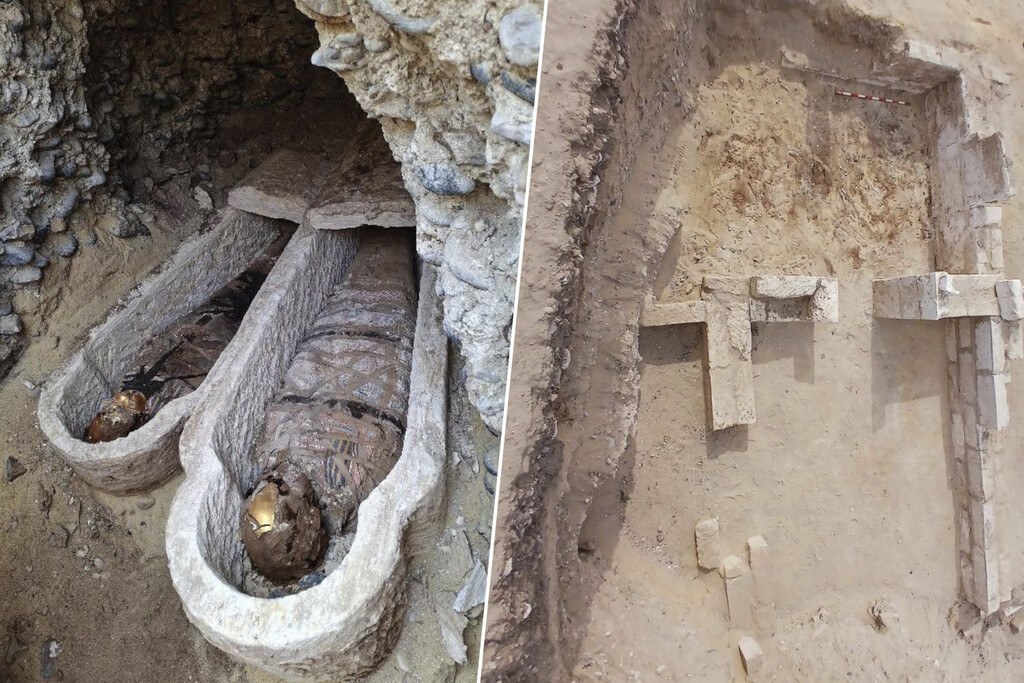
The soil of Egypt remains one of history’s most reliable archives. In Al-Bahansa, nearly 200 kilometers from Cairo, a Spanish-Egyptian archaeological team led by Maite Mascort and Esther Ponce has uncovered a striking artifact within a Roman-era necropolis: a papyrus fragment of Homer’s *Iliad*. Found tucked away with a mummy, the scroll serves as a reminder that even 2,000 years ago, the epic poem was the definitive cultural anchor of the Mediterranean.
The site, known in antiquity as Oxyrhynchus, has long been famous for its vast deposits of papyri, but this find provides a more intimate glimpse into the values of the deceased. Despite the damage wrought by centuries of grave robbers, the mission successfully excavated sectors of the necropolis dating back to the Ptolemaic and Roman periods. Alongside the literary fragment, researchers recovered traditional funerary offerings, including amulets and jars containing ashes, suggesting a blending of local Egyptian custom and Greek intellectual heritage.
To find the *Iliad* in a tomb is to find the ancient world’s equivalent of a universal standard. For the Roman-era inhabitants of Minia, Homer’s verses were more than mere literature; they were a badge of Hellenistic identity and a source of moral instruction. That a mourner—or the deceased themselves—chose to carry these specific lines into the afterlife speaks to the poem's unmatched status as the "bestseller" of its epoch, a text deemed essential even beyond the veil of death.
With reporting from Xataka.
Source · Xataka


/s3/static.nrc.nl/wp-content/uploads/2026/04/20172544/200426VER_2033162636_pavel-1.jpg)