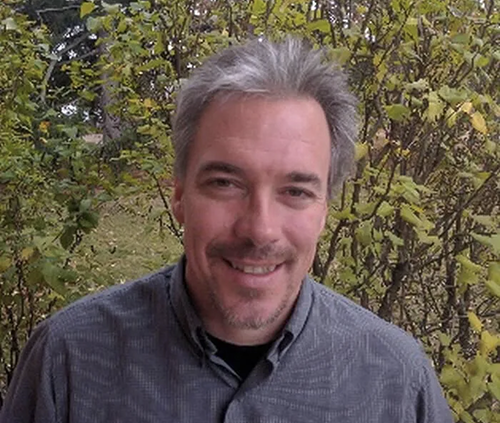
Louis deRosset, a prominent figure in contemporary metaphysics and the philosophy of language, is set to join the University of Notre Dame's Department of Philosophy. Currently a professor at the University of Vermont, deRosset will transition to his new role in South Bend this fall, marking a notable addition to one of the most established philosophy programs in the United States.
DeRosset's work primarily interrogates the structural foundations of reality — a field often referred to as "grounding." His research explores how certain facts or entities are built from, or depend upon, more fundamental ones. This analytical pursuit seeks to map the hierarchy of existence, providing a logical framework for understanding how complex systems emerge from basic principles. He is perhaps best known for his book Fundamental Things: Theory and Applications of Grounding, which serves as a cornerstone for modern discussions on metaphysical priority.
Grounding and Its Place in Contemporary Philosophy
The concept of grounding has become one of the most actively debated topics in analytic metaphysics over the past two decades. At its core, grounding asks a deceptively simple question: what makes what the case? When philosophers say that mental states are grounded in physical states, or that moral facts are grounded in natural facts, they are making claims about a distinctive kind of metaphysical dependence — one that is neither causal nor merely logical, but structural. The project attempts to articulate the architecture of reality itself, distinguishing what is fundamental from what is derivative.
DeRosset's contributions to this field have helped sharpen the formal tools available for such analysis. His work sits at the intersection of metaphysics and philosophical logic, drawing on rigorous formal methods to clarify what grounding claims actually commit their proponents to. In a discipline where terminological imprecision can generate decades of unproductive disagreement, this kind of methodological care carries considerable weight. Beyond metaphysics, his contributions to the philosophy of logic and language continue to influence how scholars parse the relationship between thought, expression, and the world.
The move to Notre Dame places deRosset within a department that has long been regarded as a center of gravity for analytic philosophy, particularly in metaphysics, philosophy of religion, and philosophical logic. Notre Dame's philosophy program has historically attracted scholars working on questions about fundamentality, modality, and the nature of abstract objects — themes that align closely with deRosset's research agenda. The department's strength in these areas has made it a natural gathering point for philosophers engaged in foundational inquiry.
What a Hire Signals About Institutional Direction
Faculty moves in philosophy departments rarely generate the kind of attention that executive appointments do in business or technology. Yet within the discipline, a hire of this profile carries signal value. It suggests that Notre Dame intends to deepen its investment in formal metaphysics and the philosophy of grounding at a time when some departments have shifted resources toward ethics, political philosophy, or interdisciplinary programs tied to artificial intelligence and cognitive science.
The University of Vermont, for its part, loses a senior figure whose presence helped anchor its own metaphysics offerings. The broader pattern — of well-resourced private universities attracting established scholars from public institutions — is familiar across the American academy and not unique to philosophy. It reflects longstanding asymmetries in endowment funding, teaching loads, and research support that shape the geography of academic talent.
For the field of grounding itself, the appointment may matter less for any single research outcome than for the institutional legitimacy it confers. When a major department recruits specifically in a subfield, it reinforces that subfield's standing within the broader discipline. Grounding has its skeptics — philosophers who question whether it constitutes a genuinely distinct metaphysical relation or merely repackages older notions of reduction and supervenience. The continued institutional investment in scholars who defend and refine the concept ensures that the debate remains live rather than settled by attrition.
Whether the move reshapes the intellectual center of gravity in analytic metaphysics or simply reinforces existing concentrations of expertise is a question that will unfold over years, not semesters. What is clear is that the appointment reflects a deliberate bet — by both deRosset and Notre Dame — on the continued vitality of foundational metaphysical inquiry at a moment when philosophy departments face persistent pressure to justify their relevance in instrumental terms.
With reporting from Daily Nous.
Source · Daily Nous