Even as the Orion spacecraft concludes its latest mission with a scheduled splashdown off the coast of San Diego, NASA is already recalibrating the path forward for its flagship human exploration program. The agency is finalizing the mission profile for Artemis III, a flight that has undergone a significant strategic shift. Originally envisioned as the mission that would return American astronauts to the lunar surface for the first time since Apollo 17 in 1972, Artemis III is now being redesigned as an Earth-orbit mission — a move intended to reduce technical risk before attempting a crewed landing on the Moon.
The decision defers the lunar landing to Artemis IV and inserts an additional proving flight into the program's sequence. Senior-level discussions are underway to determine the specific orbital parameters and test objectives for the revised mission.
Incrementalism as strategy
The pivot reflects a pattern that has defined the Artemis program since its inception. Artemis I, an uncrewed test of the Space Launch System and Orion capsule, preceded Artemis II, which carried astronauts on a lunar flyby without entering orbit. Each step was designed to validate hardware and operations before adding complexity. Redirecting Artemis III into Earth orbit extends that logic by one additional rung.
The rationale centers on what NASA calls "buying down risk" — subjecting integrated systems to flight conditions that approximate the eventual mission without committing to the full hazard profile of a lunar descent. A high-altitude Earth-orbit flight allows engineers to test rendezvous procedures, life-support endurance, and communication protocols in an environment where abort options remain comparatively accessible. The approach echoes the Gemini program of the 1960s, which methodically tested docking, spacewalking, and long-duration flight in Earth orbit before Apollo attempted the Moon.
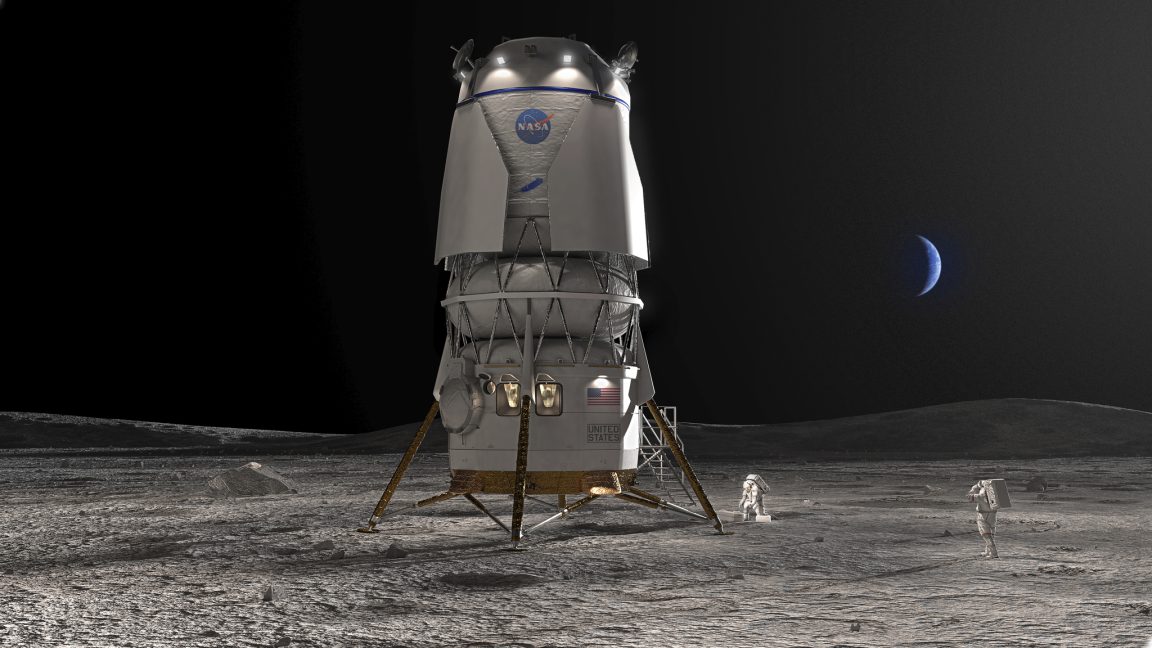
At the center of the scheduling calculus is the Human Landing System, the vehicle that will carry astronauts from lunar orbit to the surface. The development timeline for this hardware — contracted to SpaceX, which is adapting its Starship vehicle for the role — has been a persistent variable in Artemis planning. Integrating a novel landing system with the SLS-Orion architecture introduces interface risks that are difficult to retire on paper alone. An orbital shakedown flight offers a venue to stress-test at least some of those integration points before the stakes rise to include a surface mission.
What the revised mission must prove
NASA leadership is now weighing which trajectory and test objectives will extract the most useful data from the revised Artemis III. The choices are not trivial. A low-Earth-orbit profile would simplify logistics but might not replicate the thermal, radiation, and communication conditions of cislunar space. A high-Earth or even translunar trajectory would be more representative but would extend mission duration and narrow abort corridors.
The decision also carries programmatic weight beyond engineering. Each Artemis flight consumes a full SLS rocket — a vehicle with a limited production rate and substantial per-unit cost. Allocating one of those flights to an orbital test rather than a landing means the program must justify the expenditure as a net reduction in downstream risk, not merely a schedule slip rebranded as prudence.
For the broader Artemis architecture, the revised sequencing raises questions about cadence. If Artemis IV now carries the burden of being the first crewed lunar landing in over half a century, its own risk tolerance and schedule pressure increase accordingly. The program faces a tension familiar from large-scale aerospace development: each delay intended to reduce risk in one mission can compound pressure on the missions that follow.
Whether this recalibration ultimately accelerates or slows the return to the lunar surface depends on variables still in motion — the maturation of the Human Landing System, the production cadence of SLS, and the political durability of funding commitments that span multiple budget cycles. What is clear is that NASA has chosen to treat schedule ambition as subordinate to flight safety, a posture that carries both engineering credibility and political vulnerability in roughly equal measure.
With reporting from Ars Technica Space.
Source · Ars Technica Space