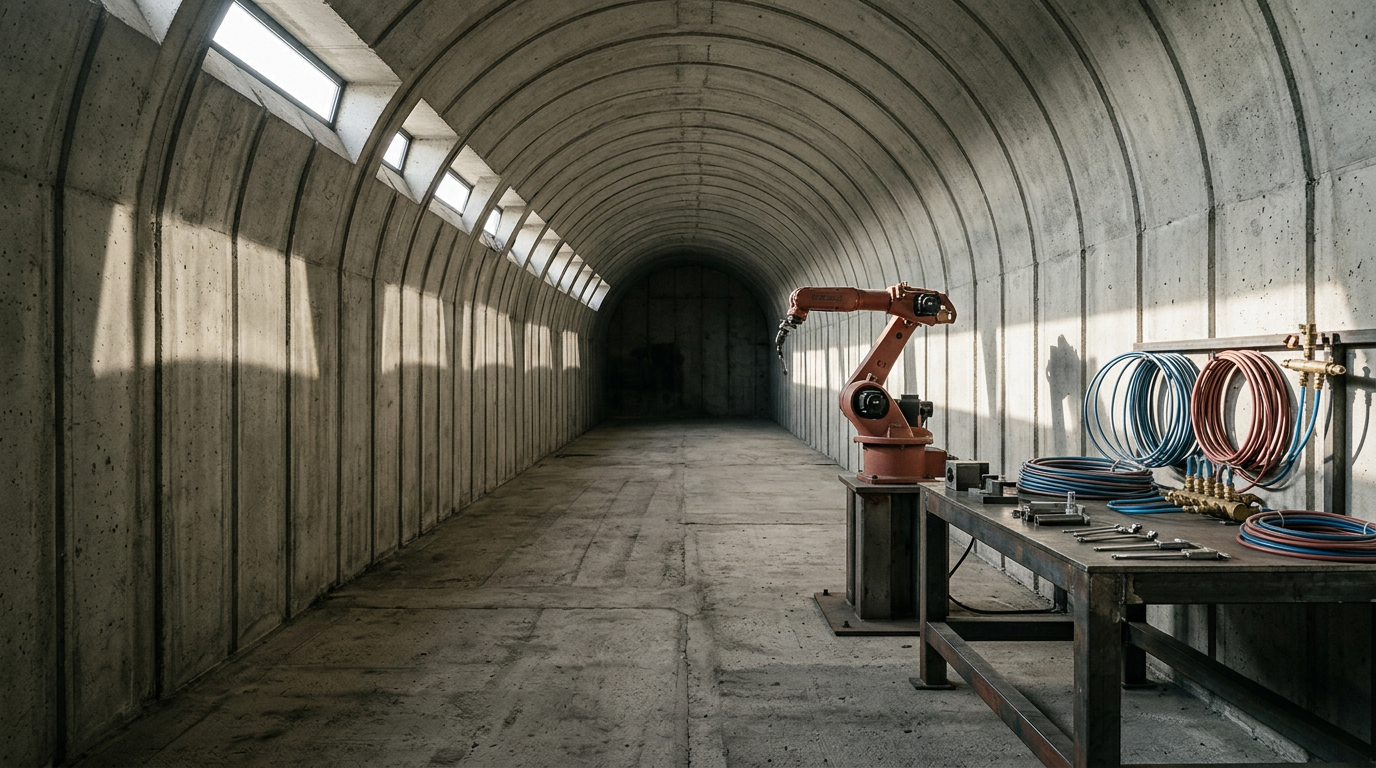
During Milan Design Week, sports giant Nike unveiled a permanent installation at Dropcity, a burgeoning center for architecture and design located in the repurposed warehouse tunnels behind Milan Central Station. The new facility, dubbed the Air Lab, provides the public with access to high-end industrial machinery, including robotic arms, thermoforming equipment, and pneumatic cylinder kits previously reserved for the company’s internal research and development teams. According to reporting from Dezeen, this initiative is not a temporary pop-up, but a long-term commitment to providing the global design community with the tools necessary to experiment with Nike’s signature Air technology.
The establishment of the Air Lab signals a pivot in how major consumer brands interact with the broader design ecosystem. By integrating its proprietary technology into a civic facility operated by architect Andrea Caputo, Nike is moving beyond traditional product marketing to position itself as a foundational partner in industrial innovation. This analysis explores how such moves redefine the boundaries between corporate IP and public utility, potentially setting a new standard for how global companies engage with local creative infrastructures.
The Evolution of Corporate-Civic Collaboration
The decision to embed industrial-grade robotics into a public-facing space like Dropcity represents a sophisticated approach to brand positioning. Historically, large corporations have maintained strict silos around their R&D processes, viewing proprietary technology as a competitive moat. However, the contemporary landscape of design and manufacturing is increasingly defined by open-source collaboration and the democratization of advanced prototyping tools. By opening its Air technology to architects and furniture designers, Nike is effectively crowdsourcing the future applications of its core innovation.
This strategy mirrors a broader shift in the luxury and performance goods sectors, where heritage and exclusivity are being replaced by utility and community integration. Dropcity itself, launched in 2024, occupies a unique position in Milan’s urban fabric, utilizing abandoned infrastructure to create a hub for material and structural experimentation. Nike’s participation in this ecosystem allows the brand to influence the next generation of designers while gaining insights into how its materials—traditionally designed for footwear—might be repurposed for architecture, furniture, or sustainable industrial applications.
Furthermore, the partnership highlights the role of design centers as the new frontier for corporate social responsibility. Instead of traditional philanthropic gestures, companies are increasingly opting for "infrastructure-as-a-service" models. By providing the machinery, Nike is not just donating funds; it is providing the physical means of production. This creates a tangible legacy that aligns the company’s brand identity with the ongoing evolution of urban design and material science, reinforcing its image as an innovator rather than just a manufacturer.
Mechanisms of Open-Ended Innovation
The operational mechanism of the Air Lab relies on the concept of "air as a medium," a framework that allows designers to explore the properties of expansion, suction, and force through Nike’s specialized equipment. The inclusion of industrial robotics, which are notoriously difficult for independent designers to access, effectively lowers the barrier to entry for high-fidelity prototyping. This is a critical development for the design community, as the cost of such machinery often limits creative exploration to well-funded corporate entities.
By framing the laboratory as a civic facility, the collaboration ensures that the output is not strictly limited to athletic wear. The ability for a furniture designer to use pneumatic systems or for an architect to experiment with thermoforming technology creates a cross-pollination of ideas. This approach serves a dual purpose: it allows Nike to observe potential use cases for its technology that its own internal teams might not have considered, and it grants the design community access to tools that were previously out of reach. The lab effectively functions as an externalized R&D department, where the risk of failure is distributed across the community, but the potential for breakthrough applications is shared.
This model also addresses the growing demand for sustainable design solutions. By providing tools that allow for the manipulation of air and lightweight materials, the lab encourages designers to explore structures that use fewer resources and offer greater efficiency. The focus on "industrial-grade" tools suggests that Nike is interested in seeing how its technology can scale, moving from the niche world of high-performance sports into the broader, more durable world of industrial design and urban architecture.
Implications for Stakeholders and Regulators
The implications of this initiative extend far beyond the design community in Milan. For regulators, the rise of corporate-funded public infrastructure presents a complex landscape. While these facilities offer clear social benefits, they also create questions about the influence of private entities on public space and the potential for "brand capture" of creative hubs. However, in the case of Dropcity, the arrangement appears to be a symbiotic relationship where the brand provides the capital and equipment, while the design center maintains the operational autonomy to ensure the space serves the broader public interest.
Competitors in the sportswear and material science sectors will likely be watching the success of this lab closely. If Nike can demonstrate that public-facing R&D leads to meaningful innovation or improved brand equity, it could trigger a wave of similar investments in design hubs worldwide. For consumers, this shift suggests a future where the products they use are increasingly the result of decentralized, collaborative processes rather than closed-door corporate cycles. The challenge for Nike will be maintaining the balance between its commercial interests and the genuinely open, experimental ethos that makes a facility like Dropcity valuable to the design community.
Uncertainties in the Future of Collaborative Design
While the Air Lab is a significant development, several questions remain regarding its long-term viability and impact. It is unclear how Nike will manage the intellectual property generated by users of the facility. Will innovations developed by independent designers in the lab be subject to any claims by the brand, or will they remain the property of the creators? The resolution of such tensions will be crucial in determining whether the facility remains a trusted space for experimentation or eventually becomes a recruitment and acquisition funnel for the company.
Furthermore, the scalability of this model remains an open question. Can the infrastructure of a repurposed warehouse in Milan be replicated in other global design capitals? The success of the Air Lab is intrinsically linked to the unique cultural and architectural context of Milan, and translating this model to other regions may prove difficult. As the initiative matures, the global design community will be looking for evidence that this collaboration leads to tangible, sustainable innovations that transcend the hype of design week events.
As the Air Lab begins its permanent operations, the focus will shift from the novelty of the launch to the quality and diversity of the work it facilitates. Whether this experiment will fundamentally change the relationship between large brands and the creative industries remains to be seen, but it certainly marks a shift in the discourse of corporate innovation. The long-term impact of such a facility depends on the autonomy of the designers who use it and the brand’s ability to remain a facilitator rather than a gatekeeper.
With reporting from Dezeen
Source · Dezeen