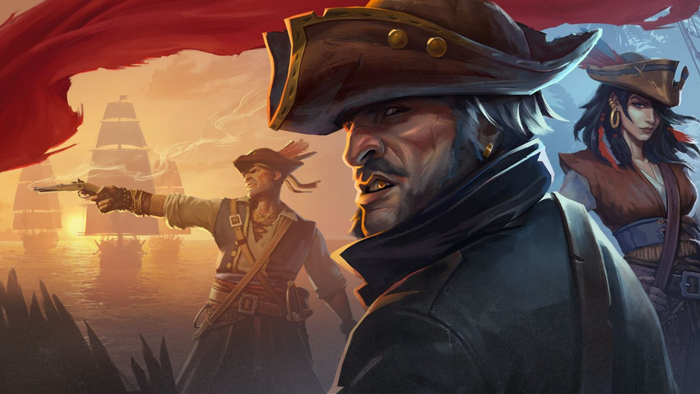
The early months of 2026 have been defined by a surprising resurgence in independent gaming, where high-fidelity simulation and deep mechanical systems are increasingly outpacing the traditional blockbuster cycle. The latest breakout is Windrose, a 16th-century pirate survival simulator developed by Kraken Express. In just six days of Early Access on Steam and the Epic Games Store, the title has moved over one million units, peaking at more than 200,000 concurrent players on Valve's platform — a figure that places it among the most successful Early Access debuts in recent memory.
Windrose finds its footing in the fertile ground between the whimsical naval exploration of Sea of Thieves and the gritty, systems-heavy survival of Valheim. Players navigate a procedurally generated world of varied biomes and over 100 dungeons, balancing ship customization with naval and land-based combat. Despite its Early Access status, the game has earned early praise for its technical optimization and immersive atmosphere — qualities that are often secondary in the initial stages of indie development.
The Early Access Model Matures
The commercial trajectory of Windrose is inseparable from the broader evolution of Early Access as a distribution and funding strategy. When Valve formalized the Early Access program on Steam in 2013, the model carried a degree of reputational risk: buyers were asked to pay for unfinished software on the promise of future completion. More than a decade later, the calculus has shifted. Titles like Baldur's Gate 3, Hades, and Valheim demonstrated that Early Access could serve not merely as a financing mechanism but as a credibility-building exercise — a public beta that, when executed well, generates organic word-of-mouth and community investment long before a 1.0 release.
Kraken Express appears to have internalized those lessons. Launching with stable performance and a substantial content offering — procedurally generated worlds, a deep crafting loop, and both solo and cooperative play — Windrose sidesteps the most common criticism leveled at Early Access titles: that they ask players to pay full price for a skeleton of a game. The one-million-unit milestone in under a week suggests that a meaningful share of the audience now treats Early Access launches with the same commercial seriousness as traditional releases, provided the product meets a baseline threshold of polish.
A Crowded Sea, a Hungry Market
This success does not exist in isolation. It follows a string of record-breaking launches for the independent and mid-tier segment, including Mewgenics and the long-awaited Slay the Spire II, the latter of which drew over 570,000 simultaneous players. Taken together, these launches suggest something structural rather than anecdotal: the audience for complex, systems-driven games is not only stable but expanding, even as the largest publishers contend with rising development costs, studio closures, and franchise fatigue.
The pirate simulation niche itself has a layered history. Rare's Sea of Thieves, initially criticized for a lack of content at its 2018 launch, grew into a durable live-service success after years of iterative updates — a trajectory that underscores both the opportunity and the obligation facing Windrose. Ubisoft's Skull and Bones, by contrast, arrived in 2024 after nearly a decade of troubled development and failed to sustain a player base, illustrating that neither brand recognition nor budget guarantees traction in a genre where player agency and systemic depth are the primary currencies.
For Kraken Express, the commercial validation is clear. The harder question is what comes next. Early Access roadmaps are promises made under favorable conditions — high visibility, enthusiastic early adopters, strong revenue flow. The history of the model is littered with titles that captured lightning in a bottle at launch only to see engagement erode as updates slowed or design direction drifted. Sustaining one million players through the iterative, sometimes unglamorous work of bug-fixing, balancing, and content expansion demands a different set of disciplines than capturing them in the first place.
The tension, then, is between the speed of commercial success and the patience required to finish the product that earned it. Whether Windrose becomes the next Valheim — a generational Early Access success story — or follows a less celebrated arc depends on decisions that have yet to be made, in a studio that, until last week, most players had never heard of.
With reporting from Canaltech.
Source · Canaltech