As the Artemis II mission enters its final phase, the four astronauts aboard NASA's Orion spacecraft have begun the quiet work of processing a journey that few humans have ever known. After nine days in deep space beyond the Moon, the crew is hurtling toward a Friday evening splashdown in the Pacific Ocean. Commander Reid Wiseman, the mission's senior officer, has offered the first visceral reflections of the voyage — describing the moment Earth vanished behind the lunar limb as one that produced chills and sweating palms, even for a seasoned pilot.
The mission represents NASA's first crewed flight beyond low Earth orbit since Apollo 17 in December 1972. Artemis II was designed primarily as a systems validation flight for the Orion capsule and the Space Launch System rocket, testing life support, navigation, and communication capabilities at lunar distance before subsequent missions attempt a crewed landing. But the crew's early accounts suggest that the human dimension of the flight may prove as consequential as the engineering data it returns.
The View No Camera Fully Captures
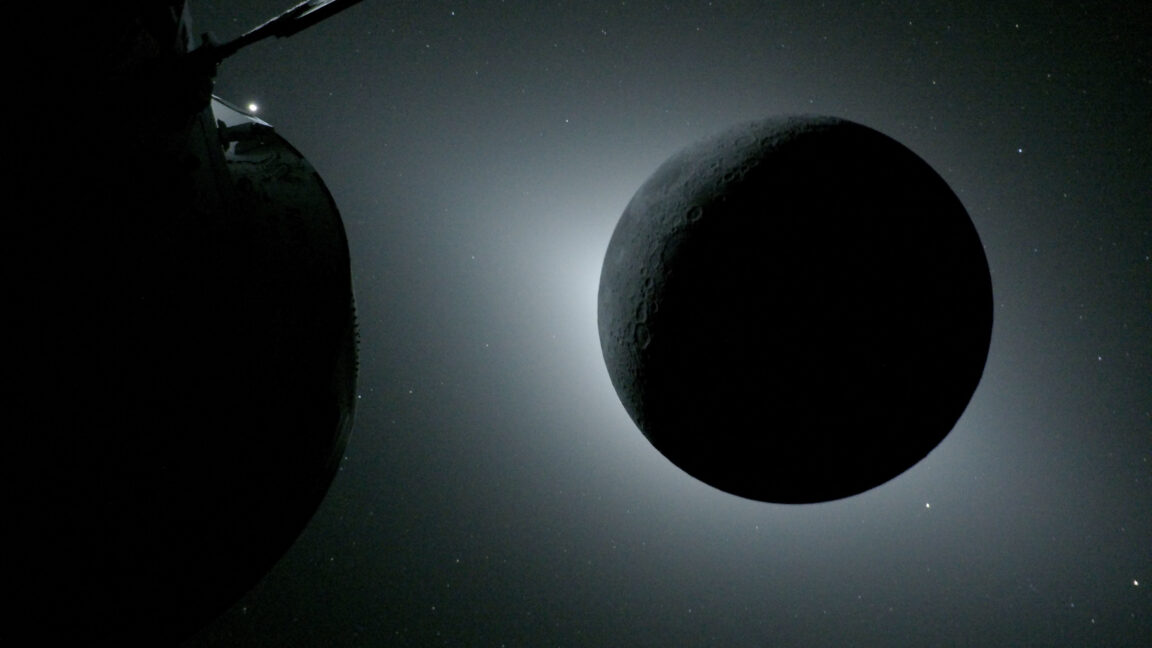
Wiseman's description of "Earthset" — the moment when the Moon's bulk eclipses the home planet from the crew's vantage — places Artemis II in a narrow lineage. Only the 24 astronauts of the Apollo program witnessed the same phenomenon, and the last of them did so more than half a century ago. During Apollo 8 in 1968, the crew's photographs of Earth rising above the lunar horizon became one of the most reproduced images in history, credited with catalyzing the modern environmental movement. The inverse experience — watching Earth disappear — received less cultural attention at the time, but Apollo veterans later described it as the more psychologically disorienting of the two.
Wiseman recounted watching Earth's atmosphere shimmer against the lunar horizon just before the planet was eclipsed by the Moon's rugged terrain. For a brief window, the familiar blue marble was replaced by the stark, monochromatic landscape of another world. The account echoes what Apollo astronauts called the "overview effect," a cognitive shift reported by space travelers who see Earth from a great distance. The term, coined by author Frank White in 1987, describes a sudden awareness of the planet's fragility and the artificiality of political borders — a sensation that intensifies the farther one travels from home.
What distinguishes the Artemis II crew's experience is the duration. Apollo missions spent roughly three days in transit each way; Artemis II's nine-day profile gave the astronauts a longer exposure to the deep-space environment and, presumably, more time to sit with its psychological weight. NASA has invested in crew behavioral health research ahead of longer Artemis missions and eventual Mars transit flights, and the subjective reports from this crew will feed into that body of work.
From the Far Side to the Pacific
As Orion nears reentry, the technical challenge shifts to the spacecraft's heat shield, which must withstand temperatures generated by atmospheric entry at speeds not encountered since the Apollo era. The capsule's skip-entry trajectory — a technique in which the vehicle briefly dips into the upper atmosphere, skips back out, and then reenters — is designed to reduce peak heating and improve landing accuracy. Artemis I, the uncrewed precursor mission, tested this maneuver, but Artemis II will be the first time human occupants experience it.
The splashdown in the Pacific will be followed by recovery operations and an extended debriefing period. Beyond the engineering validation, NASA and its international partners will be watching for something harder to quantify: how the crew's experience shapes public perception of the broader Artemis program, which aims to establish a sustained human presence at the Moon before pushing toward Mars.
The tension at the heart of Artemis II is one that has followed human spaceflight from its earliest days. The program exists to prove hardware — to demonstrate that Orion can keep a crew alive at lunar distance and bring them home safely. Yet the moments that endure in collective memory are rarely about thermal protection systems or communication latency. They are about a pilot's sweating palms as the only known living world slips behind a dead horizon. Whether that emotional resonance translates into the sustained political and budgetary support that Artemis requires remains an open question — one that the program's next chapters will answer more clearly than any single mission can.
With reporting from Ars Technica Space.
Source · Ars Technica Space