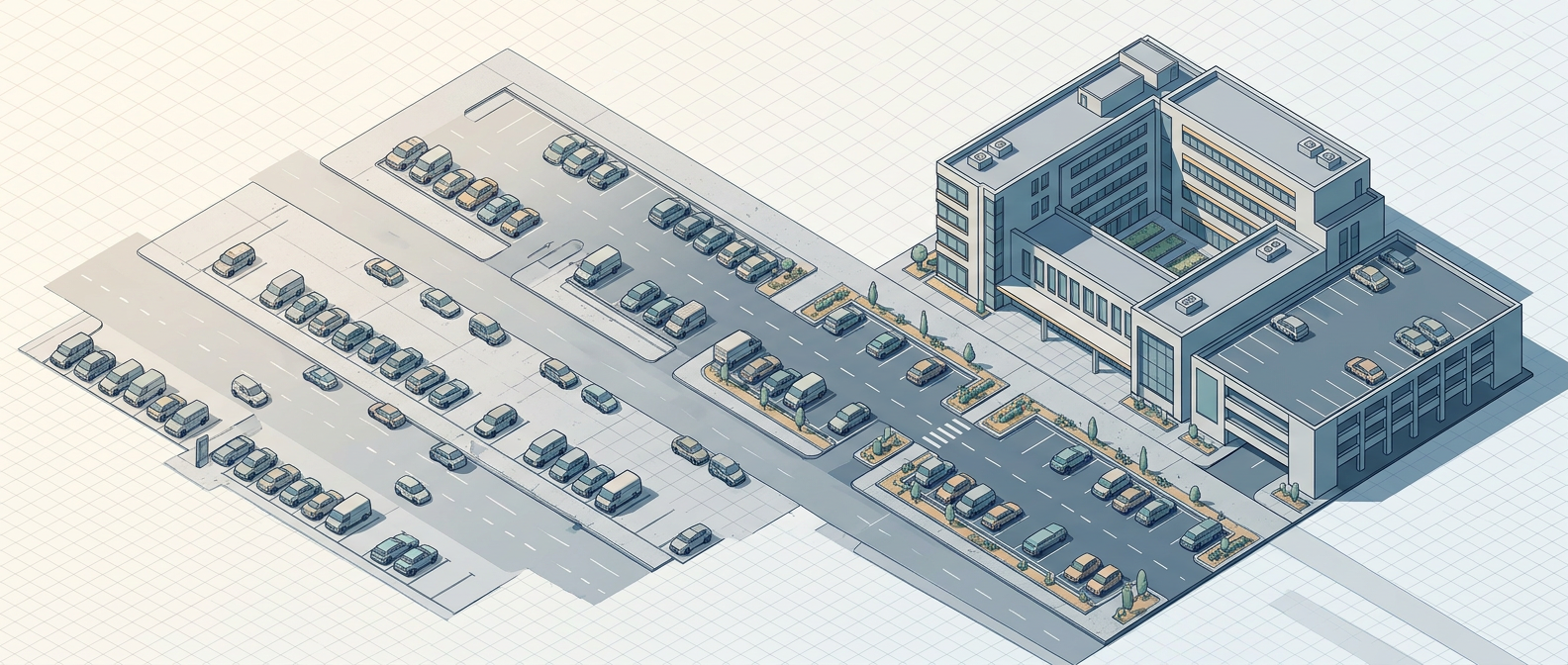
While the global narrative frequently centers on the "death of the office," São Paulo's high-end corporate market is reporting a different trajectory. In the first quarter of the year, the average leased area in the city's premium buildings climbed to 1,923 square meters — a 52% jump from the previous quarter and the highest level recorded since late 2022. The resurgence suggests that for major firms in Brazil's financial heart, the physical workspace is being reimagined rather than abandoned.
Major players are leading this expansion. Uber recently secured 15,900 square meters at the JK Square complex, while the fintech firm Wise took 14,100 square meters in the Marginal Pinheiros district. These moves are driven by a more aggressive push for in-person collaboration and a strategic consolidation of disparate offices into single, high-efficiency hubs. By bringing teams under one roof, companies are betting that the friction of physical proximity will yield higher productivity than the isolation of remote work.
De-densification as workplace strategy
Perhaps the most significant shift is what the commercial real estate industry calls "de-densification" — the deliberate allocation of more floor area per employee. Before the pandemic, the industry standard in São Paulo's Class-A towers hovered around seven square meters per person. Today, firms are seeking between 10 and 12 square meters per employee. The additional space is not wasted; it is redistributed into wider corridors, collaboration zones, quiet rooms, and amenity areas designed to make the office competitive with the home as a place to spend the working day.
The logic is transactional. Return-to-office mandates, now common among large technology and financial services firms worldwide, carry an implicit bargain: employees surrender the flexibility of remote work, and employers offer an environment that justifies the commute. Cramped open-plan layouts — the dominant format of the 2010s — undermine that bargain. A more generous floor plan, paired with better acoustics, natural light, and on-site services, is the currency companies are using to buy compliance and, ideally, enthusiasm.
This pattern echoes developments in other major office markets. In New York and London, post-pandemic leasing activity has skewed heavily toward newer, higher-quality buildings, even as older stock languishes with elevated vacancy rates. The phenomenon has been described as a "flight to quality" — tenants are not necessarily leasing more total square footage across the market, but the square footage they do lease is better, larger per capita, and concentrated in a shrinking pool of premium assets.
Supply constraints and the premium squeeze
São Paulo's situation carries an additional complication. The appetite for large, contiguous floor plates — the kind that allow an entire division or company to operate on a single level — is beginning to test the market's limits. Class-A development pipelines in the city's key corridors, including the Faria Lima, Itaim Bibi, and Marginal Pinheiros districts, have not expanded at the pace needed to absorb this sudden demand for scale. When a single tenant absorbs more than 14,000 square meters in one transaction, the inventory of comparable spaces shrinks rapidly.
The result is a bifurcated market. Premium towers with modern infrastructure, efficient floor plates, and ESG certifications attract intense competition among tenants, while older buildings — even those in desirable locations — face longer vacancy periods and downward pressure on rents. For landlords and developers, the incentive structure is clear: new supply must meet a higher bar on both design and scale. For tenants, the window to secure large blocks of premium space may be narrowing.
What remains unresolved is whether the current leasing surge reflects a durable structural shift or a concentrated wave of pent-up demand from firms that delayed real estate decisions during years of pandemic uncertainty. If return-to-office mandates soften — as they have in some global markets when labor markets tighten — the calculus changes. The tension sits between two forces: corporate leadership's conviction that physical presence drives performance, and a workforce that has demonstrated it can function effectively from home. São Paulo's premium office market is, for now, a scoreboard for the first side of that argument.
With reporting from Metro Quadrado.
Source · Metro Quadrado