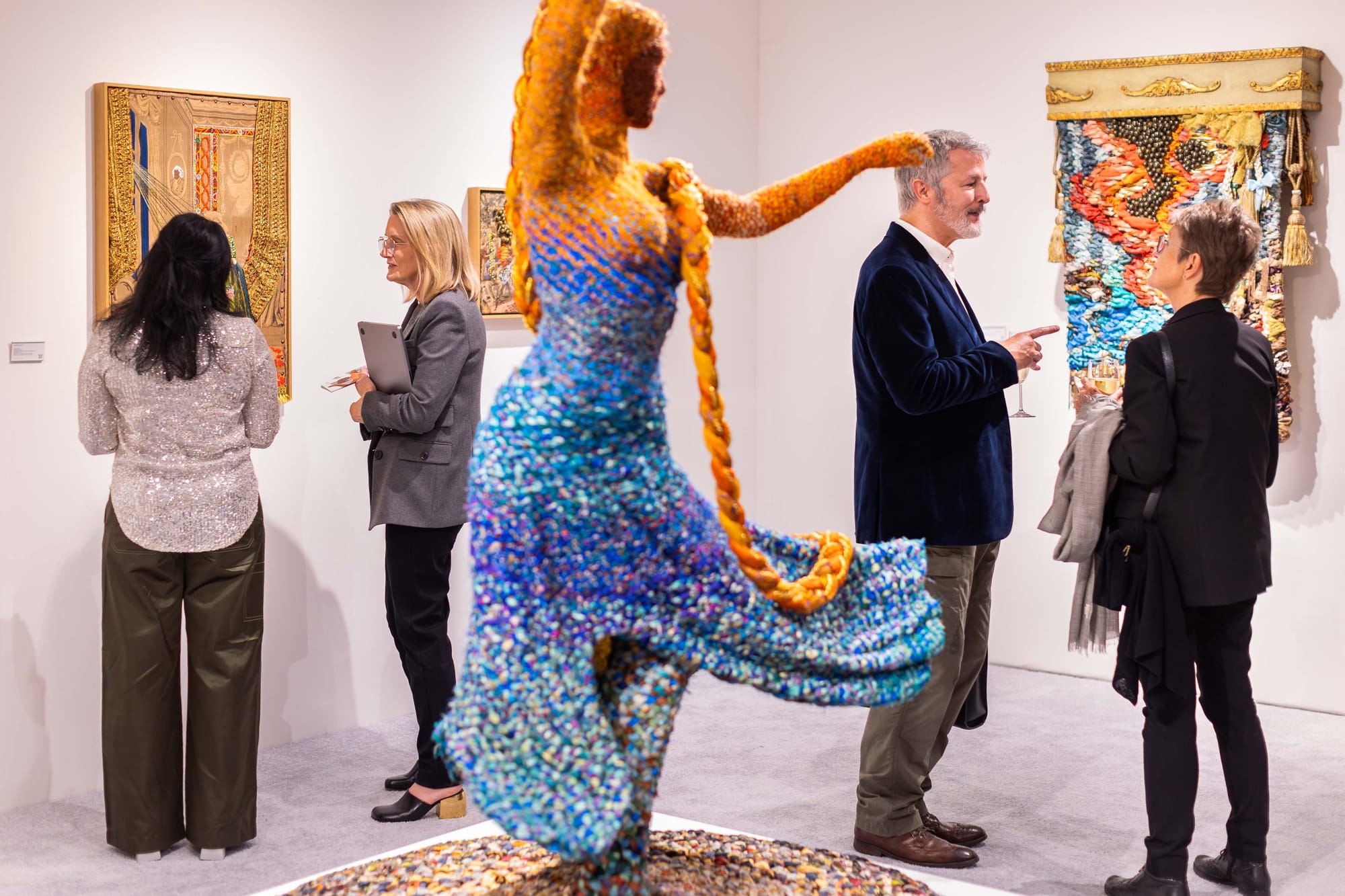
The Art Dealers Association of America (ADAA) has named the Whitney Museum of American Art as the new philanthropic beneficiary of its upcoming fall fair at the Park Avenue Armory, completing a realignment that began with the abrupt end of a three-decade partnership with the Henry Street Settlement. The rebranded event, now called the ADAA Fair, is scheduled for November and will direct proceeds from its preview gala toward the Whitney's educational initiatives and artistic programming.
The decision formalizes what had been an open question since last summer, when the ADAA severed ties with Henry Street Settlement, a Lower East Side nonprofit that provides health care, housing, and arts services. The legacy event, known as The Art Show, had historically generated approximately $1 million in unrestricted annual funding for the settlement — a sum that represented a significant share of its operating budget. The cancellation of the 2025 edition of that fair forced Henry Street into emergency fundraising and ultimately into a new arrangement with the Independent Art Fair.
From Social Services to Museum Support
The shift from Henry Street to the Whitney represents more than a change in beneficiary. It marks a structural pivot in how the ADAA conceives of its philanthropic role. For thirty years, the association's fair functioned as a rare bridge between the commercial art market and direct social services — a model in which gallery sales underwrote programs for communities with little connection to the collectors browsing the Armory's booths. That arrangement was unusual in the art world, where benefit events more commonly fund institutions that already serve the cultural establishment.
The Whitney Museum, by contrast, is one of the most prominent contemporary art institutions in the United States. Its programming and exhibitions draw significant public and private funding, and its audience overlaps considerably with the ADAA's own membership and collector base. The alignment is, in one sense, a more natural fit: dealers supporting a museum that shows and historicizes the work they sell. But it also narrows the philanthropic circuit, routing art-market proceeds back into the art-market ecosystem rather than outward toward social infrastructure.
This pattern is not unique to the ADAA. Across the broader landscape of art fairs and cultural fundraising, partnerships tend to gravitate toward institutions with high visibility and established donor networks. Benefit galas attached to museums offer naming opportunities, social capital, and audience alignment that grassroots nonprofits cannot easily replicate. The economics of these events — where ticket prices, sponsorships, and booth fees must justify the organizational effort — create incentives to partner with entities that amplify prestige rather than redistribute resources.
The Broader Tension in Art-Market Philanthropy
The ADAA's decision arrives at a moment when questions about the social obligations of the art market have grown more pointed. In recent years, galleries, auction houses, and fairs have faced increasing scrutiny over the gap between their rhetorical commitments to equity and access and the actual flow of their charitable dollars. The Henry Street partnership had served, for the ADAA, as a tangible counterargument — evidence that commercial art could fund something beyond itself.
Henry Street Settlement's pivot to the Independent Art Fair suggests the nonprofit model is adaptable, though the terms and scale of that new arrangement remain to be seen. Whether the Independent can replicate the financial contribution that The Art Show once provided is an open question, and one that matters concretely for the communities Henry Street serves.
For the ADAA, the Whitney partnership consolidates institutional credibility and simplifies the narrative around its fair. For the broader art world, the realignment raises a less comfortable question: whether the philanthropic apparatus surrounding commercial art is converging on a closed loop, in which the market funds the institutions that validate the market, and the communities once served by arrangements like the Henry Street partnership are left to find support elsewhere.
With reporting from Hyperallergic.
Source · Hyperallergic