In recent months, a concerning trend has emerged in the landscape of social engineering: the return of physical mail as a primary vector for fraud. While the digital age has conditioned consumers to treat unsolicited emails, SMS messages, and WhatsApp links with skepticism, the psychological barrier against physical mail remains significantly higher. According to reporting from Xataka, attackers are increasingly utilizing printed letters, official-looking letterheads, and physical mail delivery to solicit sensitive information, effectively mirroring the logic of traditional phishing but shifting the delivery mechanism to the mailbox.
The implications of this shift are profound, as it challenges the assumption that security awareness training should focus exclusively on digital interfaces. By presenting fraudulent requests within a physical envelope, bad actors exploit the lingering societal trust in institutional mail, which is often perceived as inherently more legitimate than electronic communication. This evolution suggests that as organizations and individuals harden their digital defenses—through multi-factor authentication and improved email filtering—adversaries are pivoting toward lower-tech, higher-trust channels to achieve the same objectives.
The Architecture of Analog Deception
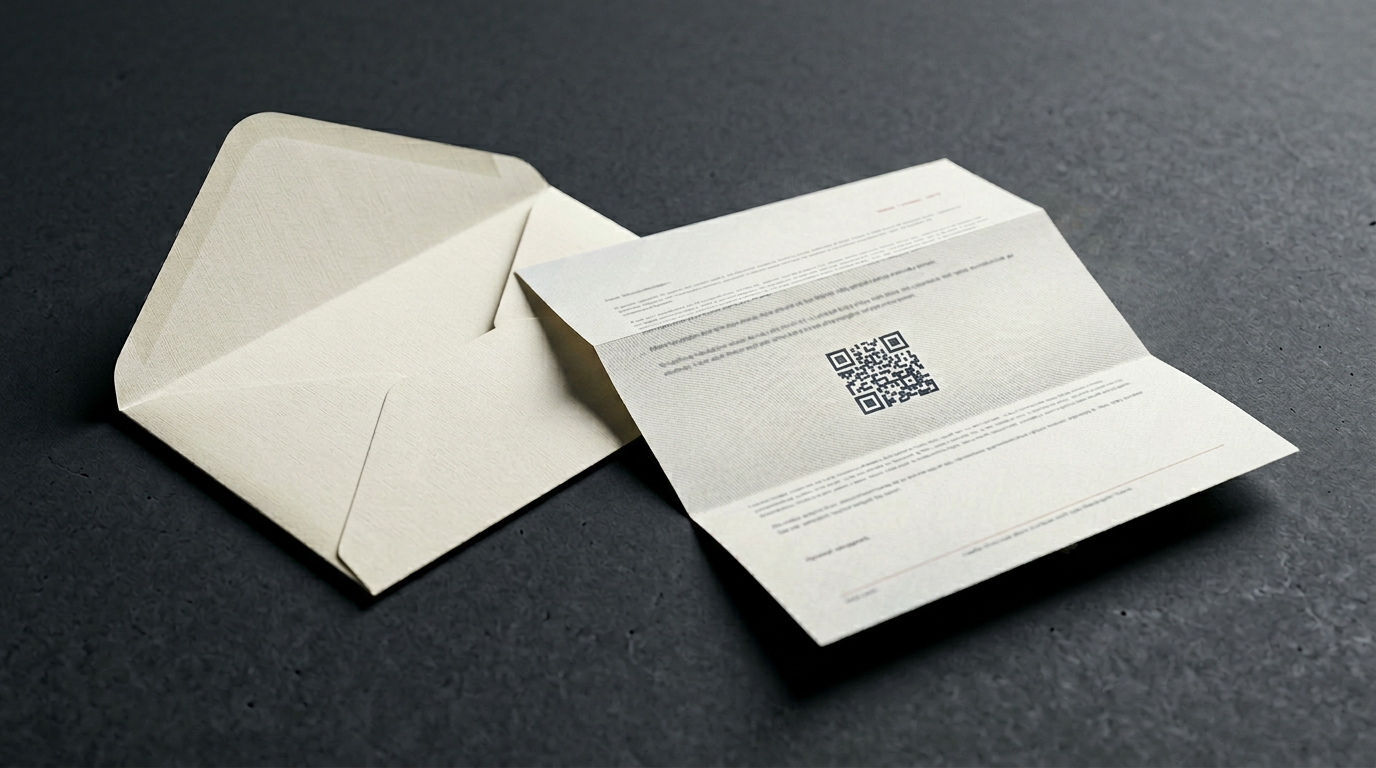
The mechanics of these physical phishing campaigns rely on the same psychological triggers as their digital predecessors: urgency, authority, and the promise of a benefit or the threat of a loss. By mimicking the official branding of trusted entities, such as hardware wallet manufacturers or government social security agencies, attackers create a facade of legitimacy that is difficult for the average recipient to immediately dismiss. In the case of cryptocurrency users, for instance, victims have reported receiving letters purportedly from Ledger, instructing them to scan a QR code to 'verify' their security settings, ultimately aiming to extract the recovery phrase essential for accessing their digital assets.
This strategy is not merely an exercise in nostalgia; it is a calculated response to the increased difficulty of executing successful digital attacks. When a user receives a letter that appears to be from a government body—such as the Spanish Social Security administration—claiming that data was lost in a cyberattack and requiring sensitive personal documentation to resolve a pension issue, the context shifts from 'suspicious email' to 'administrative necessity.' The physical nature of the letter provides a tactile confirmation of intent that a digital message often fails to convey, compelling victims to act before they have the opportunity to verify the authenticity of the request through official channels.
The Role of Data Leakage in Targeting
A critical question underlying this resurgence is how attackers obtain the specific personal information required to make these letters appear credible. The efficacy of these campaigns depends heavily on the quality of the data available to the bad actors. In many instances, this information is sourced from large-scale data breaches that have affected corporations, third-party service providers, and even government databases. As noted by the Spanish Data Protection Agency (AEPD), thousands of data breach notifications are processed annually, many of which involve the exfiltration of massive volumes of personal information, including names, addresses, and identification numbers.
Once this data is exfiltrated, it often enters a secondary market where it is traded or sold, allowing threat actors to build highly specific profiles of their targets. The fact that sensitive documents, such as national identification cards, can be purchased on illicit markets for relatively low prices underscores the systemic nature of the problem. These stolen datasets serve as the fuel for both digital and physical phishing, enabling attackers to customize their correspondence to such a degree that even cautious individuals may find it difficult to distinguish the fraudulent communication from a genuine one. The barrier to entry for these campaigns is low, provided the attacker has access to a sufficiently detailed database of victim information.
Implications for Security Stakeholders
The resurgence of physical phishing creates a complex challenge for regulators, corporations, and consumers alike. For organizations that handle sensitive user data, the burden of responsibility extends beyond protecting digital infrastructure to ensuring that their brand identity cannot be easily weaponized in physical campaigns. This necessitates a more proactive communication strategy where companies explicitly inform users that they will never request sensitive information—such as recovery phrases or bank statements—via physical mail, thereby establishing a clear 'zero-trust' policy for all interactions, regardless of the medium.
For regulators, the challenge lies in the jurisdictional complexity of these crimes. Data breaches often occur in one region, while the resulting phishing campaigns may be launched from another, targeting individuals across borders. This creates a disconnect between the enforcement of data protection laws and the actual harm experienced by the victims. Consumers, meanwhile, are forced to navigate an increasingly deceptive environment where the traditional 'don't click the link' advice is no longer a complete defense. The expectation for vigilance must now encompass every piece of mail that arrives at the doorstep, adding a new layer of cognitive load to daily life.
The Uncertainty of Physical Trust
Looking ahead, it remains uncertain whether these physical campaigns will remain a niche tactic or evolve into a more widespread phenomenon. The cost of printing and mailing is undoubtedly higher than sending a mass email, which suggests that attackers are likely focusing on high-value targets where the potential return on investment justifies the overhead. As the sophistication of these campaigns increases, so too does the likelihood that they will be integrated with other forms of fraud, potentially leading to a hybrid model where physical mail serves as the initial contact point for a more complex digital scheme.
The question of how to verify the authenticity of physical correspondence in an age of high-quality digital printing and data availability remains open. As security professionals continue to advocate for encryption and digital identity verification, the analog world continues to provide a path of least resistance for those intent on exploitation. Whether this trend forces a fundamental change in how institutions interact with their users remains to be seen, but the reliance on physical mail as a trusted channel is clearly under threat.
Ultimately, the evolution of phishing into the physical realm serves as a reminder that security is not a static goal but a dynamic process that must adapt to the shifting tactics of those who seek to undermine it. As long as sensitive data remains vulnerable to large-scale exfiltration, the potential for these campaigns to reach our homes will persist, leaving individuals to discern the truth in an increasingly blurred landscape of official and fraudulent communication.
With reporting from Xataka
Source · Xataka