The Architecture of Fear
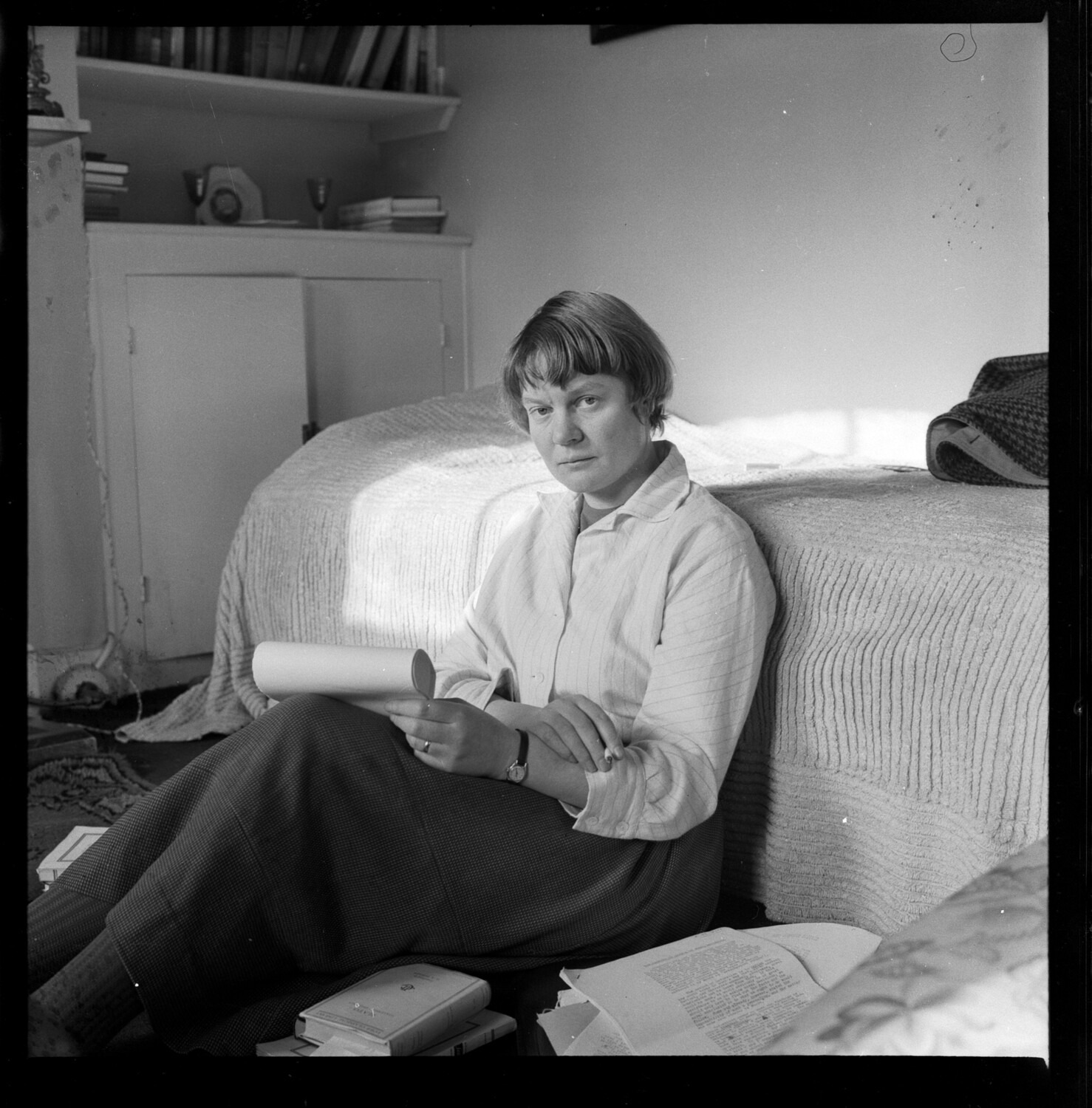
In The Sovereignty of Good, published in 1970, the philosopher and novelist Iris Murdoch advanced a deceptively simple proposition: to understand a thinker's system, ask what the thinker is afraid of. The suggestion was not meant as dismissal. It was diagnostic. For Murdoch, philosophy was rarely a disinterested exercise in logic. More often, it functioned as a sophisticated defense mechanism — a means of tidying the messy, terrifying reality of human existence into something manageable, something the ego could inhabit without trembling.
The book, drawn from three lectures Murdoch delivered at various points in the 1960s, remains one of the more unusual contributions to twentieth-century moral philosophy. Where analytic philosophy in the Anglo-American tradition had largely turned away from questions of inner life — focusing instead on language, behavior, and verifiable propositions — Murdoch insisted that the moral life was fundamentally a matter of attention. How a person sees the world, not merely what they decide to do in it, constitutes the core of ethics.
The Ego as Architect
Murdoch's critique centered on what she called the ego's tendency to cloud moral vision. Human beings, in her account, do not simply make poor choices; they construct entire perceptual frameworks designed to keep the self at the center. Moral philosophies, no less than personal rationalizations, can serve this function. A system that promises certainty — that the right action can always be derived from a rule, a calculation, or a categorical principle — may offer intellectual coherence at the cost of honesty about the difficulty of goodness.
The concept Murdoch placed in opposition to this tendency was "unselfing": the arduous, often painful process of directing attention away from the self and toward reality as it actually is. She drew on Simone Weil's notion of attention and on Plato's idea of the Good as something that exists beyond subjective preference. To look at another person clearly — without the distortion of jealousy, vanity, or self-interest — was, for Murdoch, among the hardest things a human being could attempt. It was also the foundation of genuine moral life.
This framing carries an implicit challenge to much of modern moral philosophy. Utilitarian calculus, Kantian duty, existentialist radical freedom — each, in Murdoch's reading, could be understood partly as a response to a specific anxiety. The utilitarian fears chaos without measurement. The Kantian fears the unreliability of feeling. The existentialist fears determinism. None of these fears is illegitimate. But recognizing them as fears, rather than as neutral starting points, changes the character of the inquiry.
Fragility Beneath Rigor
The implication is counterintuitive: the most rigorous intellectual structures may also be the most fragile, precisely because their rigor serves a protective function. When a philosopher constructs a world of absolute certainty, the architecture may reveal less about the nature of reality than about the depth of the builder's dread of the void. Murdoch did not argue that this recognition invalidates a given philosophy. A fear-driven insight can still be true. But it does mean that the human architecture beneath the abstraction deserves scrutiny alongside the abstraction itself.
This line of thinking has found renewed relevance in an era saturated with systematic frameworks — not only in academic philosophy but in technology, policy, and organizational theory. The drive to reduce complex moral and social questions to optimizable metrics, decision trees, or alignment protocols echoes the same impulse Murdoch identified: the desire to make the ungovernable governable, to replace the difficulty of sustained attention with the comfort of procedure.
Murdoch herself offered no tidy resolution. She did not propose a rival system to replace the ones she critiqued. What she offered instead was a practice — the discipline of looking, of resisting the ego's gravitational pull, of sitting with moral difficulty rather than engineering it away. Whether that practice can scale beyond the individual conscience, or whether it remains a private and essentially literary virtue, is a tension her work leaves deliberately unresolved. The question is not which system best conquers fear, but whether any system built primarily to manage fear can be trusted to tell the truth about goodness.
With reporting from The Point Magazine.
Source · The Point Magazine