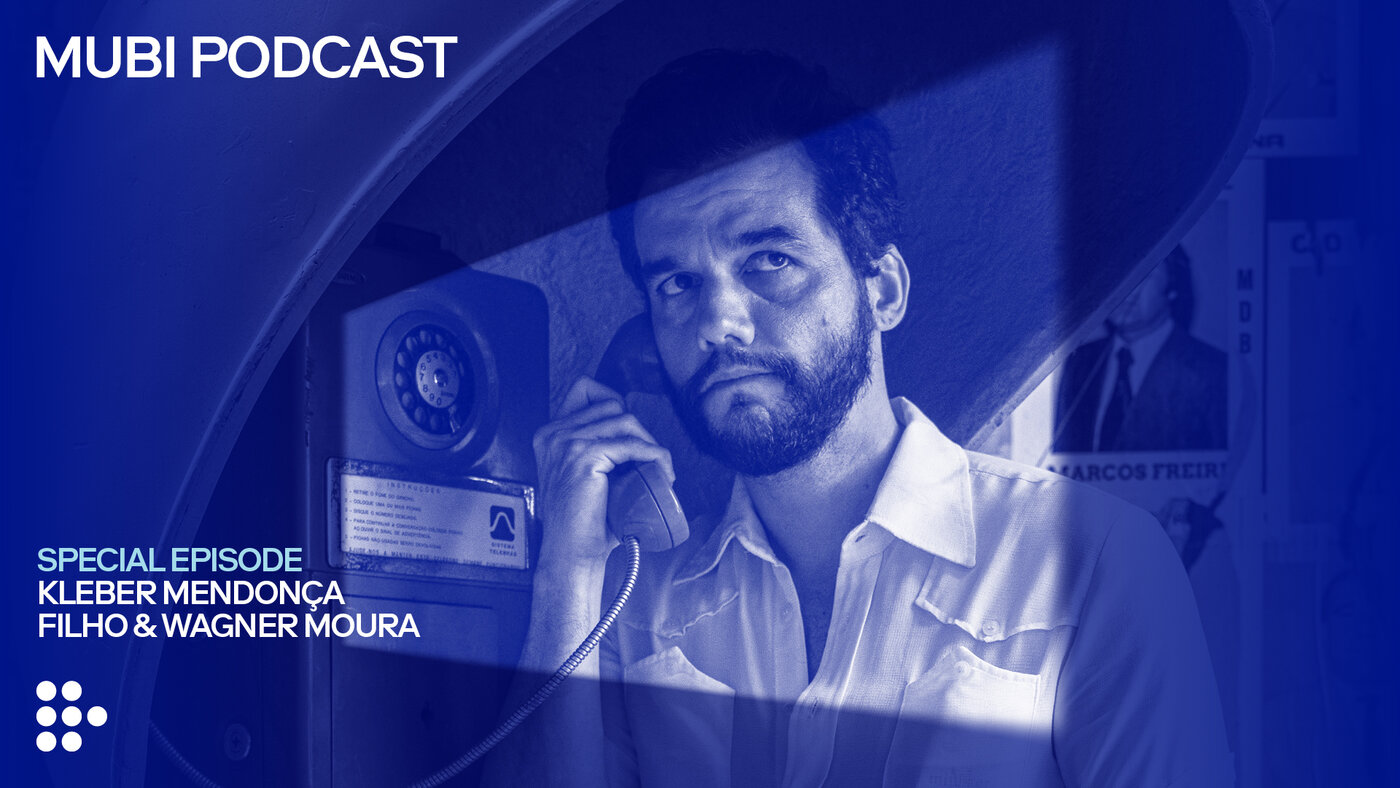
In The Secret Agent, director Kleber Mendonça Filho returns to the fertile, often fraught ground of Brazilian history — specifically the claustrophobic atmosphere of the 1970s military dictatorship. The film, starring Wagner Moura, navigates a landscape where political intrigue and the mundane intersect, producing a sense of absurdity that Mendonça Filho argues was a defining feature of life under authoritarian rule. It is a period piece that functions less as a conventional thriller and more as an excavation of national memory, one conducted through the textures of architecture, sound, and daily routine.
In a recent conversation published by MUBI, the director and his lead actor discussed the historical and cultural roots of the project. Their dialogue positioned The Secret Agent not merely as entertainment but as an act of retrieval — an attempt to reconstruct the sensory and psychological reality of an era that Brazil has processed unevenly.
Authoritarianism as Atmosphere
Mendonça Filho's filmography has long been preoccupied with the way power inscribes itself onto physical spaces. Aquarius (2016) turned a beachfront apartment building in Recife into a battleground between personal memory and real estate speculation. Bacurau (2019), co-directed with Juliano Dornelles, imagined a remote village under siege from foreign mercenaries, blending genre cinema with pointed political allegory. Pictures of Ghosts (2023), a documentary essay, traced the disappearance of Recife's movie theaters as a proxy for broader cultural erosion. In each case, the built environment carries the weight of political history.
The Secret Agent extends this logic into the 1970s, a decade during which Brazil's military regime operated at peak repressive capacity. The institutional apparatus of censorship, surveillance, and forced disappearance created a social reality in which the surreal became ordinary. Citizens navigated a world of contradictions: economic growth coexisted with political terror, official optimism masked systematic violence, and public life was governed by codes of silence that everyone understood but few could articulate openly. Mendonça Filho and Moura have noted that the film's more disorienting sequences draw directly from this atmosphere — moments that might appear invented are, in their telling, rooted in documented absurdities of the period.
This approach places The Secret Agent in a lineage of Latin American cinema that treats dictatorship not as backdrop but as a structuring force on perception itself. Argentine and Chilean filmmakers have explored similar terrain — the way authoritarian regimes distort not just politics but the very fabric of how people experience time, trust, and truth. Mendonça Filho's contribution to this tradition is characteristically spatial: his camera tends to linger on rooms, corridors, and facades, allowing architecture to communicate what dialogue cannot.
Manguebeat and the Sound of Resistance
The film's cultural texture is further shaped by its connection to manguebeat, the countercultural musical movement that emerged from Recife in the early 1990s. Manguebeat fused regional genres — maracatu, coco, ciranda — with punk, hip-hop, and electronic music, producing a sound that was defiantly local and deliberately modern. Figures such as Chico Science and the band Mundo Livre S/A turned the impoverished mangrove swamps of Recife's periphery into a symbol of creative vitality, rejecting both the nostalgia of traditional regionalism and the cultural homogeneity of mainstream Brazilian pop.
By threading manguebeat's sonic and ideological DNA into a narrative set two decades before the movement's emergence, Mendonça Filho establishes a kind of retroactive dialogue. The dictatorship-era repression depicted in The Secret Agent is, implicitly, part of the soil from which manguebeat later grew. The cultural suffocation of the 1970s generated the conditions for the explosive creativity of the 1990s. For audiences unfamiliar with northeastern Brazilian culture, this layering provides essential context; for those who know the history, it adds a dimension of tragic irony.
Wagner Moura, whose international profile was cemented by Narcos and whose range extends from commercial blockbusters to politically charged independent work, brings to the role a physicality that Mendonça Filho's cinema demands. The actor's presence grounds the film's more abstract impulses in recognizable human behavior — a necessary counterweight in a narrative where reality itself is unstable.
What remains to be seen is how Brazilian audiences receive a film that asks them to sit with the unresolved legacies of a period the country has never fully confronted through institutional accountability. The tension between collective forgetting and artistic remembrance is not unique to Brazil, but it takes a particular shape there — one that The Secret Agent appears designed to make visible rather than resolve.
With reporting from MUBI Notebook.
Source · MUBI Notebook