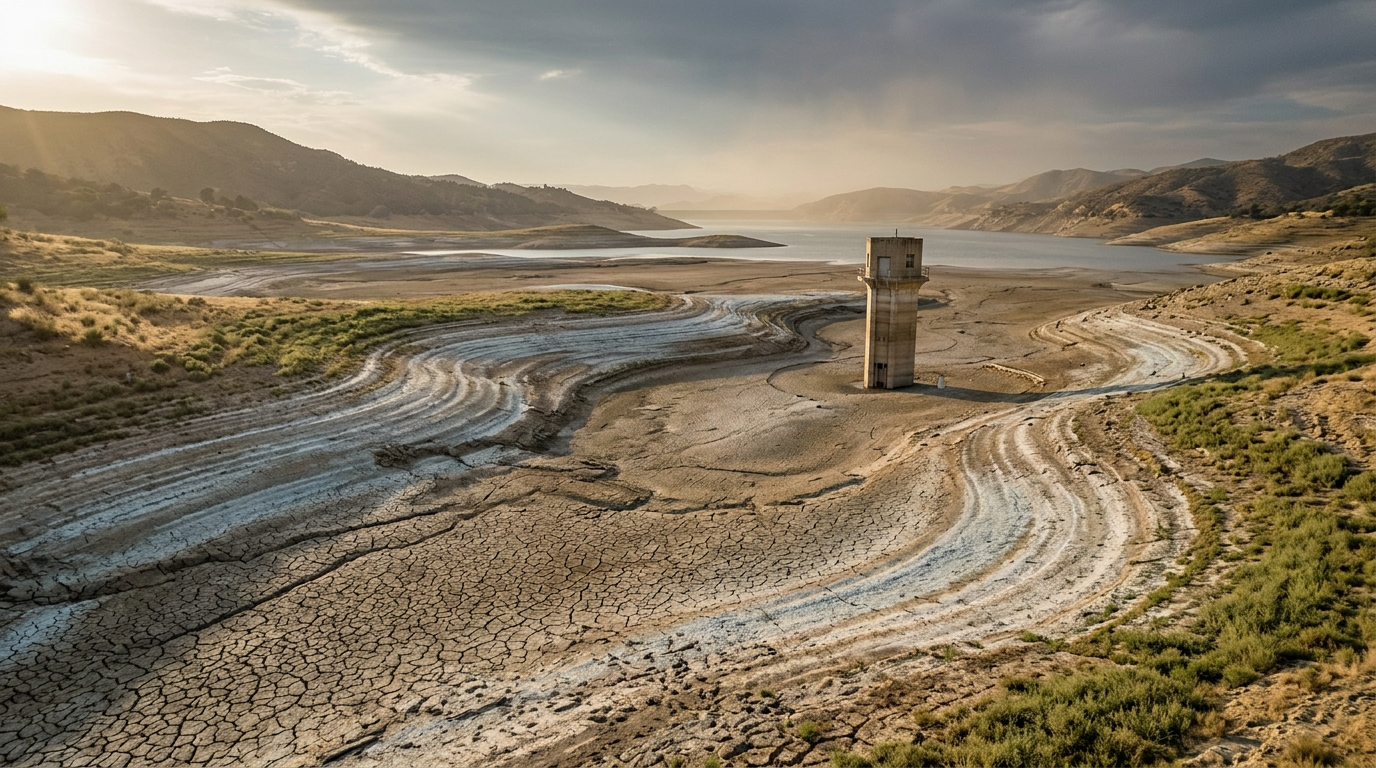
For many young adults, the traditional arc of a career — earning a degree, building a specialty, planning for a mid-century retirement — has begun to feel like an exercise in futility. The looming specter of climate collapse is not just a distant threat; it is a psychological weight that renders current ambitions seemingly pointless. When the world of 2074 is an unknowable landscape of ecological shifts, the labor of the present can feel like building on shifting sand.
This is not a fringe sentiment. Surveys conducted in recent years across multiple countries have consistently found that a significant share of young people report anxiety about the future tied specifically to climate change, with many expressing doubt about whether they should have children or invest in long-term plans. The phenomenon has acquired clinical and cultural shorthand — "climate anxiety," "eco-grief," "solastalgia" — but the labels risk flattening what is, at its core, a rational emotional response to observable planetary trends.
The Collapse of the Default Script
The post-war social contract in wealthy democracies rested on a set of implicit assumptions: that economic growth would continue, that each generation would do better than the last, and that the biophysical systems underpinning civilization would remain broadly stable. Climate science has dismantled the third assumption. Increasingly volatile weather patterns, accelerating biodiversity loss, and the visible retreat of ice sheets have made it difficult to treat the future as a simple extrapolation of the past.
For previous generations, uncertainty about the future was largely economic or geopolitical — recessions, wars, political upheaval. The current generation faces something categorically different: uncertainty about the habitability and stability of the Earth system itself. This distinction matters because it strikes at the foundation of planning. A career pivot or a financial setback can be recovered from within a functioning society. The erosion of ecological baselines raises questions about what "functioning society" will mean in three or four decades.
Climate-aware therapist Leslie Davenport suggests that the first step in navigating this paralysis is to deconstruct the concept of the "apocalypse." While serious planetary disruptions are no longer theoretical, viewing the future as a foregone conclusion of total ending leaves no room for agency. The challenge is not to predict the exact state of the world in fifty years, but to cultivate the emotional resilience required to exist within that uncertainty.
Fluidity as a Framework
The therapeutic approach Davenport describes echoes a broader shift in how climate-adjacent psychology frames the problem. Rather than treating climate anxiety as a disorder to be managed, a growing body of practice treats it as a signal — an appropriate alarm that needs to be metabolized, not silenced. The goal is not optimism, which can feel dishonest, nor despair, which is paralyzing. It is something closer to what some practitioners call "active hope": engagement with present conditions without requiring certainty about outcomes.
Planning for the future in a warming world requires a shift from rigid goals to a more fluid sense of purpose. This reframing has practical implications. Career choices oriented around adaptability rather than narrow specialization, community investment rather than individual accumulation, and skills that remain useful across a range of possible futures — these are not retreats from ambition but recalibrations of it.
There is a historical parallel worth noting. During the Cold War, the possibility of nuclear annihilation produced a similar generational reckoning with futility. Some responded with nihilism, others with activism, and many with a quiet determination to live meaningfully despite the shadow. The climate crisis differs in its slow-motion trajectory and its certainty of partial impact — the question is one of degree, not of whether disruption will occur. But the psychological architecture is recognizable: how does one build a life under a sky that may fall?
It takes a specific kind of courage to remain aware of the coming realities without succumbing to the narrative that nothing matters. By acknowledging the fear without letting it dictate the end of the story, individuals can find a way to move forward — not because the future is guaranteed, but because the present still demands their participation. Whether that participation ultimately bends the trajectory of warming, or merely sustains the dignity of those living through it, is a tension that no therapist — and no policy — can fully resolve.
With reporting from Grist.
Source · Grist