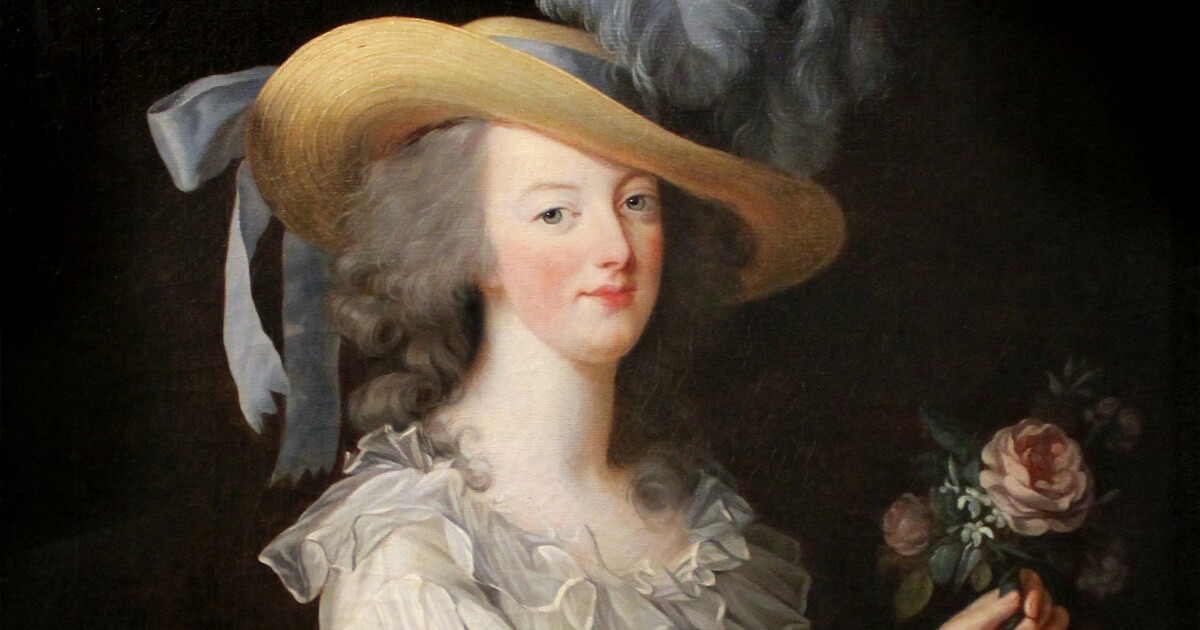
The lives of Élisabeth Louise Vigée Le Brun and Maria Cosway offer a concentrated study in what it meant for women to build lasting artistic careers in eighteenth-century Europe. Both painters achieved considerable recognition during their lifetimes — Vigée Le Brun as portraitist to Marie Antoinette and the French aristocracy, Cosway as a prominent figure in London's Royal Academy circles. Yet neither could rely on reputation alone. Lacking the insulation of inherited rank or independent wealth, both were forced to treat their creative output as a high-stakes balancing act, one in which a pristine personal reputation was as essential as technical mastery.
The challenge was structural, not incidental. In an era when a woman's professional credibility was tethered to her perceived virtue, any hint of scandal could collapse a career overnight. The art market of the period operated on patronage, personal networks, and social trust — currencies that were especially fragile for women operating without the institutional backing available to their male counterparts.
The Burden of Marriage
For both Vigée Le Brun and Cosway, early life provided a measure of encouragement. Supportive fathers recognized their daughters' talents and facilitated access to training and commissions. But the structural fragility of their success was dramatically exacerbated by the men they married. Jean-Baptiste-Pierre Le Brun, an art dealer, and Richard Cosway, a miniaturist, were not merely unhelpful partners — they were active drains on their wives' resources. Earnings were squandered, and the professional stewardship that might have shielded either woman from the volatility of the market never materialized.
This pattern was far from unique. The legal architecture of marriage in eighteenth-century England and France granted husbands near-total control over a wife's income and property. Under English common law, the doctrine of coverture effectively dissolved a married woman's independent legal identity. In France, the situation was only marginally better, with regional customs offering varying degrees of protection. For a woman whose livelihood depended on the proceeds of her own labor, marriage could function less as a partnership than as a form of expropriation.
The irony is sharp. The same institution that conferred social respectability — and thus access to patrons, salons, and commissions — simultaneously threatened to undermine the financial independence on which a sustained career depended. Vigée Le Brun and Cosway each navigated this contradiction with remarkable tenacity, but the toll was continuous.
Reputation as Infrastructure
What distinguished both painters was not simply aesthetic brilliance but a relentless, calculated effort to manage perception. Vigée Le Brun's memoirs, published later in life, were themselves an exercise in reputation management — carefully curated narratives that emphasized grace, modesty, and devotion to art. Cosway, for her part, eventually withdrew from the London art scene and devoted her later years to founding a convent school in Italy, a move that can be read as both spiritual conviction and a final act of self-reinvention.
The broader lesson extends beyond biography. The eighteenth-century art world rewarded talent, but it rewarded navigable social standing more reliably. For male painters, a ruinous marriage or a gambling habit might dent a reputation; for women, equivalent disruptions could be terminal. The asymmetry was not a matter of individual misfortune but of systemic design — a set of legal, financial, and social structures that made female artistic careers inherently more precarious.
The careers of Vigée Le Brun and Cosway thus illuminate a paradox that persisted well beyond their era. The institutions ostensibly designed to provide stability — marriage, property law, social convention — frequently operated as obstacles for women whose ambitions exceeded the domestic sphere. Their endurance was a testament not only to skill but to an exhausting vigilance, a constant calibration between creative aspiration and the constraints imposed by the men and systems that surrounded them. Whether that calibration should be celebrated as resilience or mourned as a tax on genius remains a tension the historical record does not resolve.
With reporting from London Review of Books.
Source · London Review of Books