In the high reaches of Washington's Cascade Mountains, the tools of modern hydrology can look surprisingly primitive. Toby Rodgers, a hydrologist with the USDA's Natural Resources Conservation Service, does not rely solely on orbital sensors or complex algorithms to forecast the coming season's water supply. Instead, he carries a Church Sampler — a long, serrated aluminum tube that he drives into the snowpack to extract a core sample. By weighing this cylinder of frozen precipitation on a simple spring scale, Rodgers can calculate the precise water content waiting to be released during the summer melt.
The device is the namesake of James Church, an early 20th-century classics professor at the University of Nevada, Reno. Church, who spent his leisure time traversing the Sierra Nevada, sought a reliable way to quantify how mountain snow would eventually fill the rivers and reservoirs downstream. His invention, though refined over the decades, remains fundamentally unchanged — and, by most accounts within the field, still indispensable.
Why Ground-Truth Still Matters
Snowpack is the largest natural reservoir in the American West. The slow release of meltwater from mountain snow feeds rivers, irrigates farmland, and fills the storage systems that supply cities from Denver to Los Angeles. Measuring how much water that snowpack contains — its snow water equivalent, or SWE — is therefore one of the most consequential forecasting exercises in Western resource management.
Satellite-based remote sensing and automated telemetry stations, such as the SNOTEL network operated by the USDA, have expanded the geographic reach and temporal frequency of snowpack monitoring. These systems can transmit data in near-real time from hundreds of high-altitude sites. Yet they carry known limitations. Satellite measurements of SWE struggle with forest canopy interference, complex terrain, and the distinction between wet and dry snow. Automated stations, meanwhile, measure conditions at fixed points that may not represent the broader snowfield.
The Church Sampler addresses these gaps through direct physical measurement. A trained hydrologist can sample multiple points along a transect, capturing spatial variability that a single sensor cannot. The resulting data serves as a calibration benchmark — a ground-truth reference against which remote observations are tested and corrected. In scientific terms, the tube does not compete with technology; it validates it.
This dynamic is not unique to hydrology. Across the earth sciences, field measurements retain a role that computational models alone cannot fulfill. Climate science still depends on weather balloon radiosondes launched twice daily from stations worldwide, even as satellite atmospheric profiling has matured. The persistence of such instruments reflects a broader epistemological principle: models are only as reliable as the physical observations that anchor them.
Snow Drought and the Stakes of Measurement
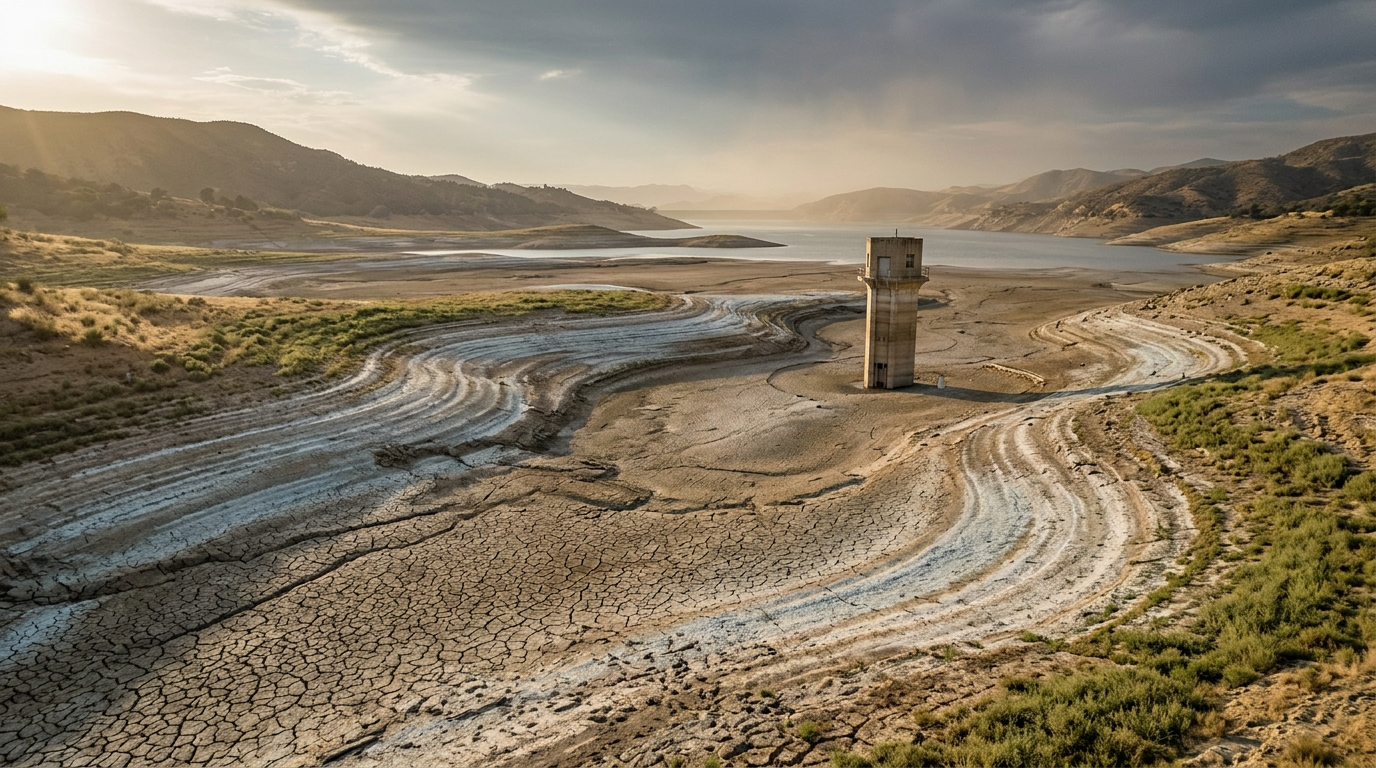
The practical urgency behind snowpack measurement has intensified as the climate of the American West shifts. Snow drought — a condition in which snowpack falls well below historical averages, whether from reduced precipitation or warmer temperatures that convert snow to rain — has become a recurring concern across the region. When snowpack is thin, summer streamflows decline, reservoir levels drop, and competition among agricultural, municipal, and ecological water users sharpens.
Water managers across Western states rely on spring snowpack surveys to set irrigation allocations, negotiate interstate water compacts, and trigger drought contingency plans. The accuracy of these decisions depends on the quality of the underlying measurement. An overestimate of available water can lead to over-allocation and crisis later in the season; an underestimate can impose unnecessary economic pain on farming communities.
The Church Sampler, in this context, is not a quaint relic. It is a decision-support tool embedded in a governance infrastructure that manages one of the most contested natural resources on the continent. Its continued use reflects a pragmatic judgment by the agencies responsible for Western water: that the cost of sending trained personnel into the mountains with aluminum tubes remains justified by the measurement quality those tubes deliver.
As snow drought episodes grow more frequent and water politics in the West grow more strained, the tension between scaling up automated monitoring and preserving labor-intensive field methods is unlikely to resolve cleanly. The question is not whether technology will eventually replace the Church Sampler, but whether the ground-truth standard it represents can be replicated by other means — and what is lost if it cannot.
With reporting from Grist.
Source · Grist