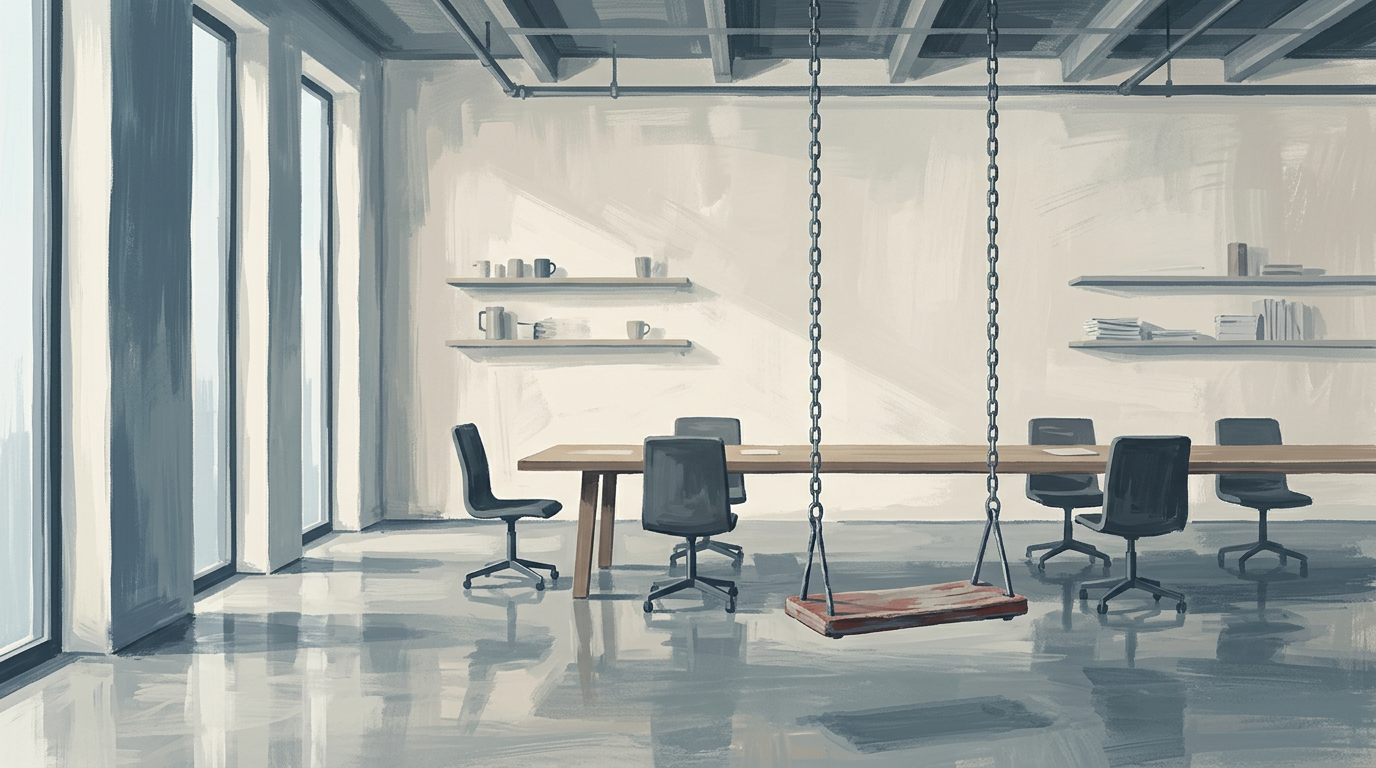
For most of human history, the suggestion that labor should be inherently enjoyable would have been met with confusion. From the arduous conditions of the Roman galley to the rigid constraints of the pre-industrial serf, work was defined by necessity, physical demand, and a lack of personal agency. It was a survival strategy, not a vehicle for self-actualization. However, the last two decades have seen a radical, if not artificial, attempt to rebrand the professional sphere. According to recent reporting, companies have increasingly adopted the aesthetics of leisure, flooding offices with amenities ranging from kombucha on tap to curated social experiences, all in an effort to transform the workplace into a site of communal fulfillment.
This shift represents a significant departure from the traditional employer-employee contract. By reframing the office as a playground and the career as a primary source of identity, organizations have sought to blur the lines between personal life and professional output. While this movement was often framed as an effort to improve employee well-being, the underlying reality suggests a more calculated mechanism of control. The editorial thesis here is that the pursuit of 'fun' at work has not liberated the modern employee; rather, it has created a new, more insidious form of entanglement that prioritizes productivity under the guise of organizational culture.
The Historical Anomaly of the 'Fun' Office
The current obsession with workplace culture is a blip on the timeline of human labor. For centuries, the boundary between the professional and the personal was starkly drawn by the sheer physical requirements of the job. It was only during the late 20th century, particularly within the competitive environments of investment banking and tech, that the 'work hard, play hard' ethos gained traction. This was a transactional bargain: intense labor was to be balanced by lavish perks and social camaraderie. It was an attempt to mitigate the friction of high-pressure environments through the promise of episodic indulgence.
As the digital age arrived, this bargain began to fray. Technology, which was supposed to liberate the workforce, instead dissolved the temporal and spatial boundaries that once protected personal time. John Maynard Keynes famously predicted that technological progress would lead to a 15-hour workweek, yet modern society has consistently converted efficiency into higher expectations rather than increased leisure. We are not working less; we are working more, and we are doing so with an expectation that our labor provides a sense of purpose that transcends the paycheck. This shift has fundamentally altered the psychological stakes of employment.
The Mechanism of Instrumental Engagement
The transformation of the office into an 'experience' is rarely, if ever, a purely altruistic endeavor. By offering gyms, nap pods, and social events, firms effectively internalize the employee’s life within the corporate ecosystem. If the office provides everything an individual needs—sustenance, social connection, and even personal development coaching—the incentive to leave or to disconnect diminishes significantly. This is not about employee happiness; it is about employee availability. The modern workplace has become a closed loop designed to maximize the duration and intensity of engagement.
Furthermore, the logic of consumer markets has been imported into the management of human capital. Employees are now treated as internal customers, subject to 'curated learning journeys' and 'community building.' This creates a performative culture where 'bringing your whole self to work' is not an invitation to authenticity, but a requirement for total commitment. When the job becomes the primary vehicle for identity and self-expression, the ability to critique the organization or set boundaries becomes psychologically difficult. The result is the rise of the 'spiritual workaholic'—an individual who remains tethered to their role not by coercion, but by a deeply ingrained sense of obligation to the corporate mission.
The Erosion of Professional Boundaries
The implications of this shift are profound for both the individual and the broader labor market. For regulators, the blurring of these lines creates a complex landscape where the traditional protections of the 40-hour workweek become increasingly difficult to enforce. When work is framed as a lifestyle choice or a personal 'journey,' the legal distinction between working time and leisure time becomes porous. This puts the burden of boundary-setting entirely on the employee, who is often ill-equipped to resist the subtle, pervasive pressure of a culture that demands constant accessibility.
For competitors and industry leaders, the 'fun' culture has become a standard of operation that is hard to ignore, yet even harder to sustain. Smaller firms and startups often feel compelled to mimic the amenities of tech giants to attract talent, creating an arms race of perks that does little to improve actual job satisfaction. The focus on 'culture' as a competitive asset has largely served to mask the underlying intensification of performance metrics. While the office may look like a playground, the dashboards and analytics governing performance have never been more rigorous, creating a tension between the surface-level camaraderie and the underlying, data-driven reality.
The Future of the Transactional Contract
As the novelty of the corporate playground fades, the question remains whether the workforce will begin to demand a return to a more transactional, and perhaps more honest, relationship with their employers. The recent trend toward hybrid and remote work has already forced a reckoning with the efficacy of on-site perks. If the 'fun' of the office was merely a tool for retention and control, its value proposition collapses the moment the employee is no longer physically present. We may be entering a period where employees prioritize autonomy and clear compensation over the performative culture of the previous decade.
Ultimately, the challenge for the next generation of management is to reconcile the desire for a cohesive organization with the reality that work is, and always will be, a means to an end. The obsession with making work 'fun' has obscured the basic dignity of a job well done. As the distinction between professional and personal life continues to evolve in a digital-first world, the necessity of reclaiming leisure as something separate from the office will become a central tension in the future of labor.
With reporting from Fast Company
Source · Fast Company