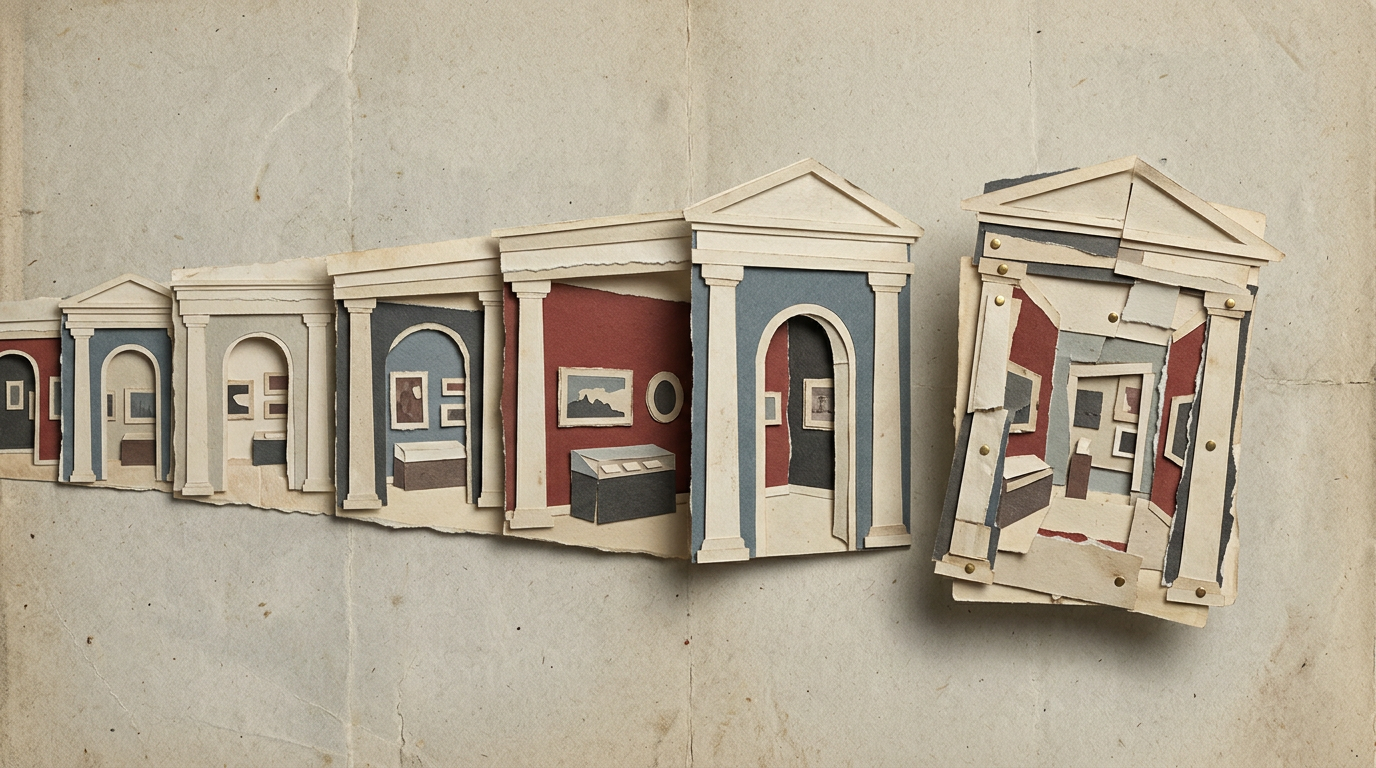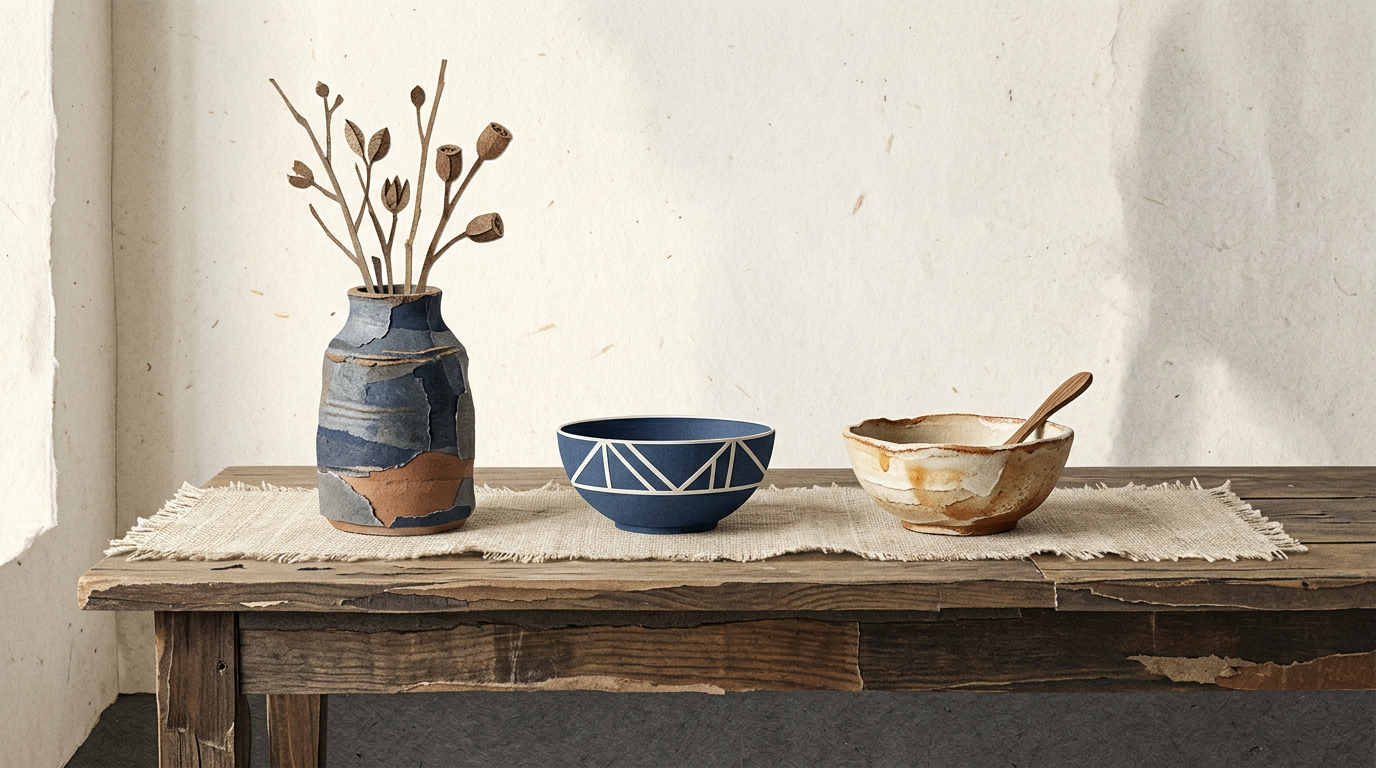
The Nationalmuseum in Stockholm has unveiled a compelling exhibition that places the work of Swedish ceramicist Wilhelm Kåge in direct conversation with the Japanese master Shōji Hamada. This curatorial effort highlights a pivotal moment in the 20th-century design landscape, where the cold, rationalist approach of Nordic functionalism encountered the deeply rooted, spiritual, and tactile traditions of the Japanese Mingei movement. According to reporting from Dagens Nyheter, the exhibition serves as more than a retrospective of two individual artists; it acts as a cultural bridge that once facilitated a shared vision for the role of art in the domestic sphere.
At the heart of this intersection lies the concept of "vackrare vardagsvaror"—more beautiful everyday goods—a philosophy that dominated Swedish design discourse during the mid-20th century. By juxtaposing Kåge’s industrial precision with Hamada’s organic, kiln-fired aesthetic, the exhibition invites a critical re-examination of how modern consumerism has fundamentally altered our relationship with the objects that populate our daily lives. The editorial thesis here is that the dialogue between these two masters was not merely an aesthetic exchange but a moral one, prioritizing the dignity of labor and the utility of the object over the fleeting nature of mass-produced convenience.
The Philosophical Foundation of Functionalism
The movement toward "beautiful everyday goods" was not a solitary Swedish invention, but rather a response to the rapid industrialization that threatened to strip the domestic environment of human warmth. Wilhelm Kåge, long associated with the Gustavsberg porcelain factory, sought to bridge the gap between elite artistic output and the accessible, mass-market products required by a growing middle class. His work was characterized by a rigorous commitment to form and a belief that well-designed objects could elevate the quality of life for the average citizen. This was the era of the "People’s Home" (Folkhemmet), where social democratic ideals were physically manifested through architecture and design.
Simultaneously, in Japan, Shōji Hamada was championing the Mingei movement, which celebrated the beauty of the anonymous, handcrafted object. Unlike the industrial focus of his Swedish contemporaries, Hamada emphasized the relationship between the potter, the clay, and the kiln. The interaction between Kåge and Hamada represents a rare historical convergence where the efficiency of the machine age was tempered by the philosophy of the artisan. This collaboration was not about standardizing production, but about standardizing the quality of experience. The historical context is essential: both men were operating in a world recovering from the trauma of global conflict, looking for ways to rebuild society through the tangible, comforting presence of functional art.
The Mechanism of Aesthetic Exchange
The exchange between Swedish and Japanese design philosophies functioned through a shared respect for material integrity. Kåge’s experimentation with glazes and textures often mirrored the techniques Hamada perfected in Mashiko. The mechanism of this influence was subtle; it was not about copying forms, but about adopting a mindset that valued the process of creation as much as the final product. In the modern era, design is often treated as a superficial layer applied to a product, rather than an integral part of its structural and emotional identity. Kåge and Hamada understood that the object is a witness to the life lived around it.
This synergy also highlights the tension between the "industrial" and the "authentic." When Kåge integrated elements of Japanese aesthetic restraint into his work, he was attempting to humanize the industrial output of Swedish factories. Conversely, Hamada’s awareness of international modernism allowed him to refine his traditional practices without losing their inherent cultural weight. This dynamic demonstrates that true innovation in design often occurs at the periphery of disciplines, where the rigidity of one system is softened by the fluidity of another. The exhibition forces the viewer to consider whether modern design has lost this capacity for synthesis, opting instead for a sterile minimalism that lacks the human touch found in the works of these two masters.
Stakeholders and the Erosion of Quality
The implications of this historical dialogue extend far beyond the museum walls, touching upon the responsibilities of contemporary manufacturers, regulators, and consumers. For the manufacturer, the Kåge-Hamada model suggests that profitability does not have to come at the expense of longevity. In a market dominated by rapid turnover and disposable goods, the focus on "beautiful everyday goods" feels increasingly radical. Regulators, often preoccupied with safety and environmental standards, rarely address the cultural sustainability of the products we consume. If an object is designed to be discarded, it represents a failure of design ethics that would have been alien to the practitioners of the mid-20th century.
For the consumer, the shift toward a "throwaway culture" has created a disconnect between the object and its history. We have become passive recipients of design rather than active participants in a material culture. The exhibition highlights that when we surround ourselves with objects that lack soul or intent, we inadvertently diminish the quality of our own daily rituals. The tension here is between the convenience of the global supply chain and the value of localized, intentional production. As we look at the legacy of these two ceramicists, we must ask whether the democratization of design has inadvertently led to the devaluation of craft.
Outlook and the Future of Domestic Design
What remains uncertain is whether a return to such intentionality is even possible in a globalized, hyper-digital economy. The rise of 3D printing and automated manufacturing processes offers new possibilities for small-scale production, yet these technologies are often used to replicate the speed of mass production rather than the thoughtfulness of the artisan. The question for the next generation of designers is how to reconcile the efficiency of the machine with the human-centric philosophy that Kåge and Hamada embodied. Can we build a future where the "everyday good" is once again treated as an object of lasting value?
As the Nationalmuseum exhibition continues to draw attention, the discourse surrounding the role of art in our homes will likely intensify. We are at a juncture where the environmental and psychological costs of modern consumerism are becoming impossible to ignore. Whether this leads to a resurgence of the "beautiful everyday goods" movement remains to be seen, but the historical record provided by the work of Kåge and Hamada provides a robust framework for those seeking an alternative to the status quo. The challenge is not merely to replicate the past, but to understand the values that made such an exchange possible in the first place.
The history of design is not a linear progression toward better technology, but a fluctuating cycle of values and priorities. As the lines between art, utility, and industry continue to blur, the lessons from the mid-20th century regarding the importance of the human element in production remain as relevant as ever, leaving the observer to determine how much of that legacy is worth preserving in the contemporary home.
With reporting from Dagens Nyheter
Source · Dagens Nyheter