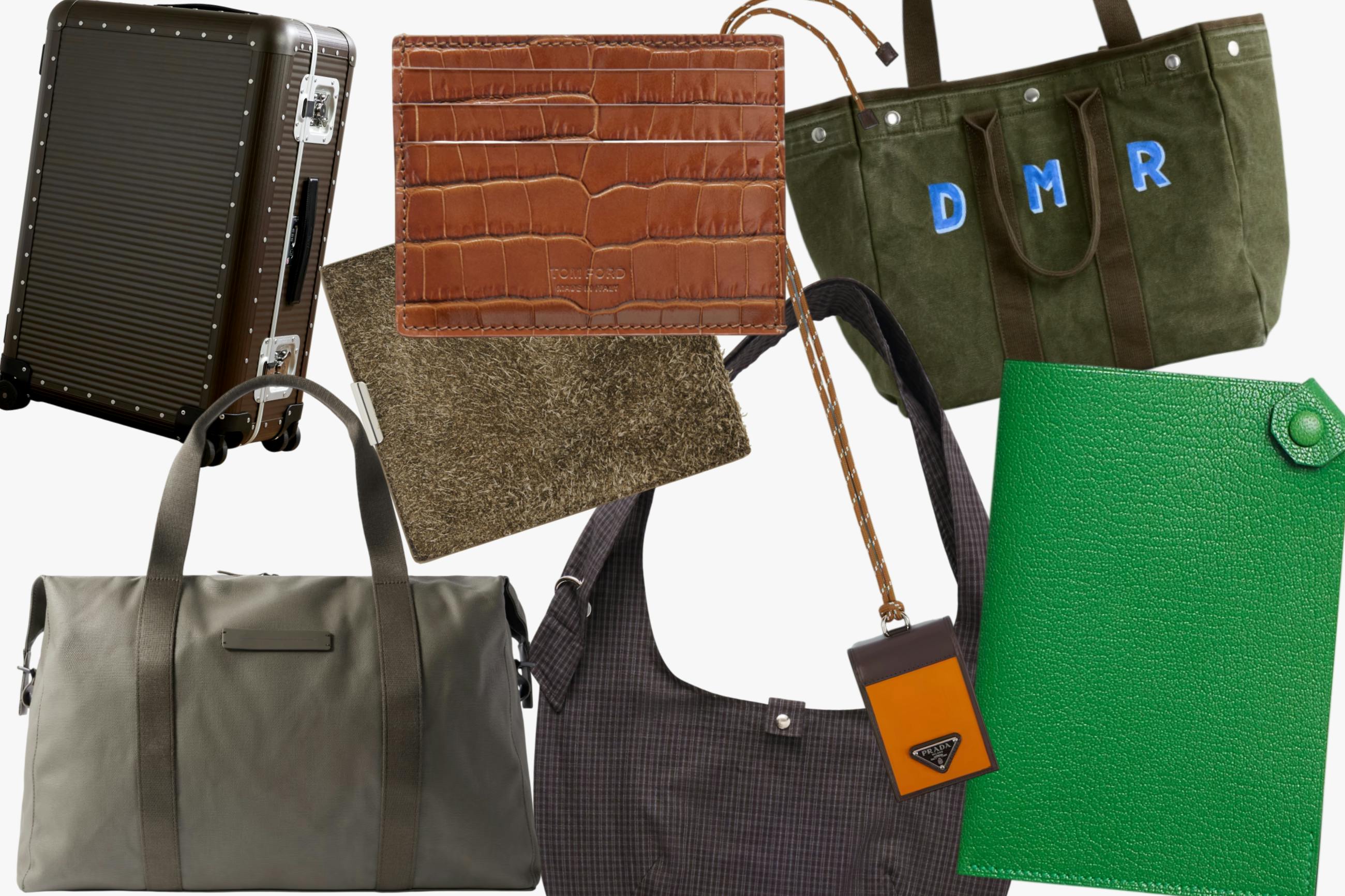
The airport terminal has long functioned as a liminal space — neither origin nor destination — where personal style is routinely subordinated to logistical convenience. Compression socks replace loafers, hoodies replace blazers, and the sartorial ambitions of daily life are checked alongside oversized luggage. Yet a quiet shift in the luxury leather goods market suggests that the most deliberate travelers have stopped trying to dress for the departure lounge altogether. Instead, they have redirected their attention to the granular: passport holders, luggage tags, document folios, and other small-format accessories crafted from high-end leather and designed to outlast any single trip.
The trend responds to a contemporary paradox in luxury consumption — the tension between a high-value wardrobe and the mundane realities of commercial air travel. A five-figure outfit can feel incongruous wedged into an economy seat. A well-made passport holder, by contrast, operates on a different frequency entirely. It is visible at precisely the moments that matter — the check-in counter, the immigration queue, the lounge reception desk — and invisible the rest of the time. That selective visibility is part of its appeal.
Small Leather Goods as Durable Status Markers
The category sometimes referred to in the trade as "small leather goods" or SLG has occupied a strategic position in the luxury business for decades. Wallets, cardholders, and key cases have historically served as entry-level products, offering consumers access to a brand's craftsmanship at a fraction of the cost of a handbag or a trunk. Travel-specific accessories — passport covers, boarding-pass wallets, luggage tags — sit within this same tier but carry an additional layer of meaning. They are not merely affordable luxury; they are contextual luxury, legible only within the rituals of transit.
What distinguishes the current moment is the degree to which major labels have invested in this niche. Leather travel accessories are no longer afterthoughts buried in the back pages of a seasonal catalog. They are featured in dedicated campaigns, styled alongside carry-on luggage, and positioned as objects that age with their owners. The patina that develops on vegetable-tanned leather over years of handling becomes, in effect, a record of movement — a visual autobiography written in stamps, scuffs, and boarding passes. This durability stands in deliberate contrast to the disposability of trend-driven fashion, where relevance is measured in weeks rather than years.
The appeal also reflects broader shifts in how consumers relate to branding. A monogrammed passport holder can carry an instantly recognizable house motif without requiring the wearer to dress head-to-toe in the same label. It permits affiliation without saturation — a calibrated signal rather than a broadcast.
The Vintage Voyager and the Return of Travel as Craft
There is a historical dimension worth noting. The great European leather houses — many of which began as trunk makers and saddlers in the nineteenth century — built their reputations on the premise that travel demanded purpose-built tools. Steamer trunks, hat boxes, and writing cases were not accessories in the modern sense; they were infrastructure. The current enthusiasm for luxury travel accessories echoes that earlier ethos, even if the context has changed from ocean liners to low-cost carriers.
This "vintage voyager" sensibility reframes the act of packing as a form of curation. The passport holder, the luggage tag, the document folio — each becomes a deliberate choice rather than a functional afterthought. In a travel environment increasingly defined by standardization and efficiency, these objects introduce a note of individual intention.
The tension, of course, is whether such objects genuinely represent a return to craftsmanship-led consumption or simply a new surface for brand logos — utility dressed in the language of heritage. The answer likely depends on the object in question and the hand that carries it. What remains clear is that the departure lounge has become a space where taste is communicated not through what one wears, but through what one holds.
With reporting from Highsnobiety.
Source · Highsnobiety