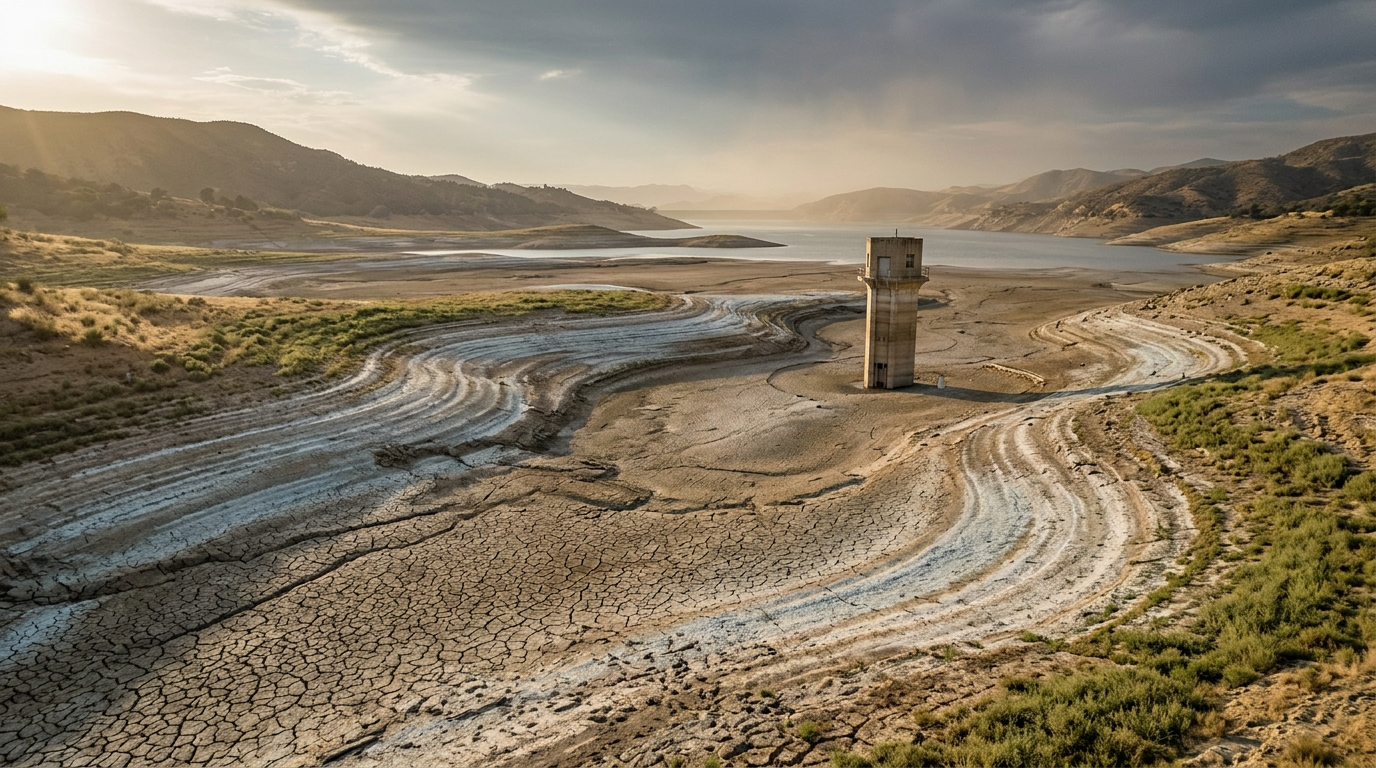
The conflict engulfing the Middle East has moved well beyond a regional security crisis. With hostilities disrupting shipping through the Persian Gulf—the world's primary corridor for urea, ammonia, and sulfur—the supply of essential fertilizers has been effectively severed for nearly a month. The timing is particularly precarious: the Northern Hemisphere is deep into its spring planting season, while Australia is preparing for winter sowing. For farmers who depend on timely delivery of synthetic nutrients to ensure viable yields, the disruption could not have come at a worse moment.
Fertilizer is not a discretionary input. Nitrogen-based compounds such as urea and ammonia are responsible for roughly half of global food production, a dependency that has only deepened since the Green Revolution of the mid-twentieth century. When access to these inputs is interrupted, the consequences do not appear immediately on supermarket shelves—they materialize months later, in diminished harvests and thinning grain reserves.
A market already stretched thin
The current shock lands on a market with remarkably little cushion. Major producing nations, notably China and Russia, had already curtailed fertilizer exports in recent years—China through periodic export restrictions aimed at securing domestic supply, and Russia through a combination of sanctions friction and deliberate supply management following its invasion of Ukraine in 2022. Those earlier disruptions demonstrated how quickly fertilizer scarcity can cascade into food price inflation. In 2022, the spike in natural gas prices—a key feedstock for ammonia synthesis—drove fertilizer costs to historic levels, contributing to a global food price index that reached its highest point on record.
The present disruption threatens to exceed that precedent. The Persian Gulf is not merely one node among many; it is the chokepoint through which a disproportionate share of global sulfur and urea trade flows. With that corridor compromised, buyers across South and Southeast Asia, sub-Saharan Africa, and Latin America face a scramble for alternative supply that the market is poorly positioned to accommodate. Spot prices for urea and ammonia have already reflected this tightness, and the longer the disruption persists, the more likely it becomes that some planting windows will simply close without adequate fertilization.
The asymmetry of impact is worth noting. Wealthier agricultural economies may absorb higher input costs, passing them along as moderate consumer price increases. For import-dependent nations in Africa and South Asia—where fertilizer application rates are already well below agronomic recommendations—the disruption risks not just higher prices but outright unavailability. The 2022 crisis offered a preview: several East African nations saw planting-season fertilizer shortages that contributed to reduced harvests and heightened food insecurity well into 2023.
Climate as compounding variable
What distinguishes this moment from previous supply shocks is the backdrop against which it unfolds. Global agriculture is already operating under increasing climate stress. Extreme heat events, erratic monsoon patterns, and prolonged droughts have become more frequent, eroding the margin of error that farmers once relied upon. A crop that receives adequate fertilizer in a difficult weather year may still underperform; a crop that receives neither adequate nutrients nor favorable weather faces a far grimmer calculus.
The compounding risk is not hypothetical. In recent growing seasons, simultaneous harvest failures across multiple breadbasket regions—a phenomenon climate scientists refer to as correlated crop failure—have moved from a theoretical concern to an observed pattern. If the fertilizer shortage persists through the current planting cycle and coincides with adverse weather in key producing regions, the resulting supply deficit could strain global grain reserves in ways that test the capacity of international food aid systems.
The geopolitical dimension adds a further layer of uncertainty. Fertilizer trade has increasingly become entangled with strategic considerations, as exporting nations recognize the leverage that control over agricultural inputs confers. The current crisis may accelerate efforts by some governments to develop domestic production capacity or diversify supply chains—but such adjustments operate on timescales measured in years, not weeks.
The central tension is stark: the global food system's dependence on a narrow set of chemical inputs, transported through a narrow set of maritime corridors, leaves it structurally vulnerable to precisely the kind of disruption now unfolding. Whether this vulnerability translates into a full-scale food security crisis or a painful but contained price shock depends on variables—the duration of the conflict, the behavior of remaining exporters, the weather—that no single actor controls.
With reporting from Carbon Brief.
Source · Carbon Brief