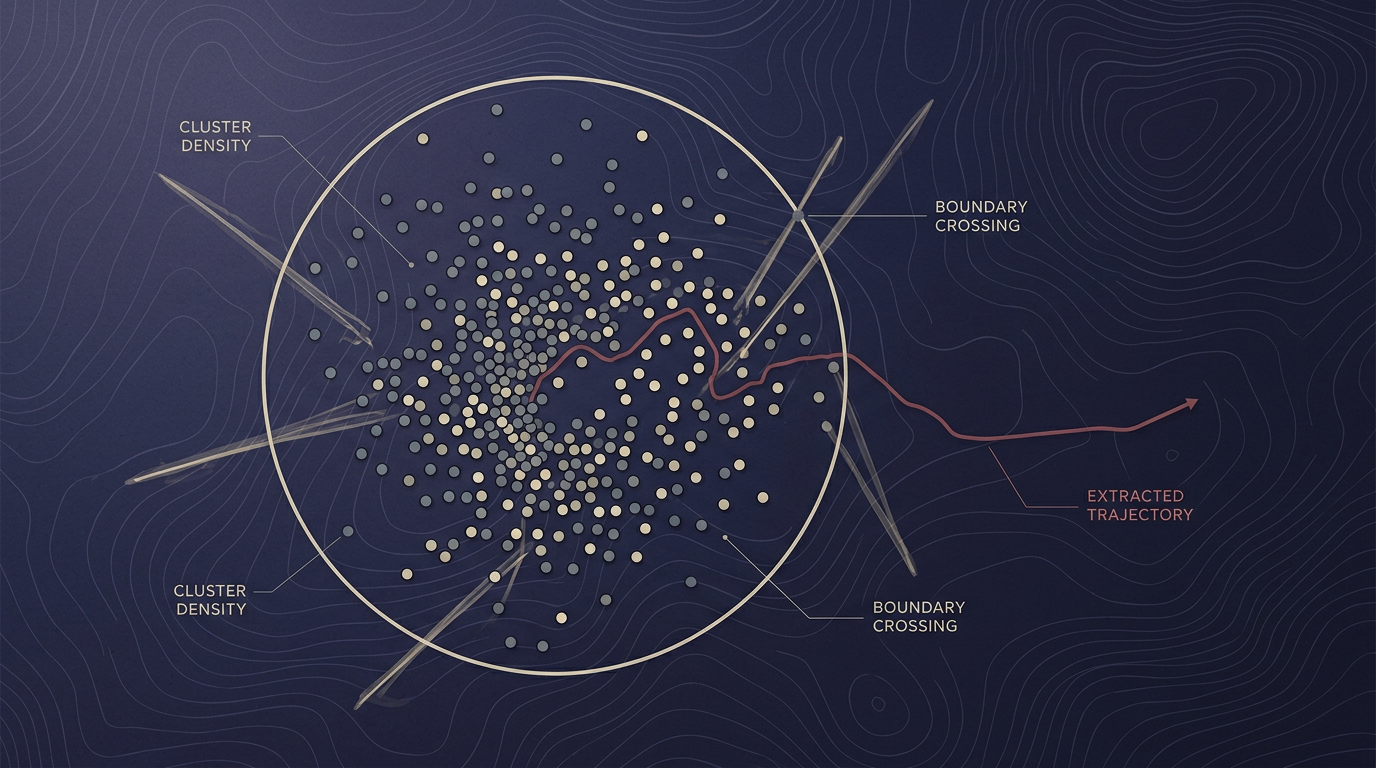
The Supreme Court recently heard oral arguments in Chatrie v. United States, a pivotal case that forces a confrontation between centuries-old constitutional protections and the realities of modern digital surveillance. The case centers on the 2019 investigation of a bank robbery near Richmond, Virginia, where law enforcement utilized a geofence warrant to identify potential suspects. By compelling Google to provide location data for every device within a specific geographic area at the time of the crime, investigators were able to isolate Okello Chatrie as a prime suspect. This method represents a significant shift in how police gather evidence, moving from targeted, individualized suspicion to a broad, indiscriminate dragnet.
At the heart of the debate is the extent to which the Fourth Amendment protects individuals from digital surveillance that encompasses innocent bystanders alongside potential perpetrators. The legal question is whether the digital footprint generated by everyday smartphone use constitutes a reasonable expectation of privacy that requires a more rigorous standard of judicial oversight. As government agencies increasingly rely on tech-enabled data harvesting, the Court’s eventual decision will likely establish a new precedent for how law enforcement interacts with the massive repositories of location data held by private corporations.
The Evolution of Digital Probable Cause
The reliance on geofence warrants marks a departure from traditional investigative practices, which historically required a specific connection between a suspect and a crime before a warrant could be issued. Under the standard interpretation of the Fourth Amendment, a warrant must be supported by probable cause and describe with particularity the place to be searched and the persons or things to be seized. Geofence warrants invert this logic by starting with a geographic area and a time window, effectively subjecting every person within that perimeter to a digital search. This creates a structural tension with the requirement that searches be narrow in scope and individualized in nature.
Historically, the law has struggled to keep pace with the granularity of location data provided by modern telecommunications infrastructure. When the Fourth Amendment was drafted, the idea of a 'search' involved physical entry or the seizure of tangible property. Today, the digital trail left by a smartphone—which can pinpoint a user's location within a three-meter radius and update every few minutes—provides a level of behavioral insight that was once unimaginable. The legal community is now grappling with whether this data should be treated as a business record, which is subject to lower privacy protections, or as a deeply personal narrative of an individual’s life that warrants the highest level of constitutional shielding.
The Mechanism of Indiscriminate Data Harvesting
The mechanics of a geofence warrant are inherently exclusionary to the concept of individualized suspicion. When a police department requests data from a provider like Google, they are not asking for information about a specific person; they are asking for a list of everyone who was present at a specific location. The service provider then processes this request by filtering its vast databases of user location history to produce a list of identifiers. This process effectively turns private tech companies into arms of the state’s investigative apparatus, regardless of whether the companies themselves are willing participants or are merely complying with a court order.
This dynamic creates a perverse incentive structure for both law enforcement and technology platforms. For police, the allure of geofence warrants lies in their efficiency; they offer a high-tech shortcut to identify leads without the need for traditional footwork or witness testimony. For technology companies, the existence of this data creates a liability that is increasingly difficult to manage. While companies often argue that they are simply complying with the law, the scale of these requests forces them to define the limits of their own cooperation. The technical reality is that the data is not just a collection of points on a map; it is a granular map of human movement that reveals habits, associations, and personal proclivities that were never intended to be public record.
Stakeholders and the Privacy Trade-off
The implications of this case extend far beyond the immediate parties involved in the Richmond robbery investigation. For regulators and privacy advocates, the primary concern is the normalization of mass surveillance tools in routine criminal investigations. If the Supreme Court permits the continued use of geofence warrants, it could signal to local and federal law enforcement that broad digital sweeps are a standard, permissible tool. This would likely lead to an increase in the frequency and scope of such warrants, potentially encompassing political protests, religious gatherings, or other activities protected under the First Amendment, where the incidental collection of data could have a chilling effect on public participation.
Conversely, law enforcement agencies argue that these tools are essential for solving complex crimes where traditional evidence is scarce. They contend that the digital age requires updated investigative techniques to match the sophistication of criminal activity. For the average consumer, the situation is one of profound vulnerability. Most users are unaware of the extent to which their location history is being logged, stored, and potentially subpoenaed. The tension between public safety and individual privacy is not merely a legal abstraction; it is a daily reality for anyone carrying a device that serves as a constant, involuntary witness to their movements.
Future Outlook and Judicial Uncertainty
What remains uncertain is how the Court will balance the government's interest in effective law enforcement against the individual's right to be free from unreasonable searches. The justices must decide whether the sheer scale of modern data collection necessitates a fundamental rethinking of what constitutes a 'reasonable' search in the digital age. A ruling that imposes strict limits on geofence warrants could force law enforcement to return to more targeted investigative methods, while a permissive ruling could solidify a new era of digital surveillance where proximity to a crime scene is sufficient to trigger a state-mandated intrusion into one’s private life.
As the digital landscape continues to evolve, the question of who owns our location data—and who has the right to access it—will likely remain at the forefront of constitutional litigation. The Court’s decision in Chatrie will not be the final word on the matter, but it will certainly set the tone for how the judiciary navigates the intersection of technology and civil liberties for years to come. The challenge lies in creating a framework that is both robust enough to protect individual privacy and flexible enough to account for the realities of modern criminal activity.
As the legal arguments settle and the Court prepares its opinion, the fundamental tension between the convenience of digital connectivity and the preservation of individual autonomy remains unresolved. The outcome of this case will define the scope of the Fourth Amendment for a generation, leaving observers to consider whether the digital age will ultimately strengthen or erode the foundational principles of privacy in a democratic society.
With reporting from The Verge
Source · The Verge