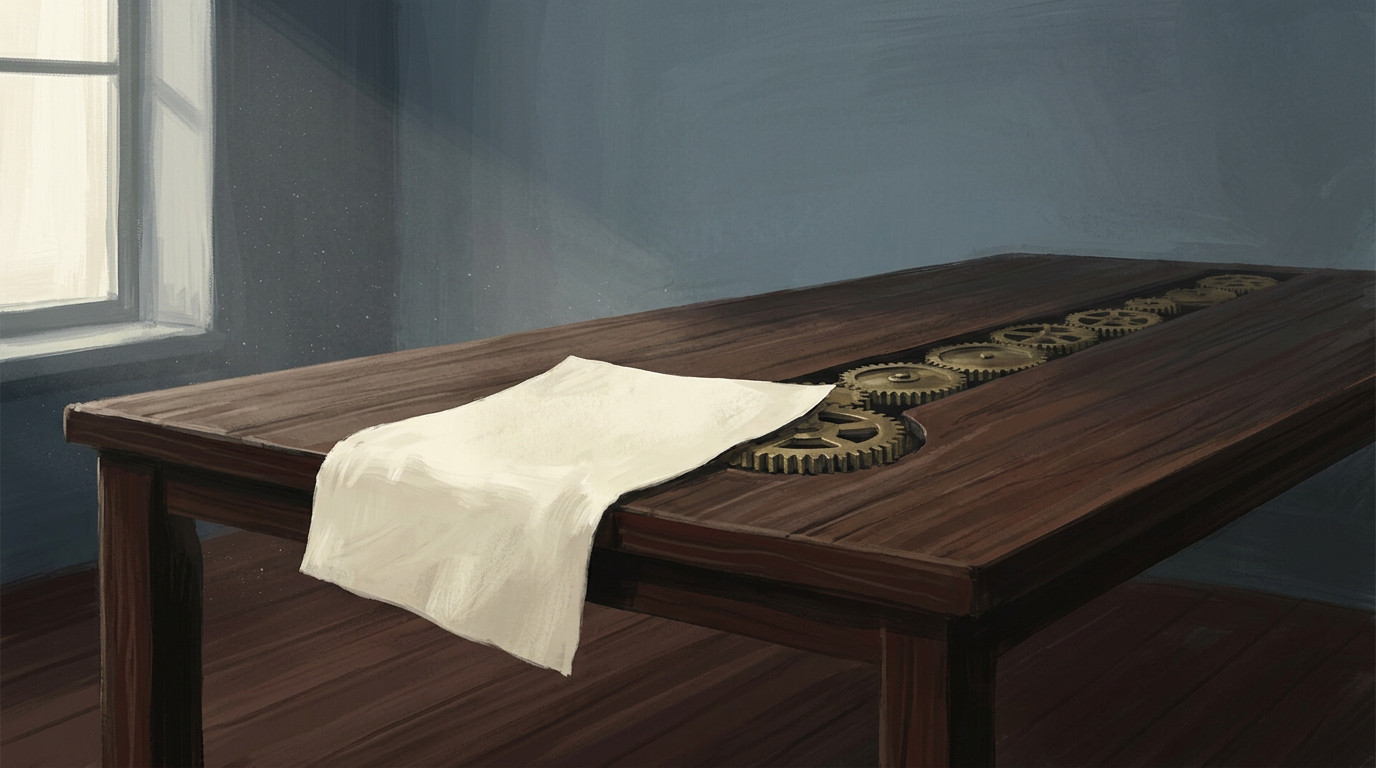
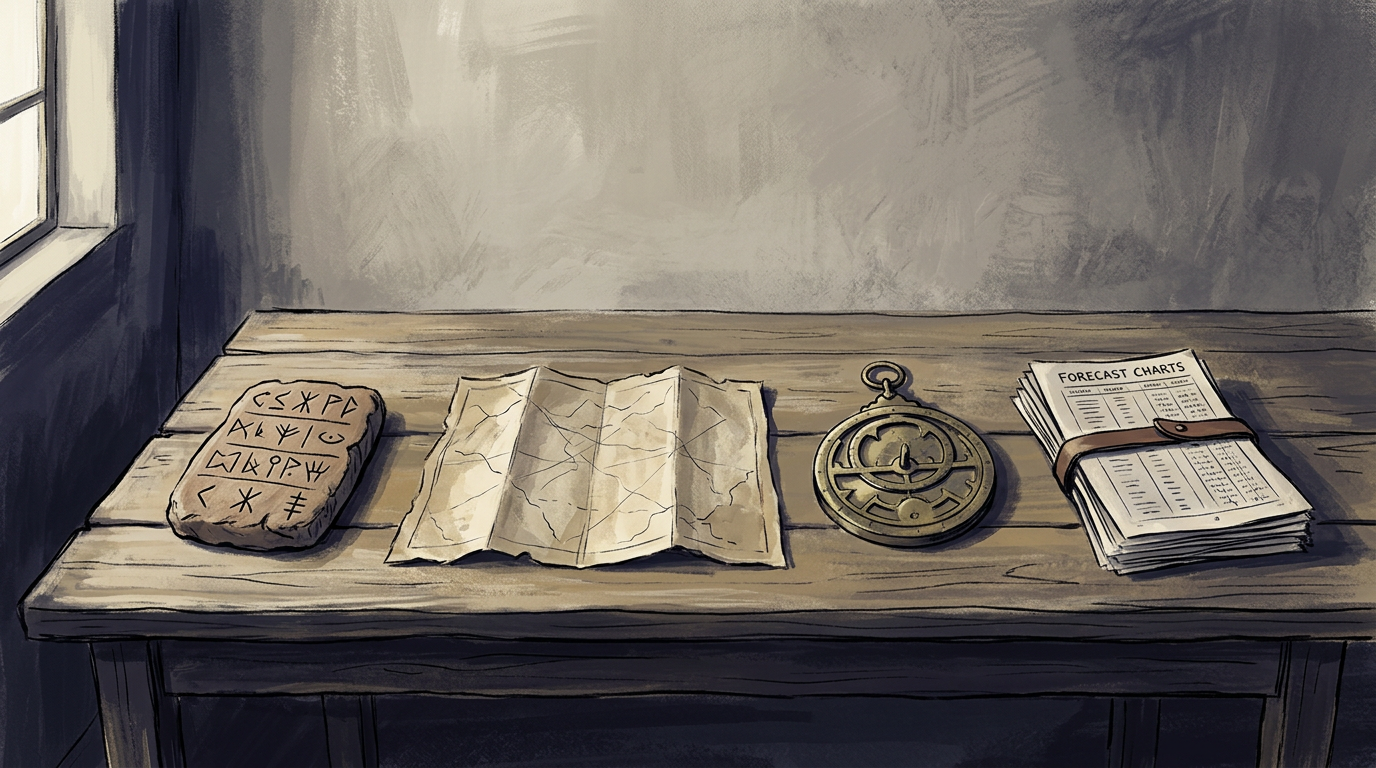
In the history of Western metaphysics, transcendence has long been synonymous with creatio ex nihilo — the idea of a creator standing outside of and prior to the material universe. This vertical hierarchy defines the divine by its separation from the mundane, establishing a binary between the architect and the architecture. For centuries, this framework has served as the default lens through which Western philosophy and theology evaluate claims about the ultimate, the infinite, and the sacred. It has also, as scholar Bin Song argues in a recent work, led Western observers to conclude — perhaps prematurely — that Chinese thought lacks a concept of transcendence entirely.
Song's intervention centers on the concept of Sheng Sheng, a term often rendered as "generative life" or "perpetual renewal." Unlike the static, external deity of the Mediterranean theological tradition, Sheng Sheng suggests a transcendence that is immanent — an infinite capacity for creation that exists within the unfolding of the natural world rather than apart from it. The move is from a God who makes the world to a cosmos that is perpetually making itself through an internal, vital logic. By placing creatio ex nihilo and Sheng Sheng in direct dialogue, Song reopens a question that comparative philosophy has circled for decades without resolution: whether transcendence necessarily requires an ontological gap between creator and creation.
The Western frame and its blind spots
The assumption that transcendence demands a radical break between the divine and the material has deep roots. It runs through the Abrahamic theological traditions, through Neoplatonism, and into the modern period via thinkers from Descartes to Kant. When early Jesuit missionaries encountered Confucian and Daoist thought in the sixteenth and seventeenth centuries, they struggled to locate a supreme being analogous to the Christian God. The absence of such a figure was frequently interpreted not as a different metaphysical architecture but as a deficiency — a philosophical tradition that had simply failed to reach the heights of theological reasoning.
This interpretive habit persisted well into the twentieth century. Comparative philosophy, even at its most generous, often operated within categories derived from Greek and Christian thought. Concepts like "being," "substance," and "first cause" served as the measuring sticks against which non-Western traditions were evaluated. The result was a structural asymmetry: Chinese philosophy could be studied, but it was rarely permitted to redefine the terms of the conversation. Song's work pushes against this asymmetry directly, not by dismissing the Western framework but by demonstrating that it captures only one possible geometry of the divine.
Immanent transcendence and the logic of renewal
The concept of Sheng Sheng draws from a lineage that includes the Yijing (the Book of Changes) and the broader Neo-Confucian tradition, where the cosmos is understood not as a finished artifact but as an ongoing process of transformation. Transcendence, in this reading, is not located above or beyond the world. It is located in the world's ceaseless capacity to generate novelty from within itself. The infinite is not found in the void before creation but in the rhythm of becoming that never exhausts itself.
This is not merely an academic distinction. It carries implications for how philosophy engages with ecology, ethics, and the relationship between human agency and natural order. A metaphysics grounded in perpetual renewal positions the human being not as a creature set apart from nature by divine fiat but as a participant in a generative process that precedes and exceeds any individual life. The ethical weight shifts accordingly — from obedience to a transcendent lawgiver toward attunement to a living pattern.
Song's framework does not ask Western philosophy to abandon creatio ex nihilo. It asks, instead, that the concept of transcendence be recognized as a genus with more than one species. The theoretical bridge Song constructs does not collapse the distance between traditions; it makes the distance legible on both sides.
What remains unresolved is whether such a bridge can hold under the pressure of genuine philosophical disagreement. The creatio ex nihilo tradition insists on a radical asymmetry between creator and creation — an asymmetry that Sheng Sheng dissolves by design. Whether these two visions can coexist within a single expanded category, or whether they ultimately describe different phenomena wearing the same name, is a tension that Song's work surfaces rather than settles.
With reporting from Notre Dame Philosophical Reviews.
Source · Notre Dame Philosophical Reviews