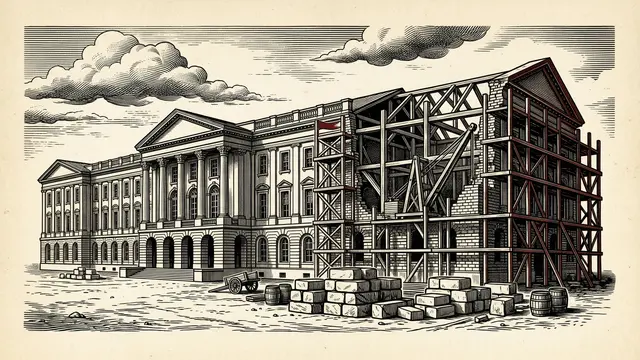
In the quiet, wood-paneled corridors of the American Ivy League, a profound dissonance has taken hold. For decades, institutions like Yale, Harvard, and Princeton have operated under the assumption that their prestige is self-evident—a product of rigorous standards and the cultivation of future leadership. Yet, as David Bromwich, a veteran scholar of literature at Yale, recently observed, this institutional aura is increasingly viewed by the public not as a beacon of excellence, but as a bastion of opacity and performative virtue. The crisis of trust currently facing these universities is not merely a matter of public relations; it is a structural failure born from the abandonment of the university’s primary mission: the transmission of knowledge and the rigorous clash of ideas.
According to recent reporting in Persuasion, the internal reckoning within the halls of Yale has brought to light a systemic erosion of academic credibility. Bromwich, who served on a committee tasked with diagnosing this decline, points to a cocktail of grade inflation, political homogeneity, and a lack of transparency in admissions that has left the public alienated. This is not simply a critique of campus culture; it is an analytical assessment of an elite class that has prioritized the appearance of inclusion over the reality of intellectual development. The thesis is clear: by attempting to be everything to everyone, elite universities have ceased to be the rigorous, meritocratic engines they once claimed to be.
The Architecture of Opacity
The fundamental problem, as Bromwich identifies, is the loss of a shared understanding regarding the purpose of higher education. In the 18th century, the concept of "publicity"—the act of making criteria known and accessible—was the hallmark of a functional institution. Today, elite admissions have become a labyrinthine process defined by "holistic" evaluations that often serve to obscure rather than illuminate. While these systems were designed with the earnest intent of broadening the student base, they have ironically created a landscape where only those with the cultural capital to navigate the "game" succeed. This opacity breeds profound distrust, as the public sees the high sticker prices and complex financial aid models as a form of false advertising.
Furthermore, the reliance on subjective personality assessments in admissions has a documented, dark history. From the early 20th-century efforts to limit Jewish enrollment to contemporary concerns regarding the treatment of Asian applicants, the "holistic" model has frequently acted as a veil for discriminatory practices. When admissions officers are tasked with evaluating a student’s "personality" or "liveliness," they are inevitably applying their own cultural biases. This subjectivity, while presented as a democratic ideal, effectively shields the institution from accountability. It replaces the objective standard of academic merit with a nebulous judgment that favors the status quo under the guise of diversity.
The Inflation of Distinction
Beyond the gates of the admissions office, the internal life of the university is suffering from a parallel decline in rigor. Grade inflation has reached a point where the A-grade, once a signifier of exceptional achievement, has become the statistical median. When 70% of grades in a prestigious institution fall within the A-range, the very mechanism of distinction is destroyed. This creates a perverse incentive structure: students gravitate toward "gut" courses that guarantee a high grade, avoiding the intellectually demanding subjects where the risk of a lower mark is real. The result is a hollowed-out curriculum where the pursuit of knowledge is secondary to the accumulation of credentials.
This phenomenon is not merely a failure of individual professors; it is a systemic collapse of the incentive to maintain standards. As Bromwich notes, there is a "fake niceness" inherent in this system—a reluctance to tell students that their work is merely average, or worse, poor. By shielding students from the reality of their intellectual performance, universities are failing in their duty to prepare them for the friction of the real world. A university that refuses to distinguish between the mediocre and the exceptional is a university that has abandoned its commitment to intellectual excellence. The consequence is a cohort of graduates who may possess the degree, but who have been deprived of the intellectual tempering that comes from rigorous, honest assessment.
The Homogeneity of Inquiry
The political climate on campus represents the final, and perhaps most visible, pillar of this crisis. The overwhelming preponderance of faculty members with left-liberal political leanings is not, in itself, the primary issue; rather, it is the resulting conformity that stifles free inquiry. When a university becomes an ideological echo chamber, the "clash of ideas" that John Stuart Mill championed becomes a theoretical concept rather than a lived reality. Students and faculty alike report a fear of expressing unpopular views, leading to a culture of self-censorship that is antithetical to the spirit of the academy. This is not a matter of explicit indoctrination, but of an implicit filter that discourages the challenging of consensus.
This intellectual monoculture is a downstream effect of the professional-managerial class dominating the university structure. As these institutions become more deeply integrated into the political and cultural life of the elite, they mirror the divisions of the broader society. The danger is that the university loses its character as a neutral site for the pursuit of truth. When ideological criteria are covertly applied to hiring and tenure, the institution sacrifices its autonomy and its ability to foster genuine debate. The challenge for the future is to restore a sense of mission that prioritizes intellectual diversity over political alignment, a task that remains fraught with difficulty in an era of intense polarization.
The Outlook for Institutional Reform
The path toward restoring trust is neither simple nor guaranteed. It requires a fundamental shift in how universities view their mission, moving away from being a "second home" or a social engineering project, and back toward the creation and transmission of knowledge. This would involve a return to explicit, meritocratic standards for admissions, a renewed commitment to rigorous grading, and a conscious effort to protect the space for dissenting viewpoints. The question remains whether these institutions have the internal fortitude to dismantle the very systems of prestige and social curation they have spent decades constructing.
As we look forward, the tension between the desire for institutional growth and the necessity of academic integrity will likely intensify. The "reflection theory" of culture—the idea that a university must mirror the society it serves—continues to exert a powerful influence on administrative decision-making. Yet, if universities continue to prioritize reflection over rigorous inquiry, they risk becoming irrelevant to the very public they seek to serve. The future of the American university depends on its ability to reclaim its role as a distinct, demanding, and intellectually autonomous institution. Whether that is possible in a culture that increasingly demands conformity is the central, unresolved question of our time.
With reporting from Persuasion
Source · Persuasion