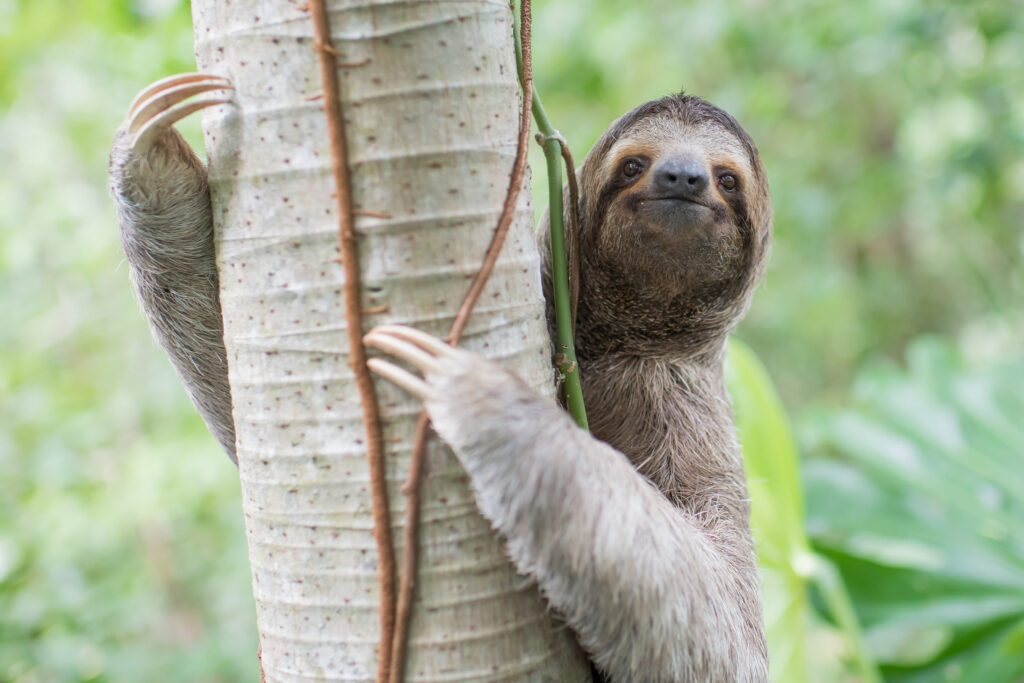
Behind the neon-lit facade of Orlando's tourist corridors, a grim logistical reality has emerged for one of the world's most specialized mammals. At an attraction known as "Sloth World," at least 31 sloths have died after being imported and housed in a warehouse environment. The facility, tucked behind the typical sprawl of souvenir shops and bars, serves as a stark illustration of the friction between commercial wildlife exhibitions and biological necessity.
Sloths are notoriously fragile subjects for relocation. Evolutionarily fine-tuned to specific tropical microclimates, their immune systems and digestive processes frequently fail when subjected to the stress of international transport and the artificial conditions of captivity. For these animals, the transition from a canopy habitat to a shipping crate is rarely just a move — it is a physiological trauma. That so many died at a single facility in a major American tourist market raises questions not only about the operator but about the regulatory architecture that permits such operations to exist.
The supply chain behind the encounter economy
The deaths at Sloth World sit within a broader commercial pattern. Over the past decade, "animal encounter" attractions have proliferated across the United States, driven by social media demand for shareable moments with exotic species. Sloths, with their placid demeanor and photogenic faces, have become particularly sought-after draws. The business model is straightforward: import animals from source countries in Central and South America, house them in accessible venues, and charge visitors for close-contact sessions.
The economics of this model reward speed and volume over animal welfare. Wild-caught sloths are cheaper to acquire than captive-bred ones, and the permitting process for exhibiting exotic animals in the United States varies dramatically by state. Florida, home to one of the country's largest concentrations of roadside zoos and exotic animal attractions, has historically maintained a licensing framework that critics describe as permissive. The state requires a Class III wildlife license for certain exotic species, but enforcement and inspection capacity have long lagged behind the pace of new openings.
This regulatory patchwork means that a facility can legally receive shipments of wild-caught sloths without necessarily demonstrating the veterinary infrastructure or environmental controls needed to keep them alive. The result is a supply chain in which mortality is, in effect, priced in — operators absorb animal losses as a cost of doing business rather than treating them as a signal to halt operations.
Biology versus captivity
The biological mismatch at the core of these deaths is well documented in zoological literature. Two-toed and three-toed sloths occupy narrow ecological niches in neotropical forests, where temperature, humidity, and diet remain remarkably stable. Their metabolisms are among the slowest of any mammal, a trait that makes them acutely sensitive to environmental disruption. Captive sloths frequently develop gastrointestinal complications, respiratory infections, and stress-related immune suppression — conditions that can prove fatal within weeks of arrival at a new facility.
Accredited zoos that maintain sloth populations invest heavily in climate-controlled enclosures, specialized diets, and veterinary monitoring. Even under those conditions, captive husbandry remains challenging. A warehouse behind a strip of Orlando tourist shops represents a fundamentally different proposition. The gap between what these animals require and what a low-overhead commercial attraction can provide is not a matter of incremental improvement; it is structural.
The situation at Sloth World is unlikely to remain an isolated case study. The incentive structure that produced it — consumer demand for novelty encounters, low barriers to entry for exhibitors, fragmented oversight — remains intact across much of the country. Whether the scale of mortality in Orlando prompts legislative or regulatory response at the state or federal level, or whether it is absorbed as another data point in a recurring pattern, may depend on how much public attention the case sustains. The tension between a growing appetite for animal proximity and the biological limits of the animals themselves shows no sign of resolving on its own.
With reporting from Inside Climate News.
Source · Inside Climate News