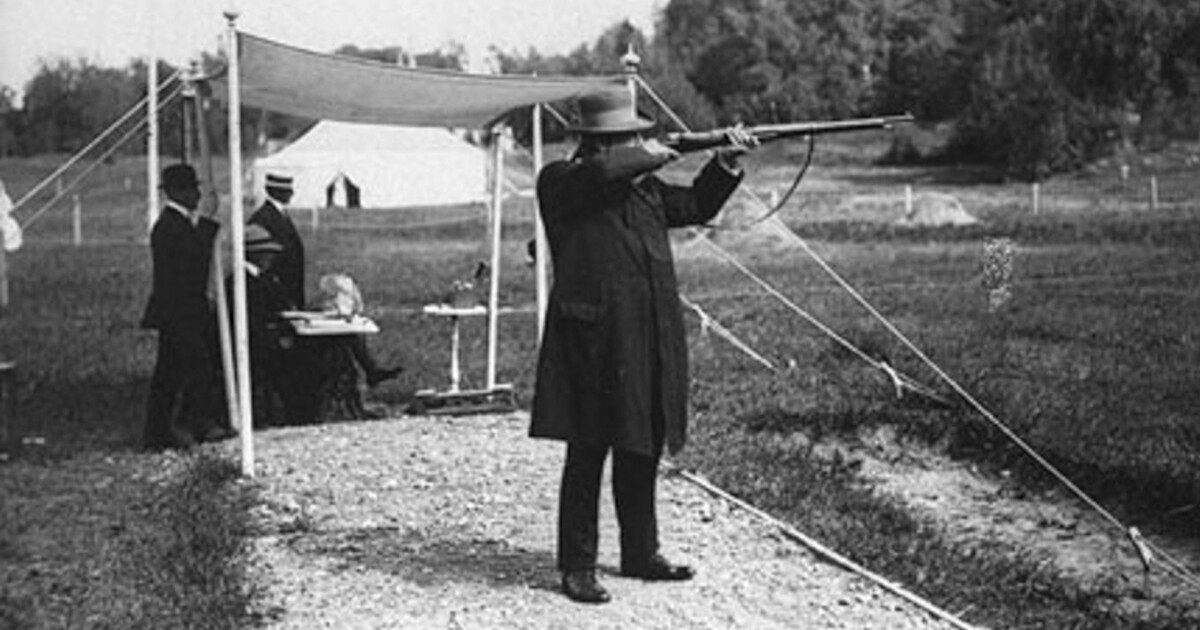
When Haruki Murakami first saw Paul Theroux’s Chinese-made firearm, his observation was pointed: “You’re the only writer I know who has a gun.” In the polite, often insulated circles of contemporary global literature, the presence of a weapon is a jarring dissonance. Yet, as Theroux reflects, he is far from the first man of letters to keep a literal arsenal alongside his metaphors.
The history of the armed author is a study in both utility and pathology. Ernest Hemingway’s life was defined by the heavy weight of hunting rifles; William Burroughs favored the compact lethality of the pistol. Hunter S. Thompson, perhaps the most flamboyant of the group, famously categorized his extensive collection not as weapons, but as “tools, or toys.” For these men, the gun was an extension of a public persona—a physical manifestation of the ruggedness or lawlessness they cultivated on the page.
However, the romanticization of the writer-marksman eventually hits a grim terminal point. Whether viewed as an instrument of sport or a plaything of the counterculture, the firearms owned by Hemingway, Burroughs, and Thompson were ultimately used with tragic violence. In tracing this lineage, Theroux highlights a persistent, if uncomfortable, tension: the way the literary imagination seeks to domesticate an object designed specifically for destruction.
With reporting from London Review of Books.
Source · London Review of Books