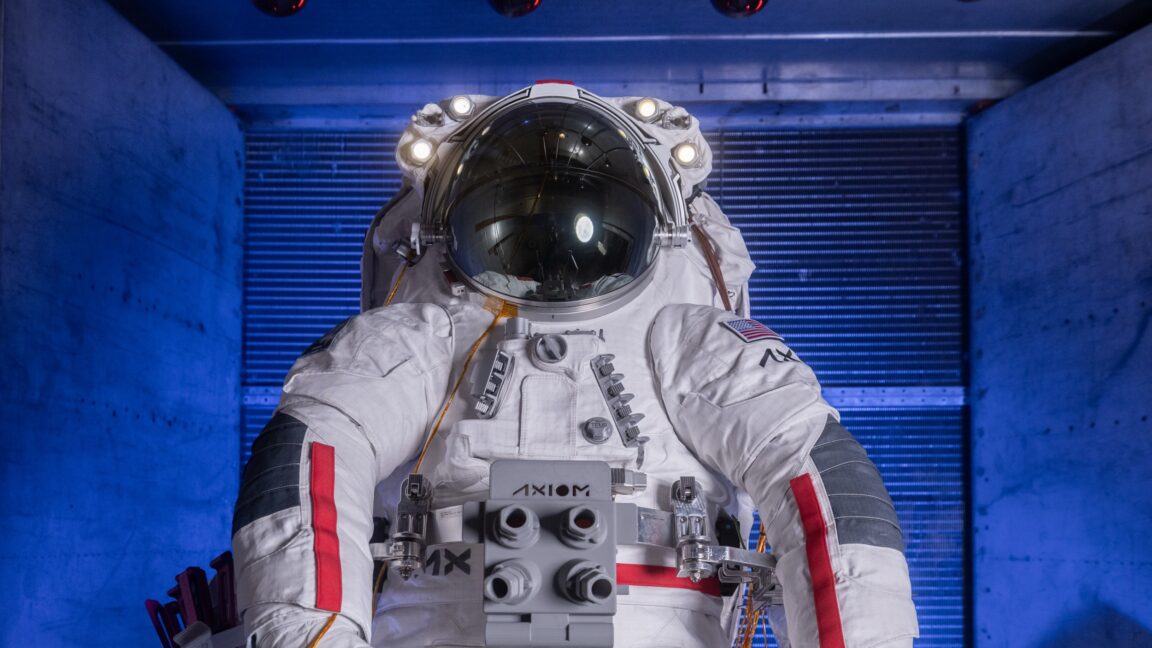
The architecture of the Artemis program is a sprawling puzzle of physics and bureaucracy, and while the foundational pieces — the Space Launch System rocket and the Orion capsule — are currently proving their mettle, the "last mile" of the journey remains the most precarious. As Orion nears its high-stakes reentry into Earth's atmosphere, NASA is turning its attention to the Human Landing System (HLS), the critical vehicle tasked with ferrying astronauts from orbit to the lunar surface.
To date, the development of these landers by SpaceX and Blue Origin has been complicated by the requirement to dock with the Lunar Gateway, a planned orbital station positioned in a highly elliptical "near-rectilinear halo orbit" — a path around the Moon that balances gravitational forces to minimize the fuel needed to maintain position. While the Gateway is intended to serve as a long-term hub for deep-space exploration, the technical overhead of reaching it has become a primary concern for contractors working against a ticking clock. In a bid to streamline the path to the surface, NASA has officially removed the Gateway docking requirement for early HLS missions.
A concession to gravity and schedule
The decision reflects a pivot toward engineering pragmatism. By allowing SpaceX's Starship HLS and Blue Origin's Blue Moon lander to bypass the orbital outpost on initial crewed missions, the agency is shedding logistical weight in favor of speed. The reasoning is straightforward: every additional rendezvous point in cislunar space introduces complexity in navigation, propellant budgets, and mission timing. Docking with a station in a halo orbit — one that does not circle the Moon in a conventional low-altitude path but instead swings far out into space before looping back — demands precise phasing maneuvers that compound risk and extend mission timelines.
The Gateway was conceived in part as a political and programmatic anchor, a way to give international partners a tangible role in lunar exploration and to justify sustained investment in deep-space infrastructure. Canada, the European Space Agency, and Japan have all committed modules or components. Removing the docking requirement for early landings does not cancel the station, but it does reorder priorities. The Gateway becomes a second-phase asset rather than a prerequisite, a staging post that must earn its place in the architecture by demonstrating operational value once it is actually in orbit and functional.
This kind of architectural simplification has precedent. The Apollo program went through its own winnowing process in the 1960s, discarding Earth-orbit rendezvous and direct-ascent profiles in favor of lunar-orbit rendezvous — the mode that ultimately succeeded. What mattered then, as now, was identifying the approach that balanced technical feasibility against schedule pressure.
Two landers, two engineering philosophies
The revised plan sharpens the contrast between NASA's two commercial lander providers. SpaceX's approach relies on Starship, a vehicle of unprecedented scale that requires multiple orbital refueling flights before it can depart for the Moon. The refueling chain is itself a major development challenge, one that introduces its own scheduling dependencies even as the Gateway requirement falls away. Blue Origin's Blue Moon lander, smaller in scope, faces a different set of integration questions — chief among them the launcher it will ride and the rendezvous profile it will follow to meet Orion in lunar orbit.
Stripping the Gateway from early missions does not eliminate rendezvous operations altogether. The landers must still meet the Orion capsule somewhere in the Moon's gravitational neighborhood to transfer crew. The question shifts from "how do we dock at a station" to "where exactly do we meet, and how do we certify that meeting point as safe for crew transfer in deep space." It is a simpler problem, but not a simple one.
The broader signal is one of triage. NASA is distinguishing between what is necessary to land humans on the Moon and what is desirable for a sustained lunar presence. The Gateway falls into the latter category. The landers, and the propulsion chains that feed them, fall into the former. Whether this reordering holds through future budget cycles and administration changes remains an open variable — one that has historically reshaped every major NASA program at least once before hardware reaches the pad.
With reporting from Ars Technica Space.
Source · Ars Technica Space