The boundaries between psychology, philosophy, and spirituality have always been porous, bleeding into one another until the distinctions feel more like academic jargon than functional differences. Modern Cognitive Behavioral Therapy (CBT), for instance, finds its DNA in the Rational Emotive Behavior Therapy of Albert Ellis, which itself was a direct descendant of Stoic thought. Both systems operate on the premise that our suffering stems not from events themselves, but from the mistaken core beliefs we wrap around them. This lineage suggests that the "hacks" of modern wellness are often just ancient wisdom rebranded for a secular age.
This synthesis extends into the realm of existential psychotherapy, where the works of Irvin Yalom and Otto Rank serve as a bridge between the clinical and the metaphysical. By drawing on the existentialism of Sartre and Camus—and reaching further back to Plato—these practitioners emphasize the radical acceptance of death as a prerequisite for life. It is a Western echo of the Buddhist prescription to meditate on one’s own mortality, a practice designed to strip away the ego’s illusions and confront the raw fact of impermanence.
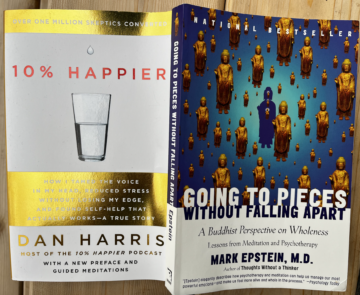
Despite the historical weight of these ideas, the friction of daily life often prevents us from engaging with them. We are frequently pulled back into the minutiae of the mundane, a struggle documented by contemporary figures like Dan Harris, whose transition from a televised panic attack to skeptical meditation advocate highlights the difficulty of the "buy-in." Harris’s journey, guided by thinkers like psychiatrist Mark Epstein, underscores a fundamental tension: we know that change is the only constant, yet we spend our lives constructing elaborate defenses against it.
Ultimately, these disparate traditions converge on the Heraclitean observation that no one steps into the same river twice. Whether through the lens of Jewish Buddhism or existentialist thought, the goal remains the same: to navigate the inevitable mourning that comes with change without falling apart. By recognizing that the river is always moving, we might finally learn how to swim.
With reporting from 3 Quarks Daily.
Source · 3 Quarks Daily