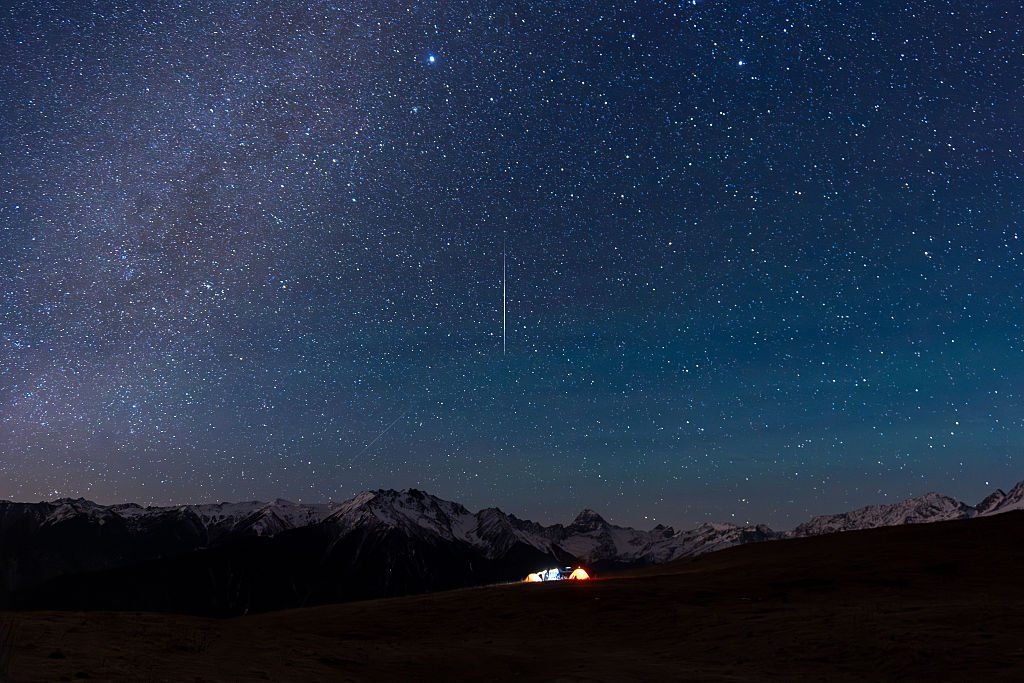
For nearly three millennia, humanity has looked to the April sky to witness the Lyrids. This annual meteor shower, documented in Chinese records as far back as 687 BCE, remains one of the most reliable fixtures in the celestial calendar. On the nights of April 22 and 23, the event reaches its peak, transforming the upper atmosphere into a brief gallery of kinetic light.
The mechanics of the display are a matter of orbital intersection. As Earth passes through the debris trail left by a passing comet, small fragments of rock and ice collide with our atmosphere at high velocities, incinerating upon entry. Unlike more elusive astronomical events that demand high-powered optics, the Lyrids require no specialized equipment; the naked eye is sufficient for those willing to trade a few hours of sleep for a view of the radiant point near the constellation Lyra.
While modern light pollution has dampened the intensity of such displays for urban dwellers, the Lyrids serve as a quiet reminder of the deep-time cycles that govern our solar system. In an era of rapid technological acceleration, there is a certain grounding effect in observing a phenomenon that has remained essentially unchanged since the dawn of recorded history.
With reporting from Exame Inovação.
Source · Exame Inovação