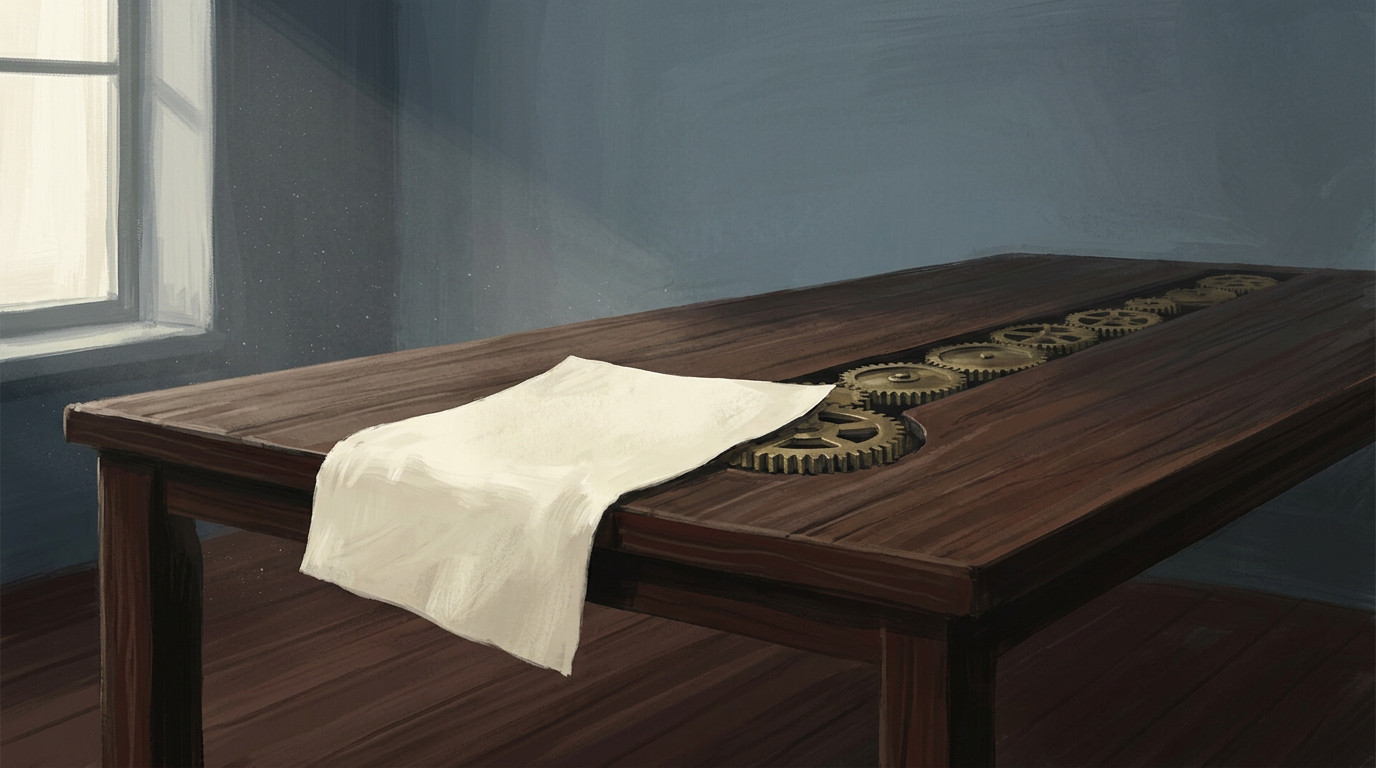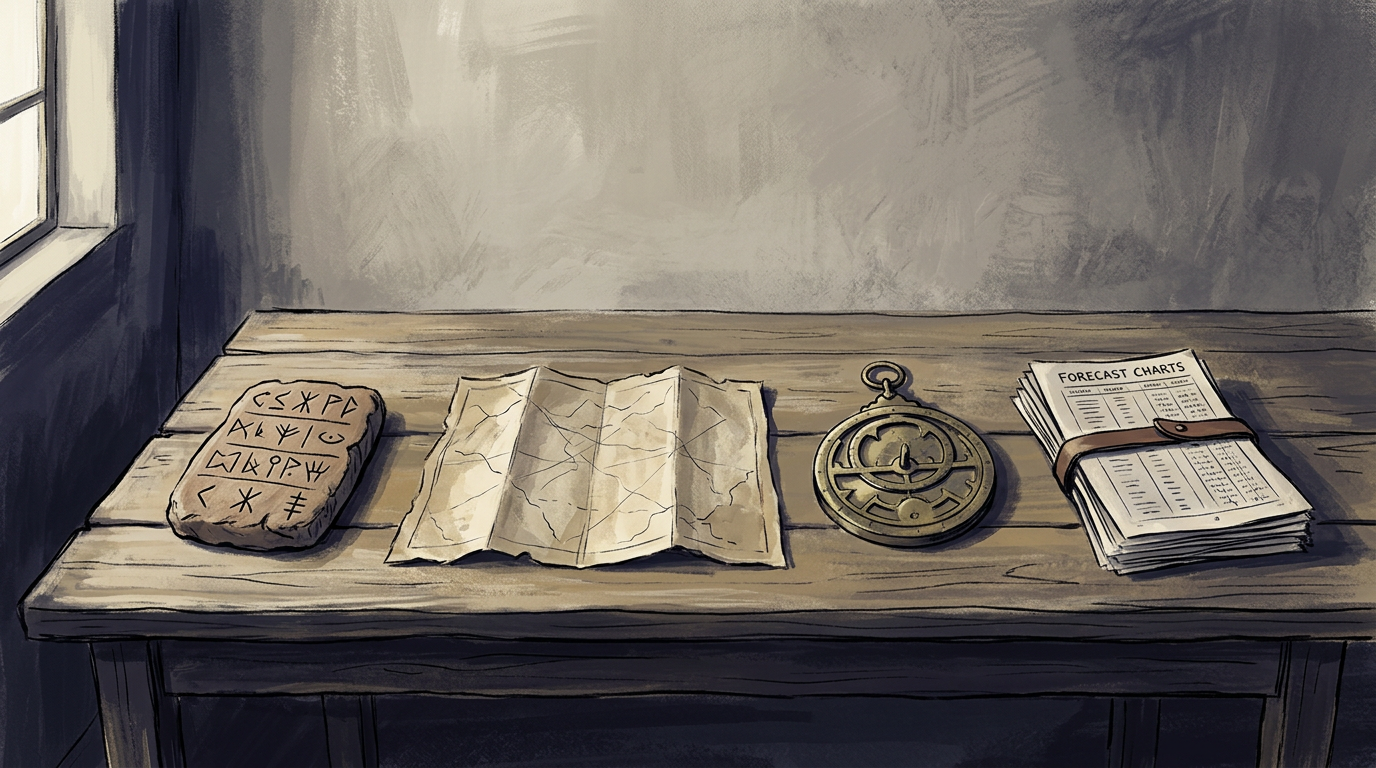
Voltaire's famous maxim, "Le mieux est l'ennemi du bien," most often translated as "the perfect is the enemy of the good," has endured for nearly three centuries as one of philosophy's most portable insights. Originally appearing in his 1772 poem La Bégueule, the line was not entirely Voltaire's invention — he was reworking an older Italian proverb, "Il meglio è l'inimico del bene" — but his formulation gave it the epigrammatic force that carried it into common usage across languages and disciplines. The phrase now circulates as a defense against procrastination, a nudge toward pragmatism, a managerial cliché. Yet its philosophical weight remains underexplored, particularly in an era that has turned optimization into both an industry and an ideology.
The contemporary resonance of the maxim is not difficult to locate. Software development, public policy, organizational management, and even personal productivity culture all operate under frameworks that prize iterative improvement — and yet simultaneously cultivate a fixation on the ideal endpoint. The result is a specific kind of paralysis: systems and individuals that defer action because the available option falls short of a theoretical optimum.
The architecture of paralysis
The mechanism Voltaire identified is deceptively simple. When the standard against which any action is measured is perfection, every achievable outcome registers as inadequate. The gap between the attainable and the ideal becomes not a space for effort but a justification for inaction. This dynamic is visible across domains. In policy design, legislation that would produce measurable but incomplete improvement is sometimes blocked by coalitions holding out for comprehensive reform — reform that, by virtue of its comprehensiveness, faces steeper political obstacles and longer timelines. In technology, product teams delay shipping functional tools while chasing feature completeness, a phenomenon familiar enough in software engineering to have its own vocabulary: scope creep, feature bloat, analysis paralysis.
The philosophical tradition offers context for why this trap is so persistent. Plato's theory of Forms posited that the material world is a degraded copy of an ideal realm — a framework that, however distant from modern empiricism, left a deep imprint on Western thought. The instinct to measure the real against the ideal, and to find the real wanting, is not merely a cognitive bias. It is a cultural inheritance. Voltaire, writing in the tradition of Enlightenment pragmatism, was pushing back against precisely this tendency: the assumption that if a thing is not perfect, it is not worth doing.
What distinguishes the current moment is that the pursuit of the best has been industrialized. Algorithmic optimization, A/B testing, and data-driven decision-making create the impression that the ideal is not merely aspirational but calculable — that with enough data and enough iterations, the optimal solution is within reach. This impression raises the threshold of what counts as acceptable. The "good" is no longer a worthy resting point; it is a waystation, and to stop there feels like failure.
The cost of waiting
The cost of this disposition is not abstract. Incremental progress, by definition, addresses problems that exist now. A housing policy that shelters some people is better than a housing policy that shelters no one while a perfect policy is debated. A medical treatment that reduces harm without eliminating it is better than no treatment at all. These are not controversial claims in isolation, yet the political and institutional dynamics that surround decision-making frequently produce outcomes that contradict them.
Voltaire's insight, read carefully, is not an argument for lowering standards. It is an argument about the structure of human agency under conditions of uncertainty. To act is to accept imperfection. To demand perfection before acting is, in practice, to choose inaction — and inaction carries its own costs, often borne by those least equipped to wait.
The tension, then, is not between ambition and complacency. It is between two conceptions of responsibility: one that locates virtue in the pursuit of the ideal, and one that locates it in the willingness to improve what exists. Whether these two orientations can coexist — or whether one must always subordinate the other — remains an open question, and not only a philosophical one. It is a question that confronts every institution, every policy debate, and every individual deciding whether the available option is good enough to act on, or whether waiting for something better is itself a form of action.
With reporting from The Point Magazine.
Source · The Point Magazine