The conclusion of the Lebanese Civil War in 1990 is often treated as a historical milestone, a definitive closing of a bloody chapter. The Taif Agreement, brokered under Arab League auspices in 1989, provided the formal architecture for ending fifteen years of sectarian fighting that had killed an estimated 120,000 people and displaced nearly a million more. Yet for those who have spent decades observing the region, the peace was always provisional. The conflict did not expire; it merely assumed new, more insidious forms, weaving itself into the fabric of the state and the psyche of its people.
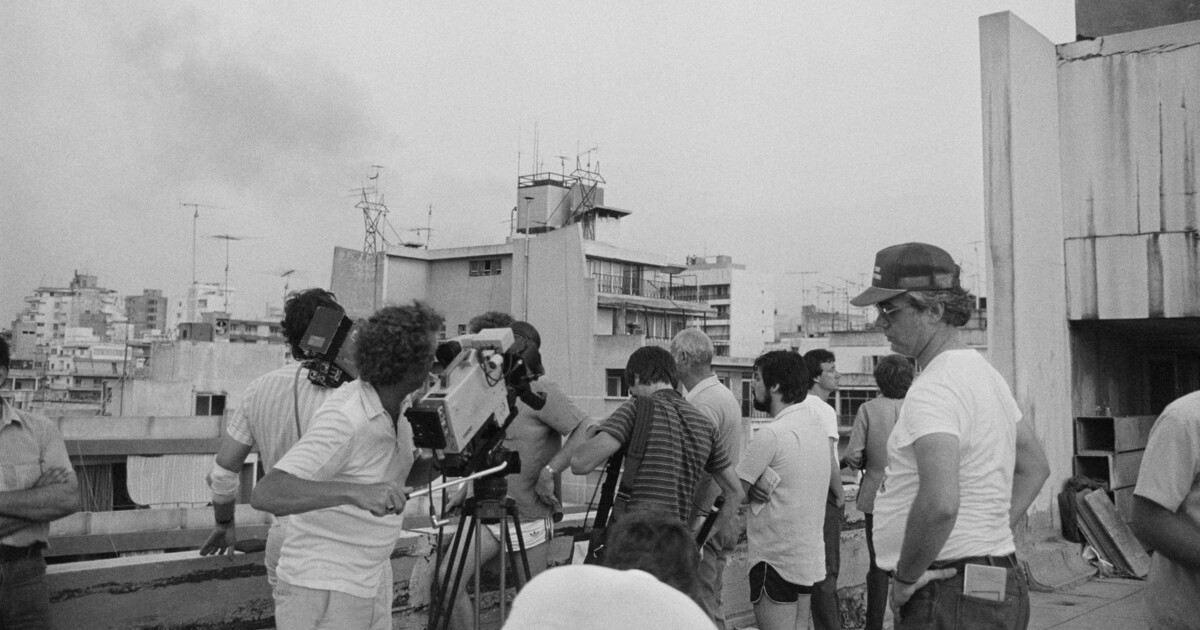
Journalists returning to Lebanon find themselves covering a cycle of violence that feels less like a series of distinct events and more like a single, protracted eruption. The 2005 assassination of former Prime Minister Rafik Hariri, the 2006 war between Hezbollah and Israel, the economic collapse that began in 2019, the catastrophic Beirut port explosion of 2020 — each event arrives not as an aberration but as a predictable expression of unresolved structural fractures. While most wars eventually reach a conclusion, however messy or unjust, Lebanon's struggle appears perpetual. It is a conflict that defies the traditional arc of beginning, middle, and end.
A State Built on Managed Instability
Lebanon's political system, rooted in confessional power-sharing, was designed less to resolve tensions than to contain them. The National Pact of 1943, which allocated executive and legislative positions along sectarian lines, institutionalized difference as the organizing principle of governance. The Taif Agreement modified the formula — shifting power from the Maronite presidency toward the Sunni prime minister and the parliament — but did not dismantle the underlying logic. Political identity in Lebanon remains tethered to sect, and the state functions as an arena for competing patronage networks rather than as a unified sovereign authority.
This architecture produces a paradox familiar to students of divided societies: stability depends on the very divisions that generate instability. Each faction maintains its own security apparatus, its own foreign patron, its own narrative of victimhood. The result is a system in which no single actor is strong enough to dominate and no coalition is durable enough to govern effectively. The state persists, but as a shell — hollowed out by the forces it was meant to arbitrate.
Parallels exist elsewhere. Bosnia and Herzegovina, emerging from its own civil war in 1995 under the Dayton Agreement, adopted a similarly fragmented governance model. Decades later, the country remains caught between institutional paralysis and latent ethnic tension. Northern Ireland's consociational arrangements after the Good Friday Agreement have proven more resilient, but even there, periodic crises expose the fragility of peace built on managed division rather than genuine reconciliation.
The Chronic Condition
This enduring state of friction functions like a chronic illness. It is a malaise that weakens the host without ever delivering a final, killing blow. Lebanon's economy, once among the most dynamic in the Middle East, has been progressively degraded not by a single catastrophe but by the cumulative weight of corruption, capital flight, and the absence of institutional reform. The banking crisis that erupted in 2019 wiped out the savings of ordinary citizens while the political class remained largely insulated — a pattern that reinforced public cynicism without producing the kind of rupture that might force systemic change.
In this environment, the "post-war" era is simply a different phase of the same systemic instability. Armed conflict gives way to economic predation; militia checkpoints are replaced by invisible barriers of sect and class; the violence becomes slower, more diffuse, but no less corrosive. The question is not whether Lebanon will face another crisis — that much is structurally assured — but whether any crisis will prove severe enough to break the cycle, or whether the system's defining feature is precisely its capacity to absorb shocks without transforming.
Some historical wounds, it appears, are not merely slow to heal. They are load-bearing — integral to the structure that surrounds them. Remove them, and the edifice must be rebuilt entirely. Leave them, and deterioration continues. Lebanon sits at this tension, caught between the impossibility of the status quo and the cost of dismantling it.
With reporting from London Review of Books.
Source · London Review of Books