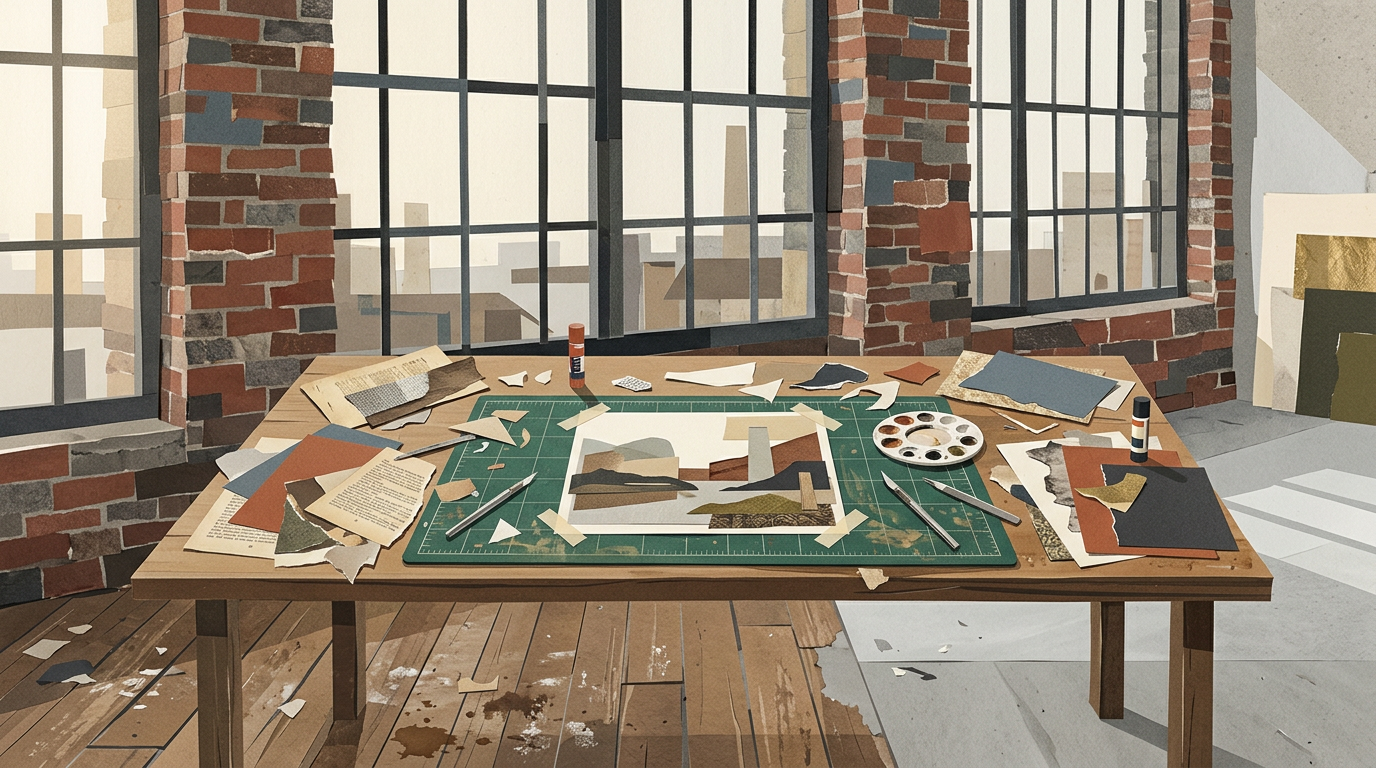
In a loft on Jay Street, Cey Adams — the graphic designer and founding creative director of Def Jam Recordings — spent a recent Sunday afternoon applying the final touches to a mixed-media collage. Adams was not there to sell work, but to participate in the 10th annual DUMBO Open Studios. His presence serves as a reminder of the neighborhood's enduring, if precarious, identity as a creative hub within a landscape increasingly defined by luxury real estate and high-volume tourism.
The waterfront district has long since shed its reputation as a raw industrial fringe. Today, the cobblestone streets are better known for the "Instagram view" of the Empire State Building framed by the Manhattan Bridge than for the grit of manufacturing. While rising commercial rents in the wake of the pandemic have pushed some long-term residents out, the event showcased more than 175 artists across 21 buildings, proving that a significant creative class remains embedded in these converted factories.
The Developer as Patron
The survival of this community is often tied to the specific patronage of local developers like Two Trees, which has cultivated a subsidized ecosystem for artists in the area for decades. Adams noted that during the height of the pandemic, the firm commissioned him for a Black Lives Matter mural, providing stability at a time when many artists were struggling to sustain their practices. This symbiotic relationship between private real estate interests and the arts remains the central tension of DUMBO's urban evolution.
The arrangement is not unique to Brooklyn. Across post-industrial cities, from Detroit to Berlin to Pittsburgh, a familiar cycle has repeated itself over the past half-century: artists move into cheap, disused industrial space; their presence generates cultural cachet; that cachet attracts capital; capital raises rents; and the artists who catalyzed the transformation are gradually displaced. The sociologist Sharon Zukin documented this dynamic in lower Manhattan as early as the 1980s. What distinguishes DUMBO is the degree to which one private landlord has attempted to manage the cycle deliberately, subsidizing studio space as a long-term amenity rather than treating artists purely as a transitional population. Whether that model represents a genuine alternative to displacement or merely a slower version of the same process is a question the neighborhood has not yet fully answered.
The tension is structural. A developer's incentive to maintain affordable creative space depends, in part, on the cultural value that space generates for surrounding commercial and residential properties. When the neighborhood reaches a level of maturity where the brand is self-sustaining — where the restaurants, the waterfront park, and the bridge views carry enough draw on their own — the economic rationale for subsidized studios weakens. DUMBO may be approaching that threshold.
Open Doors, Closed Questions
Open Studios events, now common in cities worldwide, function as both celebration and argument. They make visible the labor that typically occurs behind closed doors, offering the public a direct encounter with process rather than product. In doing so, they implicitly assert that the presence of working artists is not incidental to a neighborhood's character but constitutive of it.
The format also carries a quiet political dimension. By opening their workspaces, artists demonstrate occupancy — a physical claim on square footage that market logic might otherwise reallocate. In a district where a single converted loft can command rents that dwarf what most visual artists earn in a year, the act of showing unfinished canvases and half-assembled sculptures to curious visitors is, among other things, a statement of continued residence.
That more than 175 artists participated in this year's edition suggests the ecosystem remains viable, at least for now. But viability and vitality are not the same thing. A creative community sustained primarily through the goodwill of a single landlord operates under conditions fundamentally different from one that emerges organically from low rents and benign neglect. The former is more stable in the short term but more fragile in the long term, because it depends on decisions made in boardrooms rather than on the impersonal forces of a soft real estate market.
As DUMBO continues its transition into a polished destination, the Open Studios event offers a rare glimpse into the labor happening behind the heavy loft doors. It is an exercise in continuity — an attempt to preserve the intellectual and aesthetic friction that first made these blocks valuable, even as the world around them becomes increasingly curated. The question is whether friction and curation can coexist indefinitely, or whether one must eventually yield to the other.
With reporting from Hyperallergic.
Source · Hyperallergic