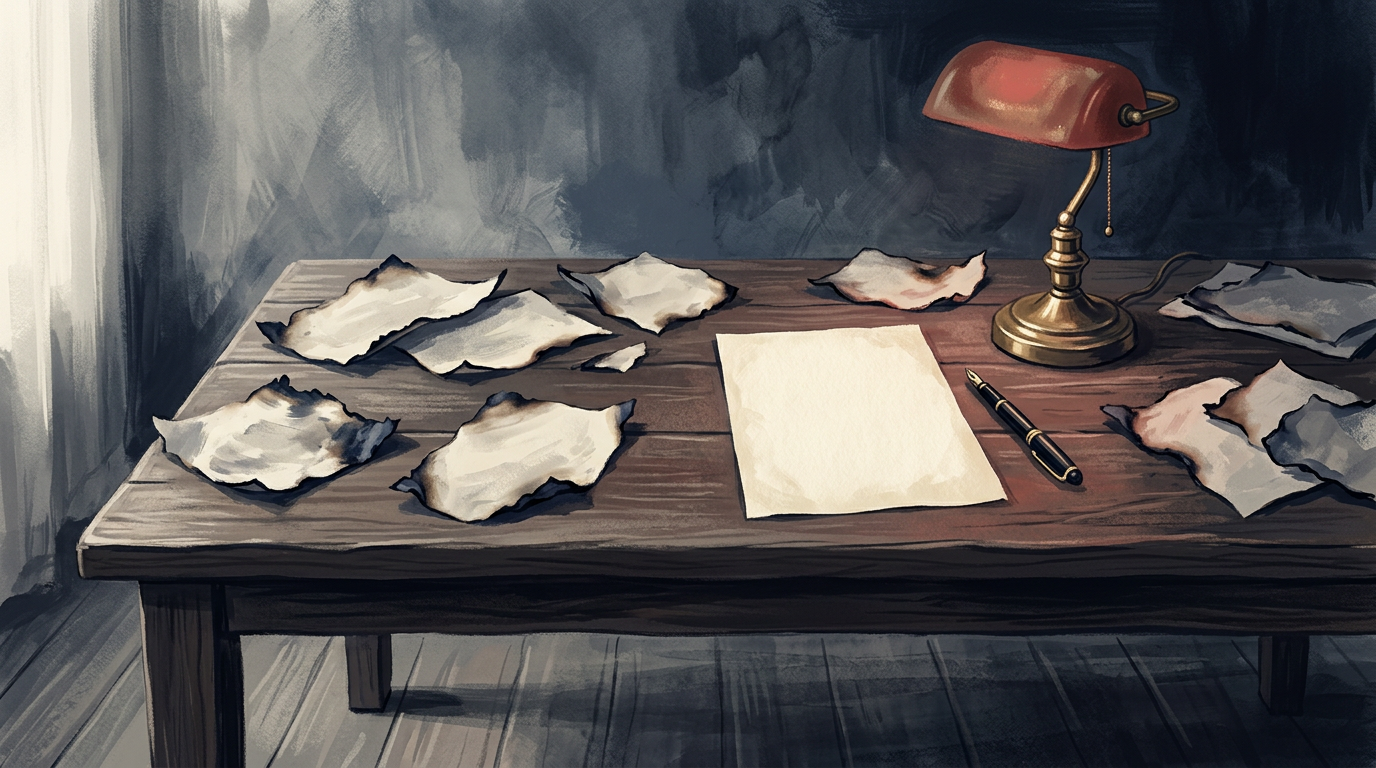
On May 2, 1936, the American poet Edna St. Vincent Millay, already an established literary figure and the first woman to receive the Pulitzer Prize for poetry, experienced a professional catastrophe that would have effectively ended the careers of many contemporaries. While vacationing on Sanibel Island, Florida, a fire consumed her hotel, destroying the entirety of her unpublished manuscript, Conversation at Midnight. The loss was not merely of a single work, but of a collection that represented months of labor, slated for imminent publication.
According to reporting from Lit Hub, the event served as a crucible for the poet. Beyond the logistical nightmare of losing a manuscript destined for the printer, the incident highlights a deeper tension between the fragility of physical intellectual property and the permanence of the human creative impulse. This analysis examines the mechanism of professional recovery in the face of near-total loss, drawing parallels between the historical necessity of reconstruction and modern paradigms of institutional resilience.
The Fragility of the Intellectual Asset
The loss of a manuscript in a pre-digital era was a singular, often terminal event. Unlike today, where version control, cloud storage, and redundant backups mitigate the risk of data loss, Millay operated in a paradigm where the physical document was the sole repository of the work. The destruction of her manuscript was not just a setback; it was an ontological erasure of the labor invested in the text. This historical vulnerability underscores the extreme reliance on physical artifacts as the primary medium for high-level intellectual output.
When we consider the structural context of the 1930s, the reliance on the singular manuscript highlights the high stakes of professional authorship. The loss of Conversation at Midnight was compounded by the destruction of a seventeenth-century edition of Catullus, which Millay reportedly mourned more deeply than her own work. This emotional reaction suggests that the value of the lost intellectual property was not purely transactional or professional; it was rooted in the connection to a lineage of thought and tradition that the poet felt personally responsible for preserving.
The Mechanism of Creative Reconstruction
Following the fire, the process of recovery was not a matter of retrieval, but of total cognitive reconstruction. The ability to rewrite an entire book from memory is a testament to the internalization of the creative process. In modern professional terms, this represents the ultimate form of 'knowledge retention.' While digital systems now handle the storage of information, the human capacity to internalize complex structures remains the most robust safeguard against systemic failure.
Millay’s eventual success in reconstructing the manuscript reveals a critical insight into the nature of professional resilience. The initial period of paralysis, documented by her husband Eugen, was a natural response to the sudden void created by the fire. However, the subsequent transition from mourning to execution suggests that the act of creation is often a recursive process. By re-engaging with the work, the author was not merely reproducing the past; she was refining it through the lens of memory, potentially resulting in a more distilled version of the original intent.
Implications for Modern Institutional Continuity
In contemporary professional environments, the incident serves as a poignant reminder of the dangers of institutional memory loss. Organizations often operate under the assumption that digital archives provide total security, yet the loss of key personnel or the failure of proprietary systems can lead to a similar 'manuscript fire' scenario. The reliance on centralized, digital-only storage without equivalent human mastery of the underlying processes creates a dangerous fragility, where the loss of access to the tool equals the loss of the capability itself.
Furthermore, the reaction of stakeholders—the publishers, the public, and the author herself—highlights the necessity of buffer periods in professional cycles. Modern corporate environments, which prioritize immediate output and constant iteration, often lack the capacity to absorb the impact of such losses. Millay’s journey suggests that true resilience requires not just redundant systems, but a culture that allows for the psychological and temporal space to rebuild when the primary framework is compromised.
The Outlook for Intellectual Preservation
As we look toward the future of professional authorship and intellectual labor, the question remains: are we becoming too reliant on the permanence of our digital infrastructure? The ease with which we store work often leads to a diminished sense of ownership over the content itself. If the systems we rely on were to fail, would the modern professional possess the internal capacity to reconstruct their contributions, or have we outsourced our cognitive labor to the point of vulnerability?
Moving forward, the challenge for creators and institutions alike is to balance the efficiency of modern tools with the necessity of maintaining a deep, internal connection to one's work. The story of Millay is not just one of tragedy, but of the triumph of the human mind over the physical vulnerabilities of the medium. As both creative and professional landscapes continue to evolve, the capacity to operate independently of one's tools remains the ultimate benchmark of professional maturity.
With reporting from Lit Hub
Source · Lit Hub