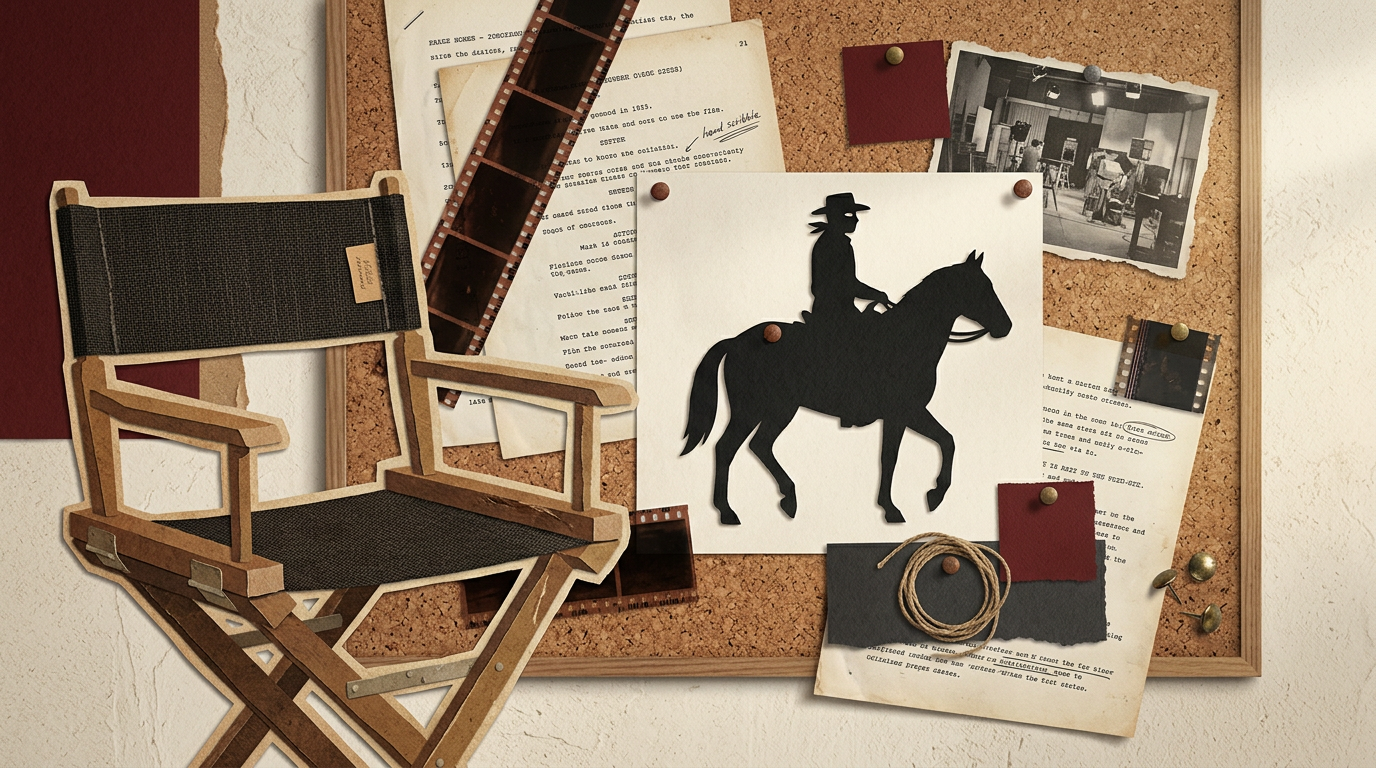
Sony Pictures has officially initiated development on a film adaptation of the Django/Zorro comic book miniseries, a project that reunites the narrative worlds of Quentin Tarantino’s 2012 hit Django Unchained and the iconic masked vigilante Zorro. According to reporting from Hypebeast, the studio has secured Academy Award-winning screenwriter Brian Helgeland—known for his precision in films such as L.A. Confidential and Mystic River—to craft the script. While the project has received the explicit blessing of Tarantino, the director has confirmed he will not step behind the camera for this feature, marking a significant evolution in how his creative output is handled.
This development comes after years of speculation and a previously stalled 2019 iteration of the project, signaling that Sony is committed to building out this specific intellectual property. By separating the creative vision from the directorial execution, the studio is effectively testing a model where the Tarantino brand can persist without requiring the director’s personal oversight. This shift is particularly notable given the current landscape of Hollywood, where legacy franchises and auteur-originated universes are increasingly treated as distinct assets that can be managed independently of their original creators.
The Strategic Preservation of the Ten-Film Cap
Quentin Tarantino has long maintained a rigid, self-imposed limit of ten films, a boundary that has become a central part of his professional identity. In an industry where directors often work until they are no longer able, this commitment to a finite filmography has created a sense of scarcity that elevates the value of each project. The cancellation of his planned final feature, The Movie Critic, demonstrated that this cap is not merely a marketing gimmick but a genuine philosophical commitment to his own legacy. By allowing the Django/Zorro project to proceed under the guidance of a writer like Helgeland, Tarantino effectively creates a loophole that allows his narrative universe to expand without compromising his personal directorial count.
This approach aligns with a broader trend among high-profile auteurs who seek to maintain creative control over their legacy while stepping back from the grueling demands of production. By acting as a curator rather than a director, Tarantino can ensure that the tone, character voice, and narrative spirit of his work remain intact, even as the execution is handed off to trusted collaborators. It is a strategic pivot that allows for the commercial expansion of his most successful intellectual properties while preserving the sanctity of his self-imposed retirement. The tension here lies in whether a 'Tarantino film' can truly exist without the director’s specific visual and rhythmic signature, or if the brand has now become an entity that can transcend the man himself.
The Mechanics of Collaborative Intellectual Property
The enlistment of Brian Helgeland is a clear signal of intent from Sony. Helgeland is not a novice or a director-for-hire; he is a seasoned professional with a reputation for structural rigor and character-driven storytelling. By pairing such a writer with a property that is inherently pulpy and high-concept, the studio is attempting to ground the crossover in a narrative reality that feels substantial. This is a mechanism common in the modern era of franchise management, where studios seek to elevate 'fan-service' projects by attaching prestige talent to the writing process. The goal is to avoid the pitfalls of a standard sequel or spin-off and instead deliver a film that feels like a legitimate entry in a cinematic canon.
This dynamic also highlights the growing importance of the comic-to-film pipeline as a tool for IP expansion. The Django/Zorro source material, co-written by Tarantino and Matt Wagner, provides a ready-made narrative framework that has already been vetted by the creator. By adapting existing comic material, the studio mitigates the risk of creative drift. The process is one of translation rather than creation, where the primary challenge is maintaining the 'Tarantino-esque' dialogue and pacing while adapting it for a broader audience. This process serves as a blueprint for how studios might handle other cult-classic properties, using the original creator as a guardian of the IP while delegating the heavy lifting of production and direction to third-party artisans.
Implications for Stakeholders and the Industry
For the studio, the primary implication is the creation of a 'Tarantino-adjacent' franchise that can generate revenue without the volatility of the director’s personal creative process. If this project succeeds, it will likely set a precedent for other directors to monetize their back catalogs through spin-offs and collaborations, fundamentally changing the economics of auteur cinema. For regulators and industry analysts, this movement represents a consolidation of power where established names are used as anchors for long-term franchise stability. The risk, of course, is that the dilution of the brand could eventually undermine the very scarcity that made the original films so valuable in the first place.
For audiences, the prospect of a Django/Zorro film offers a continuation of a beloved character arc, but it also invites a conversation about the nature of authorship. If the audience begins to associate the 'Tarantino brand' with films he did not direct, does the director’s influence diminish over time? This project forces a re-evaluation of what constitutes an auteur work in a corporate landscape that prioritizes the longevity of intellectual property. The tension between the director’s desire to retire and the studio’s desire to continue the narrative is the central conflict of this production, one that will play out in the court of public opinion upon the film's eventually anticipated release.
Outlook and Lingering Uncertainties
Despite the clear direction provided by the script development, significant uncertainty remains regarding the film's final aesthetic and tone. The absence of a director means that the most critical creative decision—the visual language of the film—has yet to be made. Without the specific kinetic energy that Tarantino brought to his previous work, the film faces the challenge of establishing its own identity while living in the shadow of its predecessor. The casting process, which has yet to begin, will also be a major indicator of how the studio intends to balance nostalgia for the original film with the requirements of a new, standalone narrative.
Investors and fans alike will be watching to see if this model of 'curated expansion' yields a product that feels authentic or if it falls into the trap of being a hollow imitation. Whether this experiment serves as a template for future projects or remains a singular outlier in the director’s career remains to be seen. As the industry continues to grapple with the tension between creative integrity and the demands of the box office, the development of Django/Zorro stands as a case study in the evolution of modern filmmaking. The question of whether the brand can survive the transition from the author to the institution is now the central narrative of this production.
As the project moves through the foundational stages of script development, the industry will be monitoring how closely the final product adheres to the established tone of the original Django Unchained. The success of this transition will depend largely on the studio's ability to maintain a delicate balance between honoring the source material and allowing for the necessary evolution of the characters in a new, independent narrative context. With reporting from Hypebeast
Source · Hypebeast