The infrastructure of the second space age is increasingly moving away from the fixed geography of traditional spaceports. Firefly Aerospace and Seagate Space Corporation have signed a memorandum of understanding to explore offshore launch capabilities for Firefly's Alpha rocket, a small-lift vehicle designed to carry payloads of up to roughly one metric ton to low Earth orbit. The partnership aims to develop an integrated sea-based launch system that could grant Alpha greater flexibility in orbital inclinations and ease the logistical bottlenecks of crowded land-based ranges.
The announcement sits at the intersection of two trends reshaping the launch industry: the proliferation of small-lift vehicles competing for a growing constellation-servicing market, and the revival of interest in maritime launch infrastructure after decades of limited adoption.
The strategic logic of going offshore
Sea-based launch is not a new concept. Sea Launch, a multinational venture that operated from a converted oil platform in the Pacific, conducted commercial missions from 1999 until financial difficulties and geopolitical complications effectively ended regular operations. China has more recently demonstrated sea-launch capability using a modified vessel in the Yellow Sea, treating it as a way to serve equatorial orbits and avoid overflying populated areas. What distinguishes the current wave of interest is the context: a launch market defined less by heavy-lift government contracts and more by the cadence demands of commercial satellite operators who need frequent, flexible access to specific orbital planes.
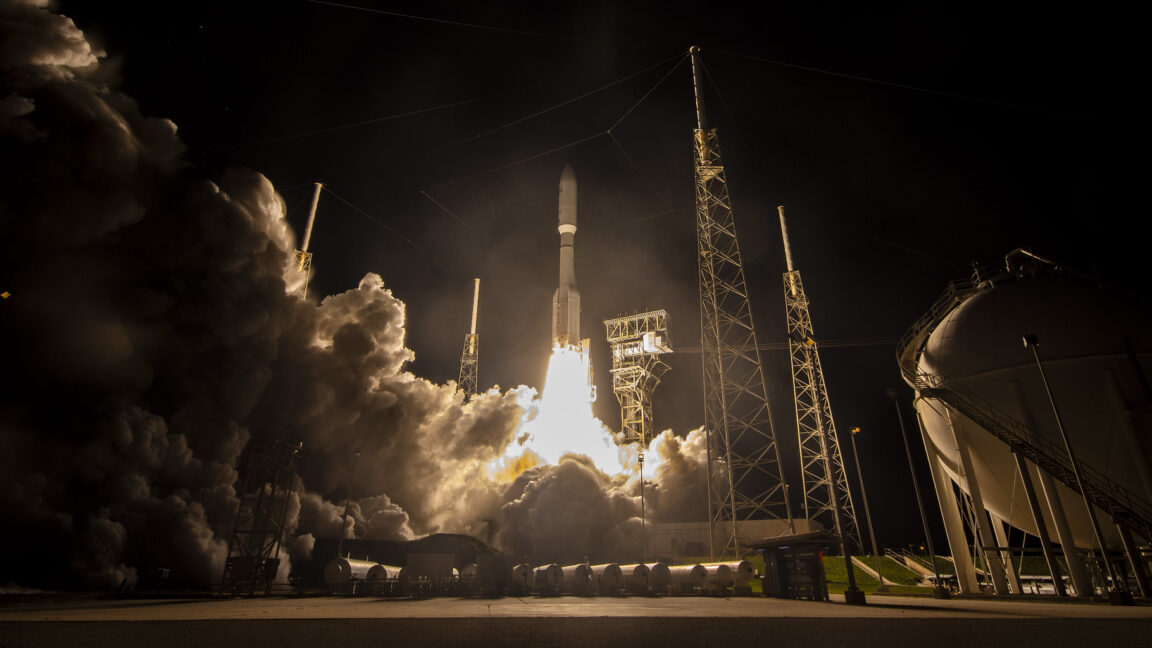
For Firefly, the appeal is straightforward. Alpha launches today from Vandenberg Space Force Base in California, a range shared with SpaceX, United Launch Alliance, and other operators. Scheduling pressure at established ranges has become a recurring constraint across the industry. An offshore platform, repositionable to different latitudes, could allow Firefly to offer customers a wider menu of orbital inclinations without competing for pad time. It could also reduce the noise and safety exclusion zones that limit launch cadence at terrestrial sites, where surrounding communities and environmental regulations impose hard ceilings on how often rockets can fly.
The memorandum of understanding remains an early-stage agreement — a framework for feasibility studies rather than a commitment to build hardware. Developing a reliable offshore launch system involves substantial engineering challenges: fuel handling at sea, precision stabilization of the launch platform, communications infrastructure, and the regulatory complexity of operating in maritime jurisdictions. The economics must also close. Sea Launch's history illustrates that the operational costs of maintaining a seagoing launch platform can erode the geographic advantages it provides.
A crowded market tests new variables
Firefly operates in a segment of the launch market that has grown intensely competitive. Rocket Lab's Electron has established a track record in the small-lift category, and several other entrants — including ABL Space Systems and Relativity Space — are at various stages of development or early operations. In this environment, differentiation matters. Payload capacity alone is no longer a sufficient selling point; responsiveness, schedule reliability, and orbital flexibility have become key variables in winning contracts, particularly from defense and intelligence customers who prize rapid-deployment capability.
A sea-based option could position Alpha as a responsive launch asset for national security missions, where the ability to reach specific orbits on short notice carries a premium. The U.S. Department of Defense has signaled growing interest in tactically responsive space launch through programs that reward providers capable of operating outside the constraints of fixed-range scheduling.
Whether the Firefly-Seagate partnership advances beyond the memorandum stage will depend on technical feasibility, cost structure, and the willingness of customers to contract for a launch mode that has no recent Western commercial precedent. The tension is clear: the operational flexibility of offshore launch is genuine, but so is the capital intensity and logistical complexity of making it work at commercial scale. The question is whether the market's appetite for orbital access on demand has grown large enough to justify the investment — or whether the economics that grounded Sea Launch a generation ago remain fundamentally unchanged.
With reporting from Ars Technica Space.
Source · Ars Technica Space